Table of Contents
One room, two days, and the nagging feeling that if you just had a free weekend, you could finally deal with it. That’s usually enough. A full 30-day challenge covers an entire home in stages, but when there’s only one room actually bothering you and only one weekend to work with, a compressed version built specifically for a single space gets real results without needing a month-long commitment.
This challenge breaks a weekend into four sessions: Saturday morning for the fastest, easiest categories, Saturday afternoon for everyday items in active use, Sunday morning for harder decisions that need more thought, and Sunday afternoon for finishing touches and putting the room back together. Pick the one room that’s been on your mind the longest before starting, since decluttering a space you’re already motivated to fix makes the whole weekend faster.
Saturday Morning: The Fast, Easy Wins
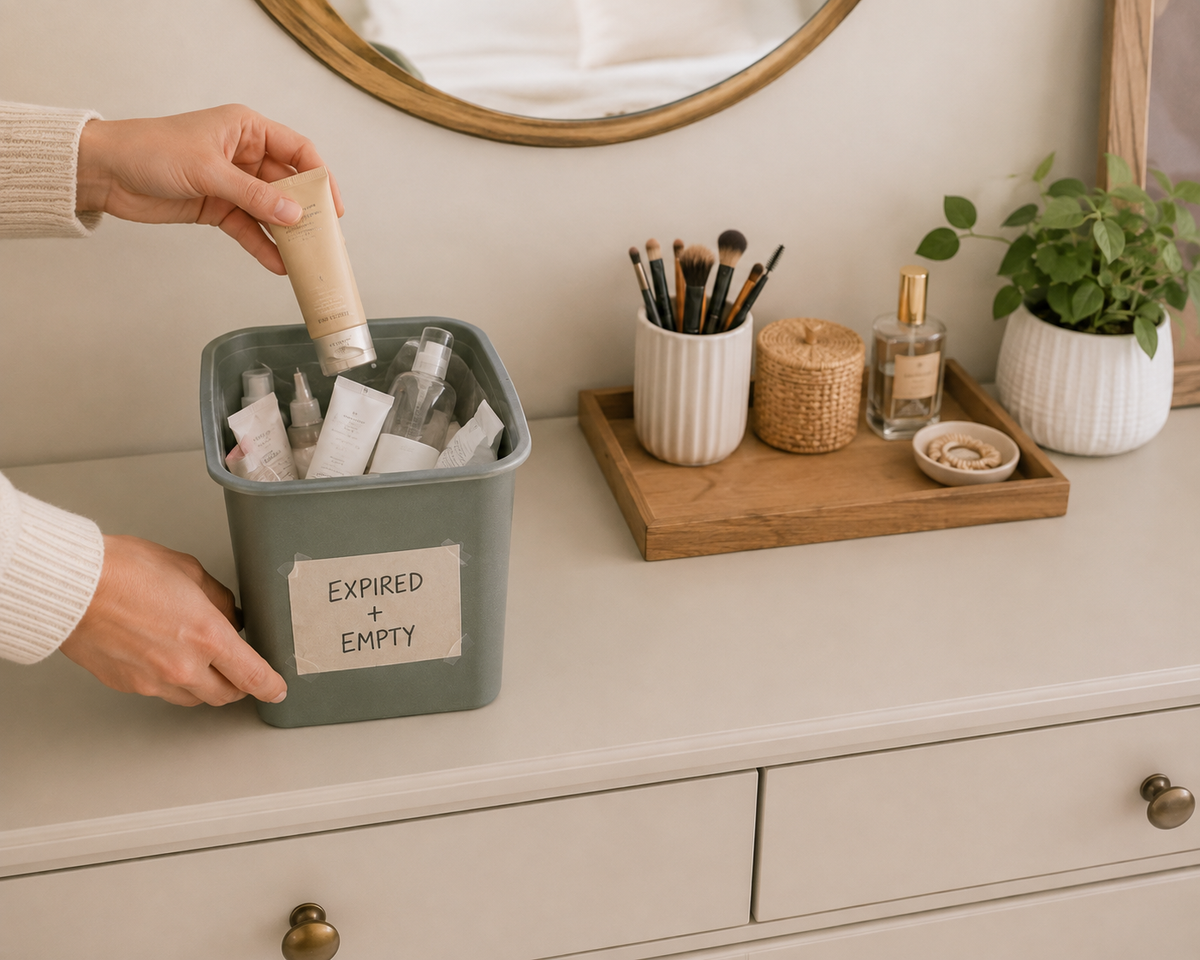
Start with the categories in the room where the decision is close to automatic: anything expired, broken, or genuinely duplicated. In a bedroom, this often means old cosmetics or toiletries on a dresser, broken hangers, or a phone charger cable that’s frayed and unsafe to keep using. In a home office, it’s expired coupons, dried-out pens, or duplicate office supplies bought because the originals couldn’t be found at the time.
Work through the room systematically rather than jumping between areas, starting with one corner or one surface and moving to the next only once it’s fully done. This prevents the common trap of half-sorting five different areas at once and ending the morning with a room that looks more chaotic than when you started, even though real progress was made.
Set a rough time budget, two to three hours, and don’t push past it even if the room isn’t finished. Saturday morning’s job is building momentum and clearing the easiest wins, not finishing the whole room in one sitting. Trying to power through everything in a single morning session is a common reason people burn out and abandon the weekend by Saturday afternoon.
Saturday Afternoon: Everyday Items in Active Use
The afternoon session moves into the room’s main function: clothes and hangers in a bedroom, papers and supplies in a home office, or toys and everyday items in a shared or kids’ space. These decisions take slightly longer than the morning’s automatic wins, since they involve genuine judgment about what’s actually in use rather than simply spotting something broken or expired.
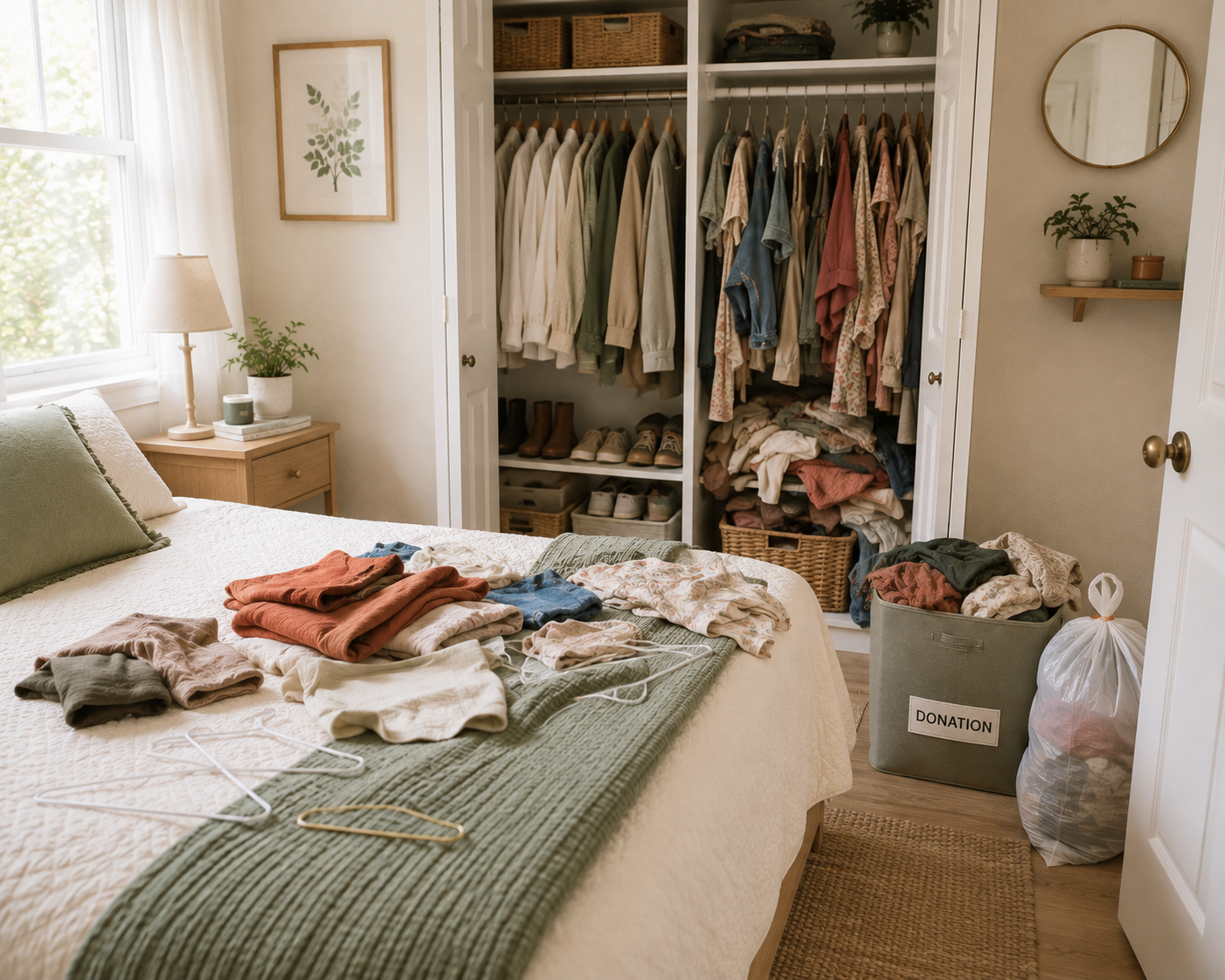
For a bedroom closet, sort into worn regularly, not worn in the last year, and genuinely unsure. The middle category, clothes untouched through at least one full seasonal cycle, is usually the fastest large win of the whole weekend, since a full year without wear is a strong, near-automatic signal that an item isn’t earning its space. For a home office, sort through active project files versus paperwork that’s outdated or duplicated elsewhere, and clear desk surfaces of anything that’s accumulated simply because it never had an assigned spot.
Take a short break between the easy-wins morning and this afternoon session rather than pushing through both without a pause. A brief reset, even twenty minutes away from the room, keeps decision fatigue from creeping in before the harder Sunday session even starts.
By the end of Saturday, the room should show visible, tangible progress: a filled donation box, a cleared surface or two, and a closet or drawer set that’s noticeably easier to use than it was that morning.

Sunday Morning: The Harder Decisions
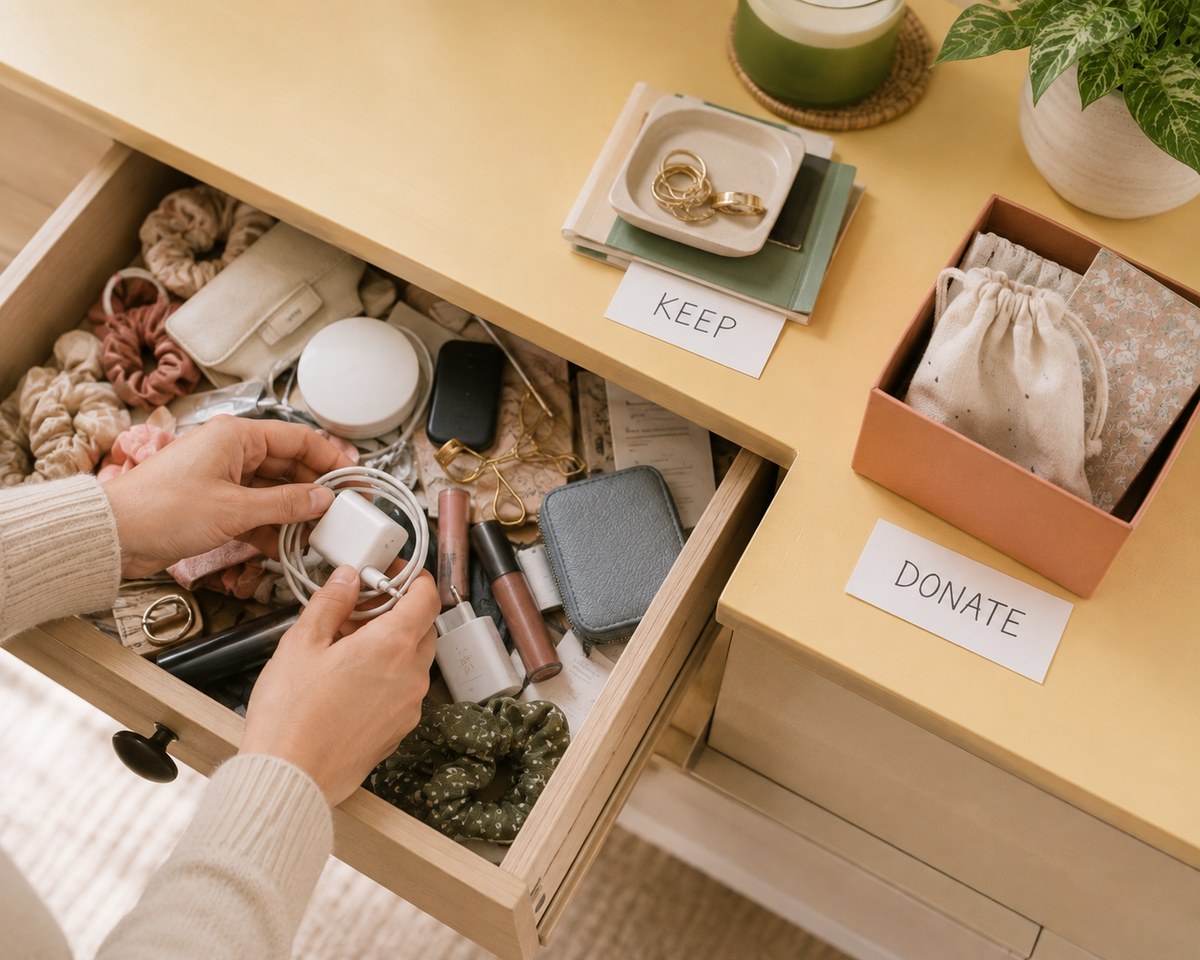
Sunday morning is reserved for whatever category in the room takes more thought than Saturday’s items, without yet touching anything genuinely sentimental. In a bedroom, this often means a drawer or shelf holding a mix of things that don’t fit neatly into any one category: old electronics, gift items never used, or belongings tied to a hobby or phase that’s quietly ended. In a home office, it’s often digital clutter, an inbox, a desktop full of unsorted files, or a drive full of duplicate photos, which carries its own kind of friction even though it’s invisible compared to physical stuff.
Give this session more room to breathe than the previous two. If a decision on a specific item genuinely stalls, set it into a small separate box rather than forcing a choice on the spot, and plan to revisit that box with fresh eyes a week or two after the weekend ends. Forcing every single decision in one sitting is more likely to produce regret than simply setting the hardest few items aside for later.
This is also a good point in the weekend to check whether the room’s storage itself, not just its contents, is working. A closet that’s been cleared out but still relies on mismatched hangers and no clear system will likely refill with clutter within a few months, since nothing’s actually changed about how items are stored day to day.
Sunday Afternoon: Finishing Touches and Putting It Back Together
The final session is about closing the loop rather than sorting anything new. Bag or box everything designated for donation and set a specific plan for where it’s actually going, a charity drop-off, a consignment shop, a resale app, rather than letting it sit in a corner of the newly cleared room for weeks. A donation pile that never leaves the house is functionally still clutter, just relabeled.
Put back what’s staying in a way that makes sense for daily use, not just visually tidy for the moment. Frequently used items go somewhere genuinely accessible; occasional items can go higher on a shelf or further back in a drawer. This is the step that determines whether the room stays organized past the first week or slides back into its old state within a month.
Take a few minutes to note what worked and what didn’t for next time, particularly if this weekend challenge is one room out of several that need the same treatment eventually. A quick mental note, or an actual written one, about which categories took longer than expected saves real time on the next room’s version of this same weekend.
Choosing the Right Room to Start With
Not every cluttered room is an equally good first choice for this challenge. A room with mostly practical, low-emotion clutter, an office, a linen closet, a garage corner, tends to move faster and builds confidence for tackling a harder room later. A bedroom or a shared family space, which mixes practical items with a higher share of sentimental or emotionally loaded belongings, often takes longer even when the physical size of the room is the same.
If several rooms genuinely need this treatment, consider running the weekend challenge on the easiest room first, even if it’s not the one bothering you most, purely to build the skill and pacing before attempting a harder space. The four-session structure works the same regardless of which room it’s applied to, but the emotional weight of the decisions inside it changes a lot from one room type to the next.
A studio apartment or a single-room living situation changes this calculation slightly, since there’s only one space to work with rather than a choice between rooms. In that case, breaking the single room into functional zones, the sleeping area, the kitchen corner, the closet, and treating each zone the way this guide treats a full separate room, keeps the same four-session pacing intact even without multiple physical rooms to divide the work across.
What Genuinely Different Rooms Need From This Weekend
The four-session structure holds up across most room types, but the specific categories inside each session shift depending on the room. A kitchen version of this weekend replaces Saturday afternoon’s clothing sort with cookware, small appliances, and pantry overflow, while Sunday morning’s harder decisions often center on sentimental cookware (an inherited dish set, gifted serving pieces) rather than digital clutter or hobby gear.
A kids’ room or shared space adds a layer this guide’s bedroom and office examples don’t fully cover: outgrown clothes and toys that carry sentimental weight for a parent even though the child has moved past them. Treat this category with the same care as Sunday morning’s harder decisions rather than rushing it through Saturday’s easy-win pace, since a parent’s attachment to a child’s outgrown item often runs deeper than the item’s practical usefulness would suggest.
A living room, if it’s the room chosen for the weekend, tends to have less sheer volume than a bedroom closet but more visible, high-traffic clutter, since it’s the room guests and family see first. Prioritize surfaces and shared storage (a coffee table, a media console, a shared bookshelf) over any single deep closet, since the payoff in how the room feels day to day is often higher relative to the time spent.
FAQ
What if I can’t finish the whole room in one weekend? Pick up exactly where you left off the following weekend rather than starting over. The four-session structure holds up fine split across two weekends if one room turns out to need more time than expected.
Should I include sentimental items in this weekend challenge? Only briefly, and only if they’re low-stakes. Genuinely sentimental decisions deserve more time than a compressed weekend allows, and a dedicated slower approach works better for that specific category.
What’s the single best room to start with if I have several that need this treatment? Start with whichever room bothers you most day to day. The motivation from finally fixing a space you interact with constantly tends to carry over into the next room’s challenge.
How much should I expect to get rid of in one weekend? This varies a lot by room and how long clutter has been building, but a single bedroom or home office commonly yields one to two full boxes of donations plus a trash bag, when the challenge is worked through fully rather than rushed.
Related Reading
For the full month-long version this weekend challenge is compressed from, The Complete 30-Day Decluttering Challenge covers every stage across a whole home in more depth.
If sentimental items in this room are the part you’re avoiding, A Gentler Challenge for Decluttering Sentimental Items covers a slower, more deliberate approach built specifically for that category.
And if even a single free weekend isn’t realistic given your schedule, A Decluttering Challenge for When There’s No Free Weekend breaks a similar process into short sessions spread across a few weeks instead.
For the full category, browse Decluttering Challenges under the Seasonal & Maintenance hub, home to every reset and decluttering guide on the site.