Table of Contents
There’s a particular kind of small living room that never quite settles into being one thing. A desk chair sits half-turned toward the TV. A folded sofa bed’s frame edge peeks out under a throw blanket that’s clearly there to hide something. Nothing in the room is doing its job badly, exactly. It’s just that every piece looks like it’s mid-negotiation with the others about which room this actually is.
That’s the real challenge with a multi-purpose living room, and it’s not about running out of space. It’s about a room that has to serve two or three jobs, without ever fully committing to looking like any one of them. Solve that, and a genuinely small living room can host guests on Friday, run a Zoom call on Monday, and still feel like a proper living room every evening in between.
The Real Problem With Multi-Purpose Rooms
A multi-purpose room fails visually when its extra functions stay half-visible all the time, not when the room is simply doing more than one job. A desk that’s always out, papers and all, competes with the living room identity even on days nobody’s working. A sofa bed that’s technically folded up but still reads as “a bed with cushions on it” never fully becomes a couch in anyone’s mind, including yours.
The fix isn’t choosing one function over the others. It’s making sure each secondary function has a genuine “off” state, a version of itself that fully recedes when it’s not in use, so the room defaults back to being a living room the rest of the time.
Furniture That Switches Jobs Cleanly
The furniture that makes a multi-purpose room work isn’t necessarily more expensive than single-purpose pieces. It just needs a real transition between its two states, not a compromise that leaves both jobs half-done.
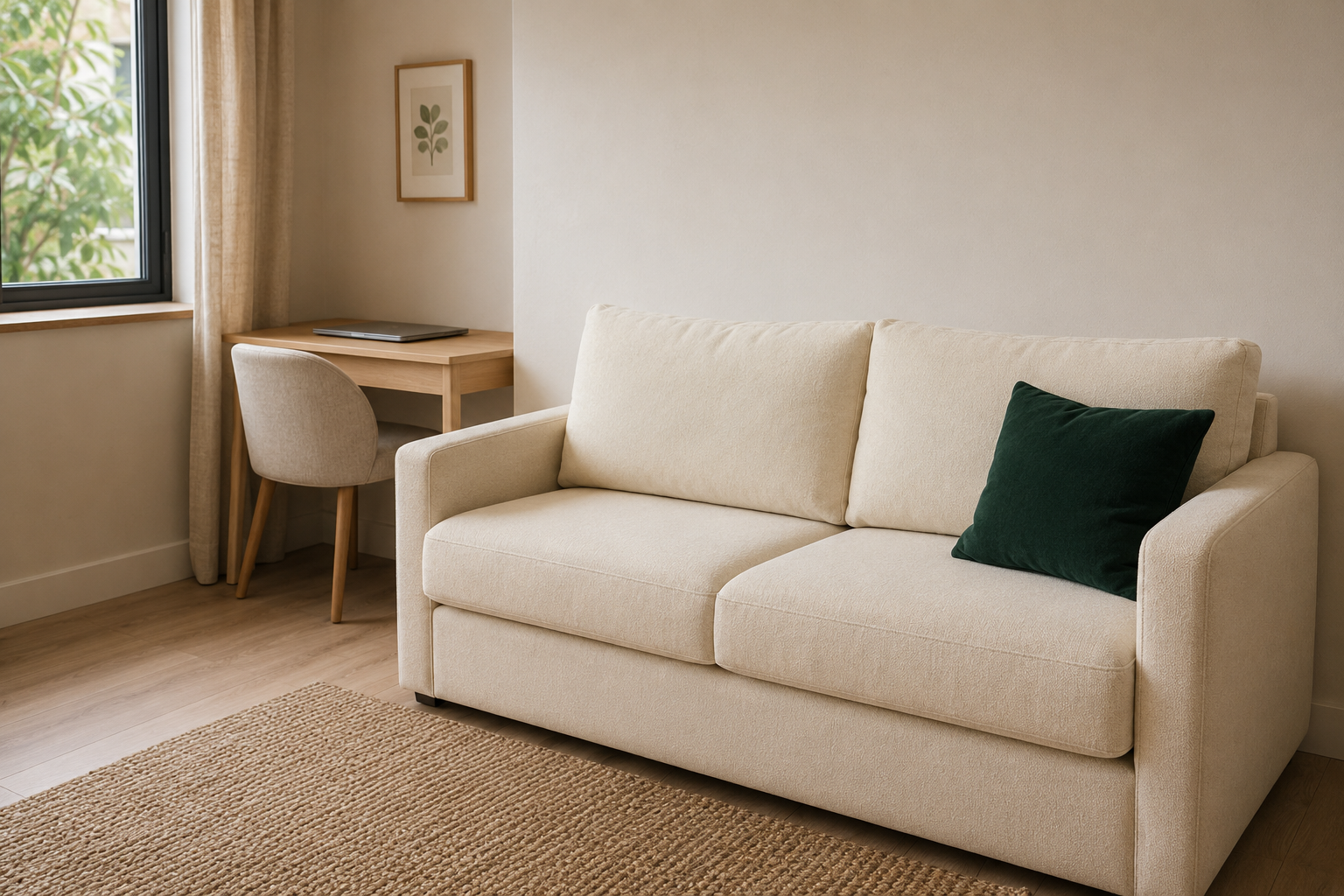
A sofa bed works best when the folded position genuinely looks like seating, not like a bed with a blanket thrown over it. Look for models with back cushions substantial enough to hide the mechanism entirely, and style it with the same throw pillows you’d use on a regular sofa, so nothing about its daytime appearance hints at its nighttime job.
A daybed solves this even more cleanly in a room where floor space allows it, since a daybed reads as a sofa on sight, with none of the fold-out transformation a sofa bed requires. It sacrifices a little seating depth for a much more convincing “off” state.
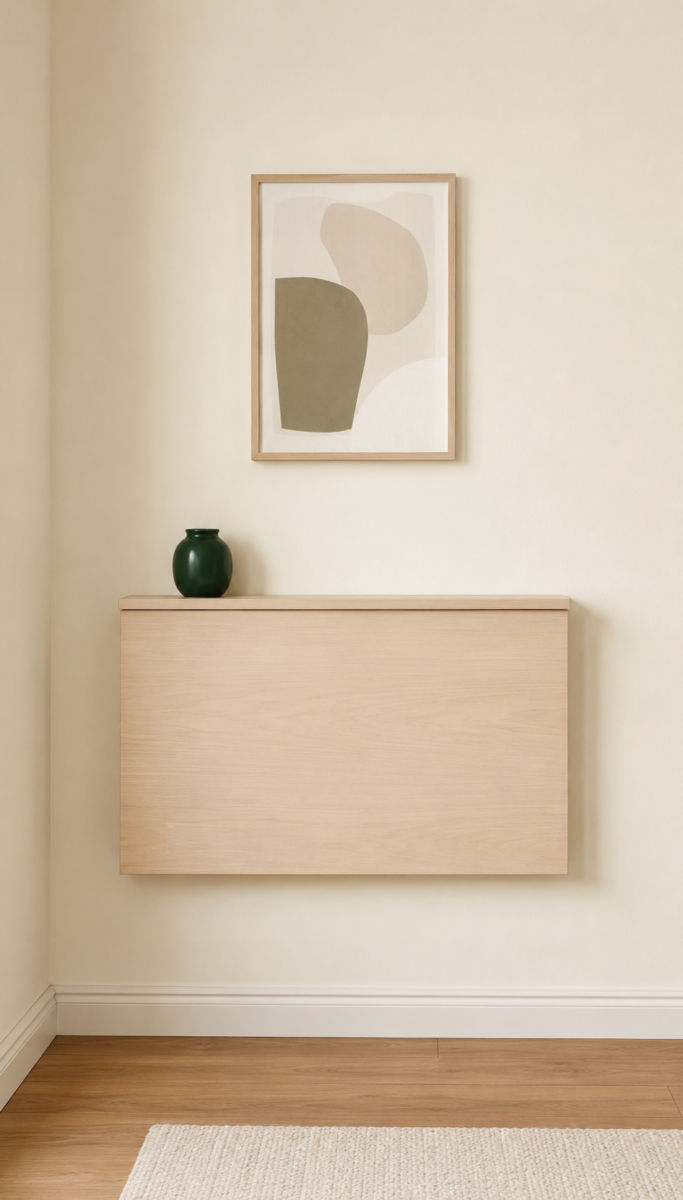
A closing or foldable desk matters more than almost any other piece in a living-room-office combo. A wall-mounted fold-down desk, or a slim desk with a drawer deep enough to hide a laptop and papers completely, lets the workspace disappear in under a minute rather than staying visible as a constant reminder of Monday.
The Living Room and Guest Room Combo
A living room that also hosts overnight guests works best when the sleeping function is entirely contained in one piece of furniture, rather than spread across a room that has to be rearranged every time someone stays over. A sofa bed or daybed handles this directly. What often gets missed is guest storage: sheets, an extra pillow, and a towel need a home that isn’t a frantic search through a hall closet at 11pm the night someone arrives.
A dedicated bin or small section of a nearby closet, stocked ahead of time with exactly what a guest night needs, turns this from a production into a five-minute setup. Keep it separate from your everyday linens so it’s never accidentally depleted, and so pulling it out doesn’t require digging through unrelated storage first.
The Living Room and Home Office Combo
A living room doubling as a home office needs the workspace to visually disappear at the end of the workday, or the room starts to feel like an office that occasionally allows television, rather than the reverse. This is less about the desk’s size and more about whether closing the laptop actually ends the visual presence of “office” in the room.
A closing desk handles most of this. What helps beyond that: keeping work supplies in a single closed container, a bag, a drawer, or a small rolling cart, rather than letting notebooks and chargers spread across the coffee table during the day. If the desk chair doesn’t match the room’s other seating, angling it away from the main sightline when it’s not in use keeps it from reading as a second, mismatched piece of living room furniture.
The One Rule That Makes Any Combo Work
Whatever the second (or third) function of your living room is, build a genuine end-of-use routine for it, the physical act of closing the desk, folding the sofa back, or putting the guest linens away, and treat that routine as part of using the space, not an optional extra step. A multi-purpose room that skips this reset drifts toward whichever function was used most recently, and stops feeling like a living room at all within a few weeks.
This routine doesn’t need to take long. A desk that closes in ten seconds and a sofa bed that folds up in under a minute mean the whole reset for most multi-purpose rooms takes under two minutes total. The point isn’t effort. It’s consistency, doing it every time rather than “when I remember to,” so the room reliably defaults back to being what it’s supposed to be most of the time.
Common Mistakes
The most common mistake in a multi-purpose living room is buying furniture that compromises on both jobs instead of doing either one well, a desk too flimsy for real work and too visually “officey” to blend in, or a sofa bed with a mattress so thin it barely functions as a bed while still looking like one all day. A few other patterns worth watching for:
- Skipping the end-of-use routine because it feels like extra effort. The two minutes it takes pays for itself every single time the room needs to feel like a living room again.
- Storing secondary-function supplies with everyday items. Guest linens mixed in with regular bedding, or work supplies scattered across regular living room storage, makes both functions harder to maintain.
- Choosing furniture that looks like a compromise. A sofa bed or desk that clearly announces its dual purpose at all times undermines the whole point of a multi-purpose plan, which is a room that looks intentional, not one that looks like it’s making do.
By the time all of this is in place, the room stops feeling like it’s juggling three identities and starts feeling like a living room that happens to be capable of more, which is really the difference this whole guide has been pointing toward. Guests get a real bed without a week of advance planning. Workdays end when the desk closes, not when you finally give up ignoring it. And on an ordinary Tuesday evening, with nothing scheduled and no one staying over, the room just looks like a living room, calm and settled, exactly as it should.
Noticing When a Room Has Drifted
Even a well-planned multi-purpose room can slowly drift toward whichever function gets used most, and catching that early is easier than fixing it after it’s been happening for a month. A few honest signs worth checking for occasionally: the desk hasn’t fully closed in over a week, work supplies have quietly claimed a permanent spot on a shelf that used to hold living room items, or the guest linen bin has been raided for everyday use and never restocked.
None of these are failures exactly. They’re just the normal pull of a room being used the way it’s actually needed most that week. The fix is simply noticing and resetting, the same two-minute routine covered above, rather than letting a temporary shift become the room’s new permanent default without anyone deciding that on purpose.
FAQ
Is a sofa bed comfortable enough for regular guest use? Quality varies a lot by model. Look for a mattress at least 4 to 5 inches thick with individually wrapped coils rather than a thin foam pad, which is the detail that most affects whether guests actually sleep well.
How do I keep a home office from taking over my living room visually? Prioritize furniture that fully closes or folds away, and store work supplies in one container rather than letting them spread across shared surfaces during the day.
What’s the fastest way to prep a living-room guest space? Keep a dedicated bin of sheets, a pillow, and a towel stocked ahead of time, separate from your everyday linens, so a guest night takes minutes instead of a last-minute scramble.
Do I need special furniture, or can I make my current setup multi-purpose? Often your current setup, or a small furniture swap, gets you most of the way there. The bigger factor is usually building the end-of-use routine, not necessarily buying new pieces.
Can a small living room really handle three functions well? Yes, as long as no more than one secondary function is “out” at any given time. A living room, guest room, and office can share one space as long as each one has a real off state and a routine that returns to it.
Related Reading
- The Complete Small Living Room Guide — the full layout, storage, and style sequence this guide fits into
- Small Living Room Layout Guide — furniture arrangements that work around a fireplace, a window wall, or a single entry point
- Small Living Room Storage Guide — storage that doesn’t need a built-in wall unit
- Complete Guide to Multi-Purpose Living Rooms — related Taims Space guide.
- Living Room and Guest Room in One Space — related Taims Space guide.
- Living Room and Home Office — related Taims Space guide.
- Furniture That Does Two Jobs at Once — related Taims Space guide.
- Complete Guide to Small Living Room Layouts — related Taims Space guide.
Category: Multi-Purpose Living Rooms Hub: /small-living-rooms/
Reviewed by the Taims Space editorial team.