
Table of Contents
Two apartments can do the exact same amount of organizing in a year and end up in completely different places. The difference usually isn’t effort. It’s timing.
Reset your entryway before the season that actually fills it with clutter, not after, and the same hour of work does twice the good. Wait until a closet is already overflowing to deal with it, and that same hour barely makes a dent. This guide breaks the seasonal reset down room by room, for each of the four seasons, so you know exactly what to touch and when, instead of guessing your way through a general cleaning list.
If you haven’t read it yet, the Complete Seasonal Reset Guide covers the bigger-picture order (reset, then challenge, then maintain) that this checklist slots into. Here, we’re going deeper into the specific, room-level tasks for each season.
Why Timing Matters More Than How Much You Do
The right seasonal reset task done at the right time takes five minutes and prevents a problem. The same task done three months late can take an hour and still only partially fix it. Timing, not effort, is what makes a reset actually work.
Take smoke and carbon monoxide detector batteries as an example. The National Fire Protection Association recommends testing alarms monthly and replacing batteries at least once a year, and the standard advice, “change your clock, change your batteries,” ties that swap to the two clock changes every American household already experiences each spring and fall. Skip that ten-second habit and the stakes are real: roughly three out of five home fire deaths happen in homes with no smoke alarm or a non-working one, according to NFPA data. Attaching this task to a date you’re already marking on the calendar is what makes it stick.
The same logic applies to lower-stakes tasks. Swapping your closet’s seasonal clothing before the temperature actually shifts means you’re never digging through the wrong season’s clothes on a day you need the right ones. Checking storage bins for humidity damage before summer’s peak humidity arrives, not after you’ve already noticed a musty smell, is the difference between a five-minute wipe-down and pulling everything out to air dry. Every checklist below is built around this idea: doing the right thing right before the season needs it, not scrambling to catch up once it’s already a problem.
Spring Reset Checklist, Room by Room
Bedroom. Swap heavy winter bedding for a lighter comforter or quilt, and store the winter set in a breathable bag rather than plastic, which traps moisture. Rotate seasonal clothing: winter coats and boots move to the back of the closet or top shelf, spring layers move to eye level. Check under the bed for anything that migrated there over winter (it always does).
Kitchen. Wipe down the inside of cabinets you don’t open daily, since these collect the most unnoticed dust and crumbs over a closed-up winter. Check expiration dates on spices and pantry staples bought before the holidays. If you have a window that gets blocked by winter condensation, this is the season to actually clean the glass and sill.
Living room. Move heavier textiles (thick throws, dark-toned pillow covers) into storage and bring out lighter fabrics. Vacuum under furniture that hasn’t been moved since fall. Check houseplants for winter damage from dry heat and reposition anything that needs more spring light.
Entryway and closets. This is the highest-priority spring stop. Swap winter coats, boots, and heavy accessories for lighter jackets and shoes, and do a genuine look inside every storage bin rather than just the ones on top. A national cleaning survey found that 75% of Americans who spring clean specifically target storage spaces like closets and under-bed bins, more than almost any other category, which tells you where the buildup actually is.
Summer Reset Checklist, Room by Room
Bedroom. Check for musty smells in closets or under-bed storage, since summer humidity is when these first show up. Swap heavier curtains for lighter ones if your space gets hot, and consider a small dehumidifier if a closet feels damp to the touch.
Kitchen. Clean the refrigerator coils and check the door seal, both of which work harder in summer heat. Empty and wipe down any pantry shelf storing snacks, since summer heat speeds up staleness. If you use a window AC unit, this is the reset where you check and clean the filter before running it daily.
Living room. Relocate anything winter-specific still sitting in prime storage (the top shelf, the front of the closet) to the deepest, least accessible spot you have. You won’t need it for months, so let it stop taking up your best storage real estate.
Entryway. Do a five-minute sweep for new summer-specific clutter: sunscreen, water bottles, beach bags, and pool towels tend to pile up near the door faster than any other season’s gear. A small designated bin or hook for these items now saves a bigger cleanup in September.

Fall Reset Checklist, Room by Room
Bedroom. Reverse the spring swap: lighter bedding goes into storage, heavier comforters and flannel sheets come out. Rotate clothing again, moving summer pieces to the back of the closet and pulling sweaters and jackets forward. This is also the reset where a genuine “does this still fit the season and still fit me” pass through the closet earns its place.
Kitchen. Check your oven and stovetop before the season of more baking and more cooking begins in earnest. Wipe down cabinet fronts and handles, which pick up more contact in a season spent indoors more often. Restock pantry staples for soups and baked goods if that’s part of your fall routine.
Living room. Bring back heavier textiles and darker-toned accents. Check any wood furniture for dryness as heating systems start running again. This is also the reset where testing your heating system, if you’re able to, before the first genuinely cold night saves a much worse scramble in December.
Entryway and safety checks. Test smoke and carbon monoxide alarms and change the batteries, tied to the fall clock change as discussed above. Check weatherstripping around your front door and any windows for drafts. Swap in boots, umbrellas, and heavier coats near the door, and move summer sandals and beach gear to deep storage.
Winter Reset Checklist, Room by Room
Bedroom. Check closet doors and drawers for sticking, which is common as dry winter heat affects wood. Do an honest inventory of what’s actually being worn daily versus what’s sitting untouched, since a closet that felt right in October can feel cluttered again by January without a single new purchase.
Kitchen. Wipe down surfaces near the stove more often, since more indoor cooking in winter means more buildup. Check that pantry and cabinet doors close fully, since minor swelling or humidity shifts from running a heater can affect this.
Living room. This is the room you’ll spend the most hours in this season, so it’s worth a genuinely honest look at what’s cluttering it. A single overflowing basket or an unread stack of mail matters more in a room you’re sitting in for hours each evening than it does in a season you’re mostly outside.
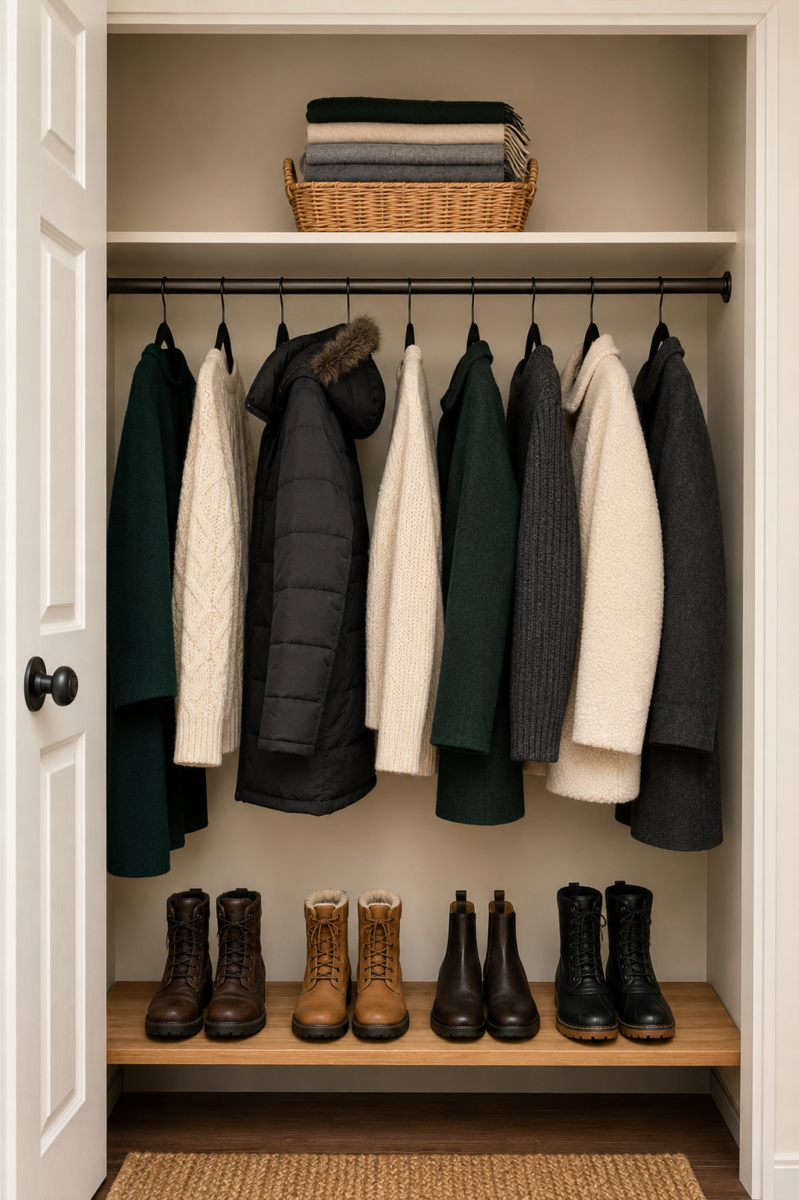
Entryway. Reset for heavy winter gear: boots, coats, scarves, and bags all get used harder in this season than any other, and a designated spot for wet or snowy items (a tray, a mat, a hook lower than the rest) prevents the pileup that otherwise ends up on your floor.
Turning This Into a Recurring Calendar, Not a One-Time List
A seasonal reset checklist only works if it’s attached to actual dates, not a vague intention to “get to it eventually.” Pick one weekend near the start of each season, put all four on a calendar at once, and treat them as fixed the way you would a recurring bill.
A useful anchor point for each:
| Season | Rough timing | Anchor it to |
| Spring | Early-to-mid March | The first genuinely warm weekend |
| Summer | Early-to-mid June | The first week school lets out, or a similar seasonal marker |
| Fall | Mid-September | The first week temperatures drop below 60°F |
| Winter | Early December | The weekend after Thanksgiving, before holiday guests arrive |
Anchoring each reset to a real-world marker, rather than a specific calendar date, means the timing naturally adjusts if a season runs early or late where you live. It also means you’re never reaching for a checklist in a panic; you already know roughly which week it’s coming.
Starting Mid-Year: What to Do If You’re Behind
If you’re picking this up in the middle of a season you’ve already missed, don’t try to do all four seasons’ worth of catch-up in one sitting. Start with whichever room bothers you the most every single day, finish that one room’s current-season tasks, and let the rest wait for its proper turn on the calendar.
This matters because trying to catch up on everything at once recreates the exact problem a seasonal reset is designed to avoid: one exhausting session instead of four manageable ones. If it’s currently fall and you never did a spring or summer reset, skip straight to the fall checklist above rather than working backward through seasons that have already passed. The goal from here forward is simply to be on time for winter, not to retroactively fix a year that’s already gone.
Frequently Asked Questions
What’s the very first thing I should do in a seasonal reset? Start with your entryway and closets. These two spaces collect the most seasonal buildup, and they’re also the ones you interact with daily, so fixing them first gives you the fastest, most noticeable payoff for the least time invested.
How do I remember to actually do this every season? Anchor each reset to a real-world event rather than a specific date: the first warm weekend, the week temperatures drop, the weekend after Thanksgiving. Put all four on a calendar at the start of the year so you’re never caught off guard.
Do I need to do every single task on each seasonal checklist? No. Treat these as a menu, not a mandate. If your kitchen never accumulates much clutter, spend less time there and more time on whichever room actually needs it. The room-by-room format exists so you can prioritize, not so every box has to be checked.
What if I move mid-season and miss a reset entirely? Pick up with whichever season is current when you’re settled, and don’t try to backfill the one you missed. A move already involves its own version of decluttering and organizing, which typically covers most of what a missed seasonal reset would have addressed anyway.
How long should a single room take during a seasonal reset? Fifteen to twenty minutes per room is typical when you’re keeping up with the previous season. A room you’re catching up on after a skipped season can take thirty to forty-five minutes, since there’s more backlog to clear in one pass.
Related Reading
- The Complete Seasonal Reset Guide — the bigger-picture decision order (reset, then challenge, then maintain) this checklist fits into: https://taimsspace.com/the-complete-seasonal-reset-guide/
- Decluttering Challenge Guide — for when one specific space has outgrown a simple seasonal reset and needs a deeper overhaul: https://taimsspace.com/decluttering-challenge-guide/
- Home Maintenance Routine Guide — the daily and weekly habits that keep these seasonal resets from piling up in the first place: https://taimsspace.com/home-maintenance-routine-guide/
- Category: Seasonal Resets — every seasonal checklist and reset guide in one place: https://taimsspace.com/seasonal-resets/
- Hub: Seasonal & Maintenance — the full Maintain-stage hub, covering resets, challenges, routines, and move checklists: https://taimsspace.com/the-complete-seasonal-reset-guide-2/
- Decluttering Challenge Guide — related practical guide on Taims Space.
- Home Maintenance Routine Guide — related practical guide on Taims Space.
- Seasonal Reset System — related practical guide on Taims Space.
- The Complete Seasonal Reset Guide — related Taims Space guide.
- Spring Reset Checklist — related Taims Space guide.
- Fall Reset Checklist — related Taims Space guide.
- Rotating Seasonal Storage — related Taims Space guide.