Table of Contents
The common advice for shoe storage is always some version of “get a shoe rack for the closet floor.” That works fine if there’s floor to put it on. In a small closet already holding a hamper, a vacuum, and whatever else didn’t fit anywhere else in the apartment, there usually isn’t. The floor is the one zone in a small closet that fills up first and stays full, which means shoe storage that depends on floor space is the wrong solution before it even gets tried.
The fix is to stop thinking about shoes as a floor problem and start thinking about them as a height problem. Over-the-door organizers, stackable cubes, and hanging pocket systems all store a full shoe collection using vertical space that’s currently doing nothing, without needing a single square foot of the closet floor.
Over-the-Door Organizers: The Highest-Capacity Option With Zero Floor Footprint
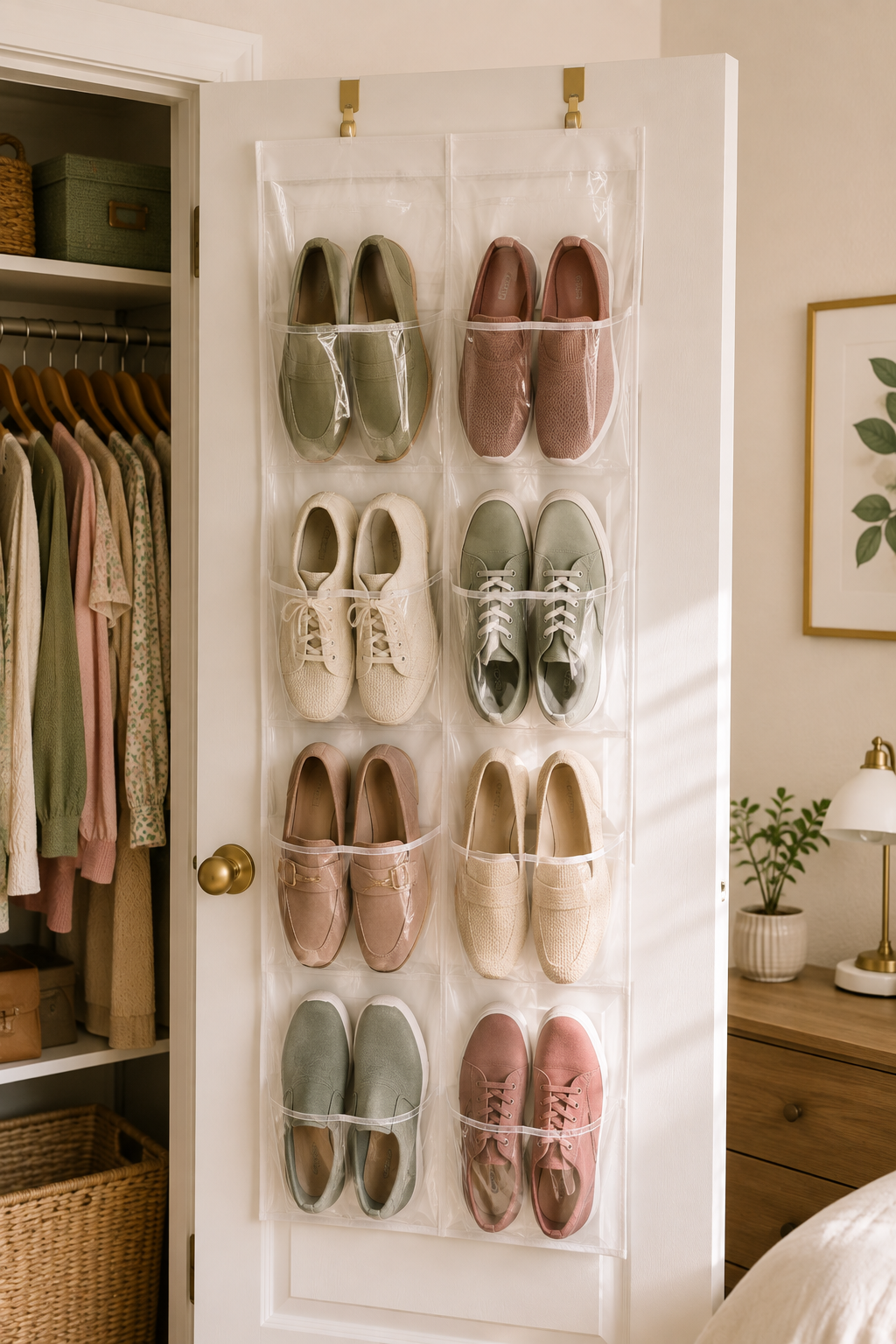
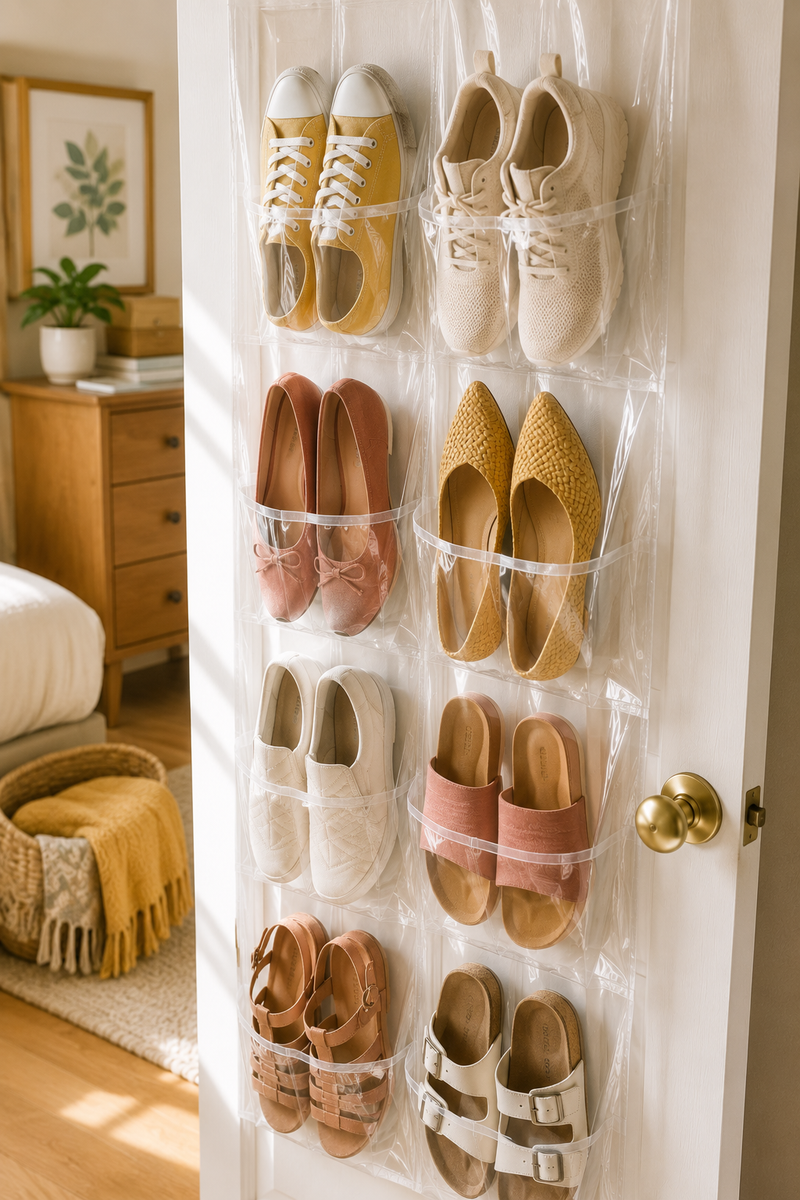
An over-the-door shoe organizer with clear pockets hangs directly on the top edge of the closet door using built-in hooks, no tools, no adhesive, no drilling. A standard version holds 12 to 24 pairs depending on the number of rows, which for most people covers an entire shoe collection in the exact footprint the door was already taking up.
The trade-off is depth. Because the organizer sits flush against the door, check that it doesn’t add enough bulk to catch on a shelf or a rod when the door swings shut, especially in a closet where the door opens into a tight space. Load the organizer fully and do a complete open-and-close test before considering the setup finished, since a pocket that looked fine half-empty can shift and catch once every slot is full.
Clear pockets matter more here than they might for other closet storage, since you’re looking through several rows at once to find a specific pair. Solid fabric pockets work visually but slow down the actual “grab my shoes and go” moment that matters most on a weekday morning.
Stackable Shoe Cubes: Best When the Shelf Has Room but the Floor Doesn’t
If the closet has an existing shelf with unused vertical clearance above it, stackable shoe cubes turn that gap into shoe storage without touching the floor at all. Each cube typically holds one pair and stacks directly on top of another, so a column of four or five cubes takes up the same footprint as a single shoebox while holding a full row’s worth of pairs.
This option works especially well for shoes you want visible and easy to grab without digging, since many stackable cubes have a front flap or an open face rather than a fully enclosed lid. It’s a better fit for everyday shoes in regular rotation than for once-a-year occasion shoes, which are better suited to a closed bin further back on the shelf.
Measure the clearance between the shelf and the ceiling or the rod above it before buying a full stack. Most cubes run 5 to 6 inches tall each, so four stacked cubes need at least 20 to 24 inches of clear vertical space, more than some closets actually have above a single shelf.
Hanging Pocket Organizers: Best for a Rod With Spare Width
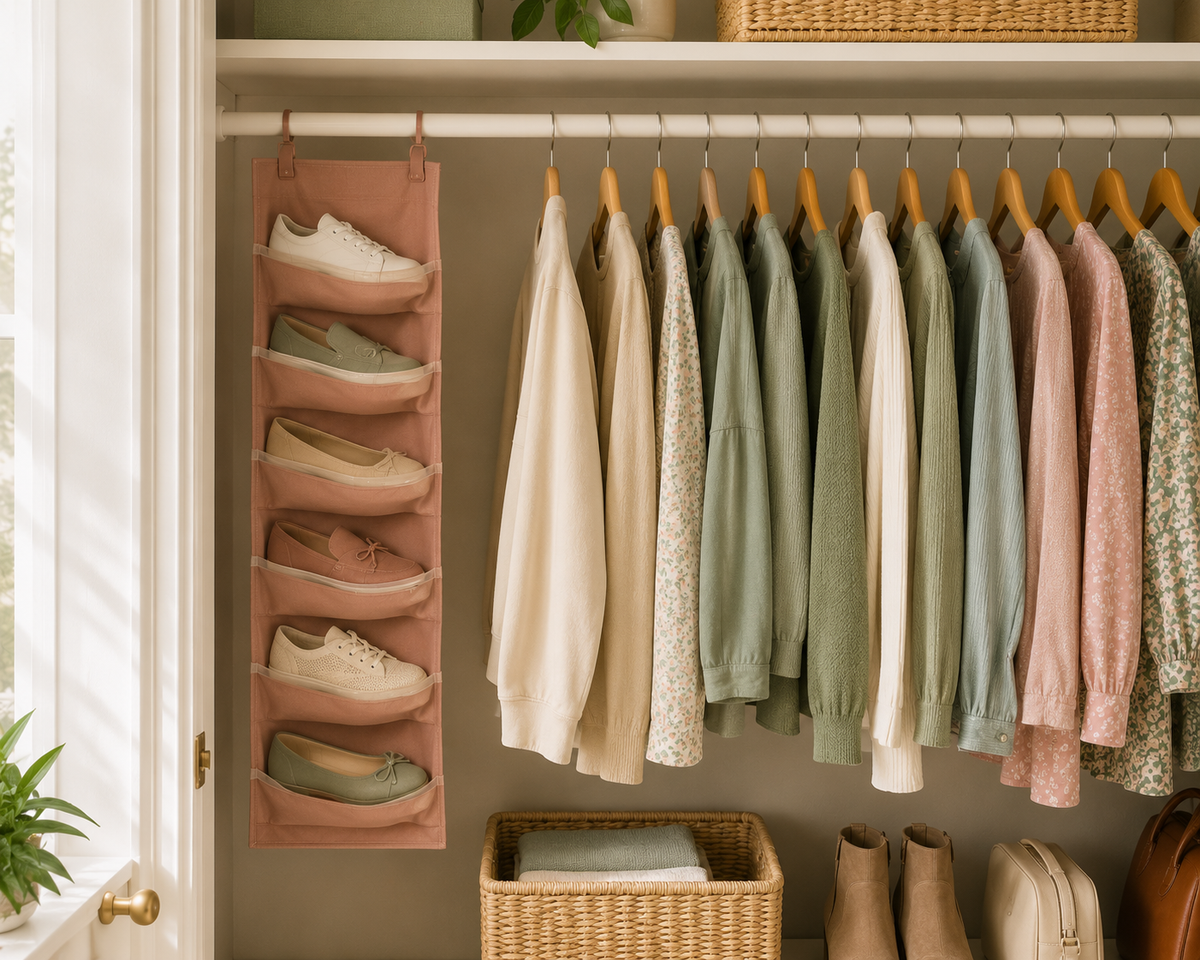
A fabric hanging shoe organizer, the kind with a hook at the top and a column of pockets down the length, clips directly onto the existing closet rod and hangs alongside clothes rather than needing its own dedicated space. This works best in a closet where the rod has some unused width left after clothes are hung, since the organizer itself takes up 10 to 14 inches of hanging space once it’s loaded.
Because it hangs at roughly the same height as clothing, it puts shoes at eye or chest level rather than down at the floor, which some people find easier for daily use even when floor space technically exists. The trade-off is that it competes directly with hanging clothes for rod space, so it’s the wrong choice for a closet where the rod itself is already the tightest zone.
For anyone using a tension-mounted double rod to add hanging capacity, a hanging shoe organizer fits naturally on the lower rod, where shorter clearance items already live, rather than competing with full-length clothes on the top rod.
Matching Which Option to the Specific Obstacle in Your Closet
Not every small closet has the same shoe problem, so the right fix depends on which specific constraint is actually limiting the space.
If the floor is completely full and there’s nowhere left to add a rack, the over-the-door organizer solves it without needing any floor space at all, since it uses the door itself.
If the shelf has unused vertical clearance above it but the floor and rod are both maxed out, stackable cubes turn that dead air into a genuine second storage zone.
If the rod has spare width but the shelf and floor are both full, a hanging pocket organizer uses that unused rod space instead, without touching either of the other two zones.
Most closets end up combining two of these rather than relying on just one. A closet with 20 pairs of shoes rarely fits them all in a single system, but splitting daily-rotation shoes onto the over-the-door organizer and occasional-use pairs into stackable cubes on the shelf covers the full collection without any of it sitting loose on the floor.
A Common Mistake: Storing Every Pair the Same Way
Not every shoe deserves the same storage treatment, and treating a full collection identically is a common reason these systems feel crowded within a few months. Daily-rotation shoes (the two or three pairs actually worn most weeks) belong somewhere fast to grab, like the over-the-door organizer’s bottom rows or a hanging pocket at chest height. Occasional shoes (dress shoes, specific-occasion pairs) can go higher up in stackable cubes, since reaching for them less often means the extra step doesn’t matter.
Genuinely seasonal shoes, heavy winter boots or beach sandals, are usually better off in seasonal under-bed storage entirely rather than taking up closet shoe-storage space year-round for something worn three months out of twelve.
What to Do When You Genuinely Have Too Many Shoes for Any System
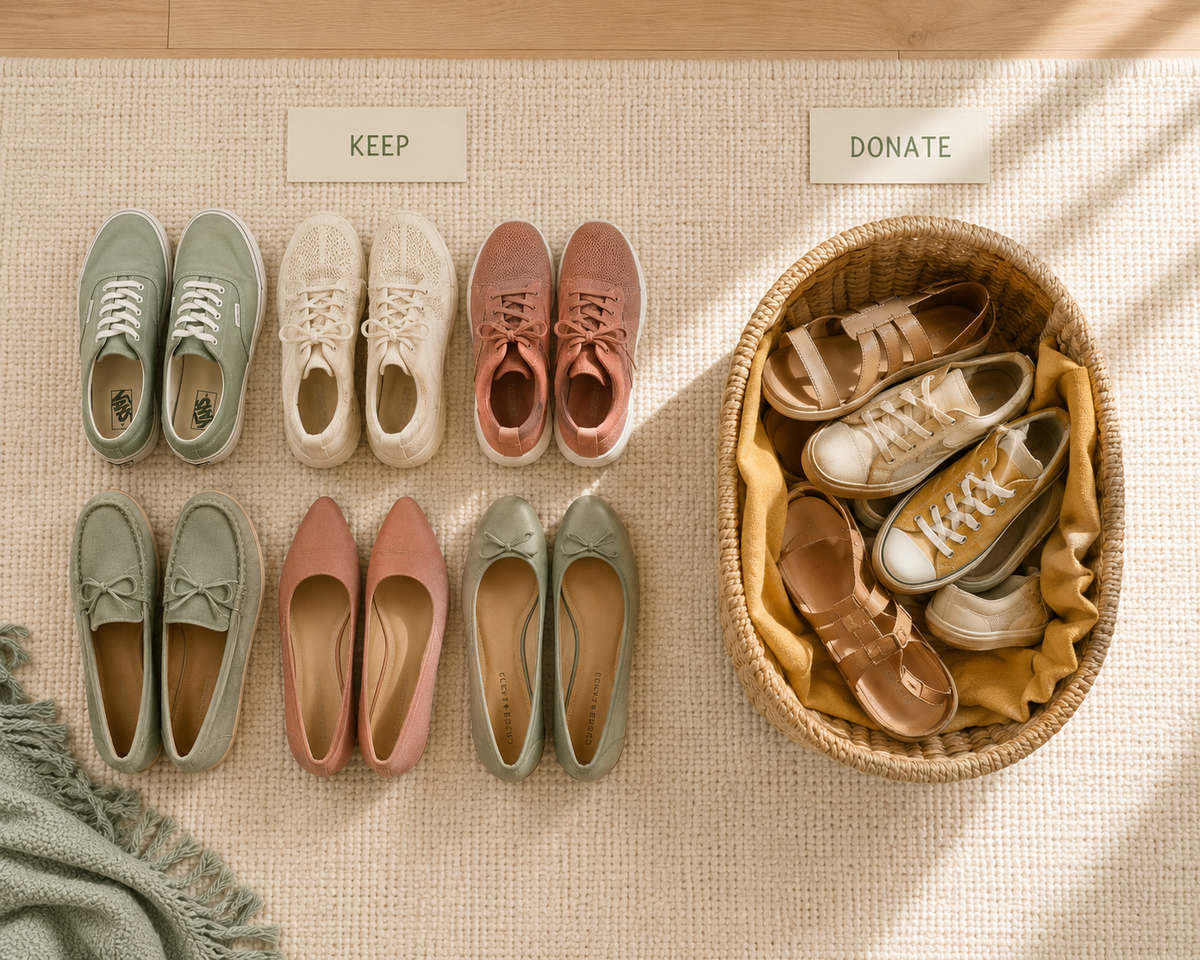
Sometimes the honest answer isn’t a better storage system, it’s fewer shoes than the closet is being asked to hold. Before buying a second over-the-door organizer or stacking cubes three columns deep, it’s worth doing a quick count: lay out every pair currently in the closet and sort them into three piles, worn in the last three months, worn in the last year but not recently, and not worn in over a year.
That third pile is usually the honest answer to a shoe storage problem that no organizer will fully solve. A pair that hasn’t been worn in over a year, barring a genuinely rare occasion item like a specific wedding shoe, is rarely coming back into rotation. Donating or reselling that pile before adding more storage capacity is often the faster, cheaper fix compared to buying a second or third storage system to accommodate a collection that’s grown past what the closet can reasonably hold.
For the shoes that remain after that sort, the systems in this guide should comfortably fit a realistic, actively-worn collection without needing to stack storage three or four layers deep just to make everything fit.
Combining Systems Without Overcrowding the Door or Rod
When a closet genuinely needs two of these systems working together, like an over-the-door organizer for daily shoes and stackable cubes for occasional pairs, it helps to assign each system a clear, separate category rather than letting overflow from one spill randomly into the other. Daily sneakers and flats stay in the door organizer’s lower, easiest-to-reach rows. Dress shoes and occasion pairs go into the shelf cubes, where the extra step to reach them doesn’t matter because they’re worn less often.
This kind of clear division prevents the most common failure mode with combined systems: shoes ending up wherever there happened to be an empty pocket that day, which within a few weeks turns two organized systems back into the same guessing game the closet had before either was installed. A five-second rule works well here. If finding a specific pair takes more than five seconds of searching, the category assignments need a quick reset, not a third storage system.
FAQ
How many pairs of shoes fit in a standard over-the-door organizer? Most versions hold 12 to 24 pairs depending on the number of rows, usually 6 to 12 rows with two shoes per pocket.
Will an over-the-door shoe organizer damage a rental door? No. These hang from hooks over the top edge of the door with no adhesive, screws, or drilling involved, and remove without leaving any marks.
What’s the best option if my closet has no shelf and no extra rod width? The over-the-door organizer is the strongest fallback in this case, since it only depends on the door itself and doesn’t compete with the rod or shelf for space.
Should heels and boots be stored differently than flats and sneakers? Heels generally do better upright in a stackable cube or a dedicated pocket, since laying them flat over time can bend the heel structure. Boots take up more vertical space, so they’re often better suited to a shelf bin or seasonal under-bed storage than a shallow over-the-door pocket.
Related Reading
For the full four-zone system this shoe storage plugs into, The Complete Small Closet Organization Guide covers the rod, floor, and shelf zones alongside this one.
If the closet needs a second rod or shelving unit before any of these shoe options have room to work, Closet Systems That Fit a Small Space Without a Renovation covers the no-drill additions that create that space first.
And if seasonal boots or sandals are crowding the shoe storage year-round, How to Store Off-Season Clothes in a Closet With No Extra Room covers where those pairs should go instead.
For the full category, browse Closet Organization under the Organization & Storage hub, home to every small-closet and storage-system guide on the site.