Table of Contents
Say your number out loud for a second. Maybe it’s $150. Maybe it’s $500. Whatever it is, you’ve probably already looked at a few “budget bedroom makeover” posts and felt like the number they had in mind was still bigger than yours, or the room they showed still looked like it cost more than they claimed.
Here’s the actual answer: a small bedroom looks finished based on where the money goes, not how much of it there is. Two people can spend the exact same $300 and end up with completely different results, because one of them spent it on the handful of things that actually change how a room feels, and the other spread it thin across a dozen small purchases that barely register.
This guide covers exactly where to put real money first, what to skip without regret, and how to stretch what’s left.
Spend Here First: Lighting and Bedding
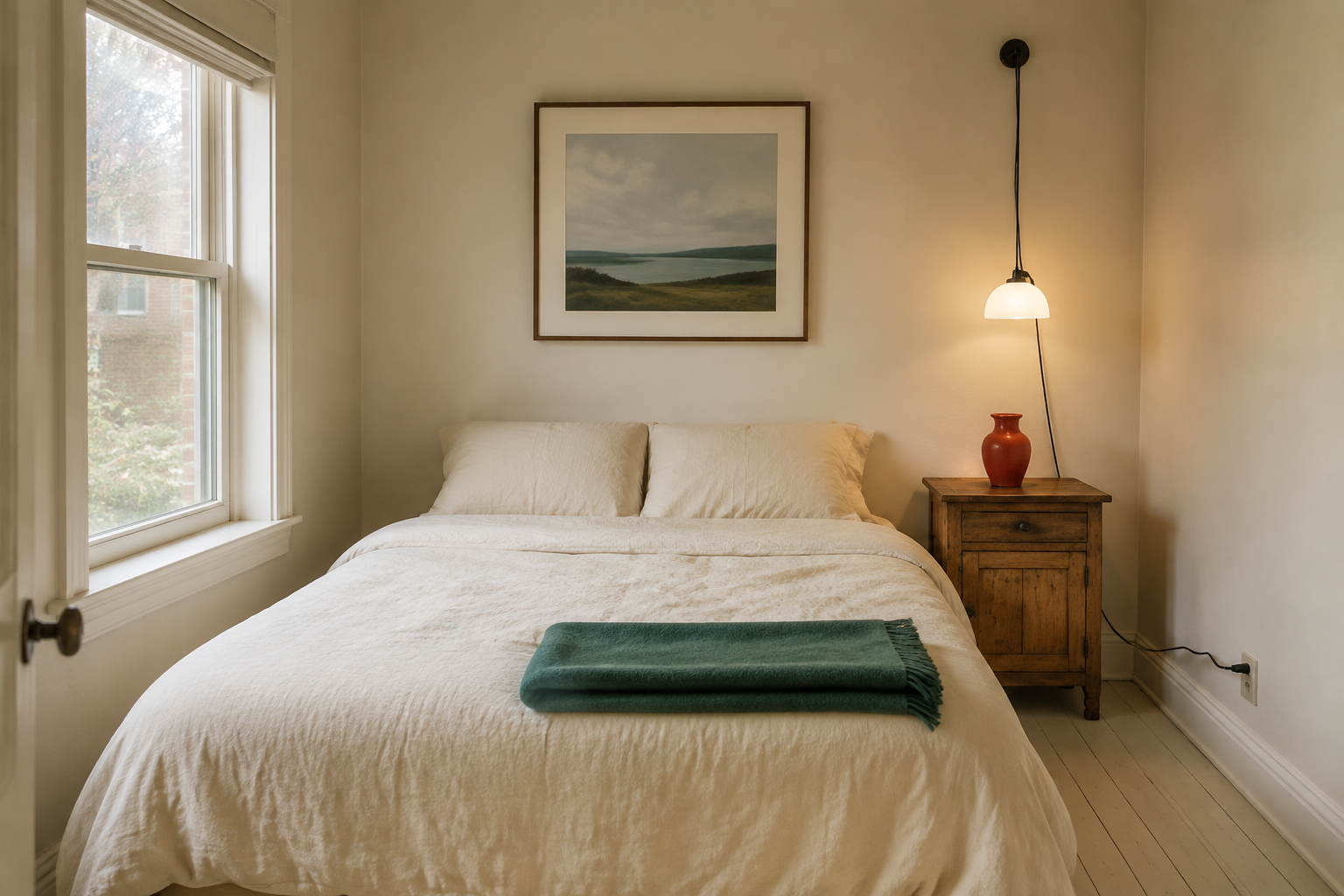
If your budget is genuinely tight, put the first real dollars toward lighting and bedding before anything else, because these two categories do more visible work per dollar than any other purchase in the room.
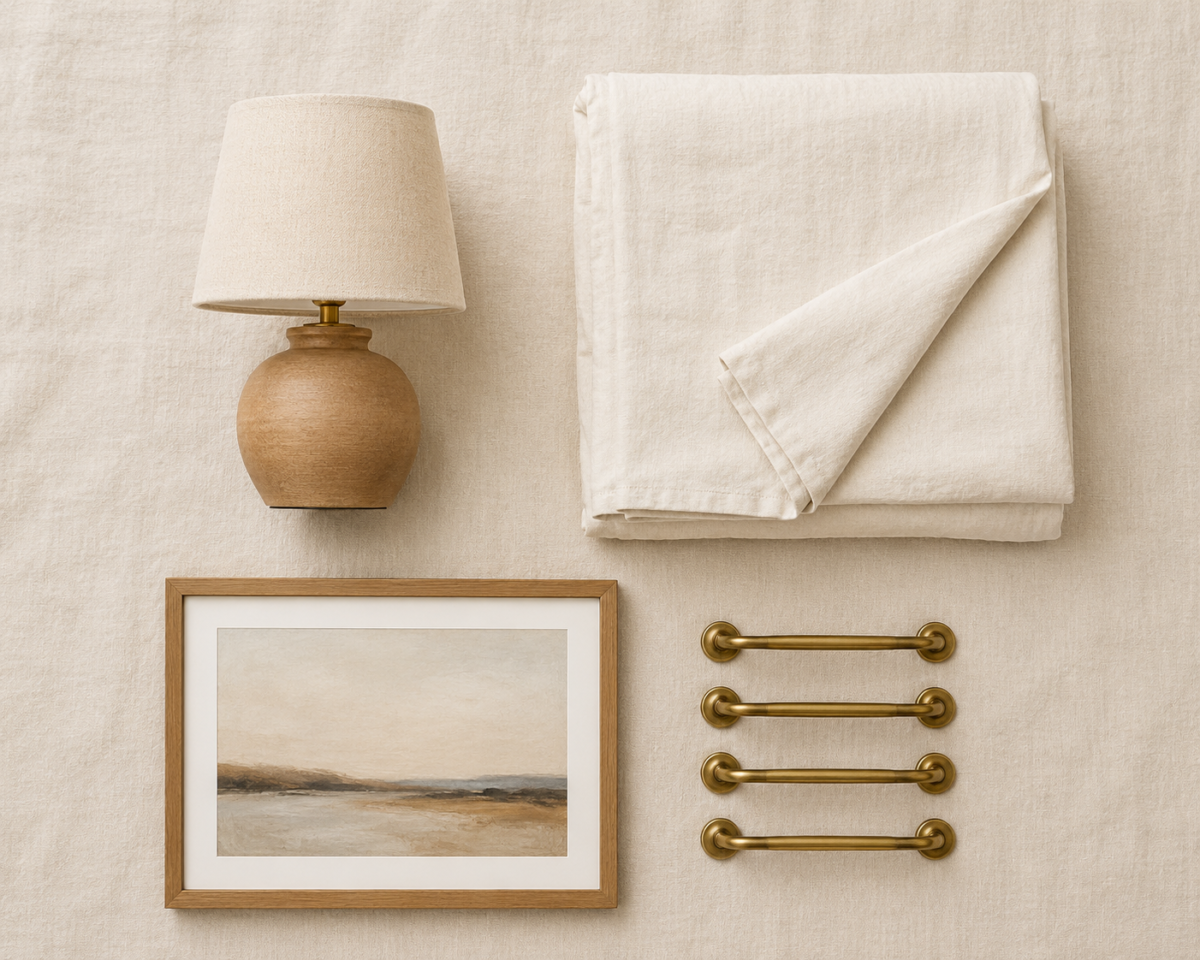
One warm-bulb lamp, in the $20 to $40 range, changes how every other color and object in the room reads, which the small bedroom lighting guide covers in more depth if you want the full layering strategy. And one genuinely good textile layer on the bed, a real linen or cotton duvet cover rather than a thin polyester one, does more for how “finished” a room looks than five smaller decor purchases combined, because the bed takes up more visual space than anything else in a small bedroom.
If you only have room in the budget for two purchases this month, make them these two. Everything after this section is optional by comparison.
Spend Here Second: One Real Piece Instead of Five Small Ones
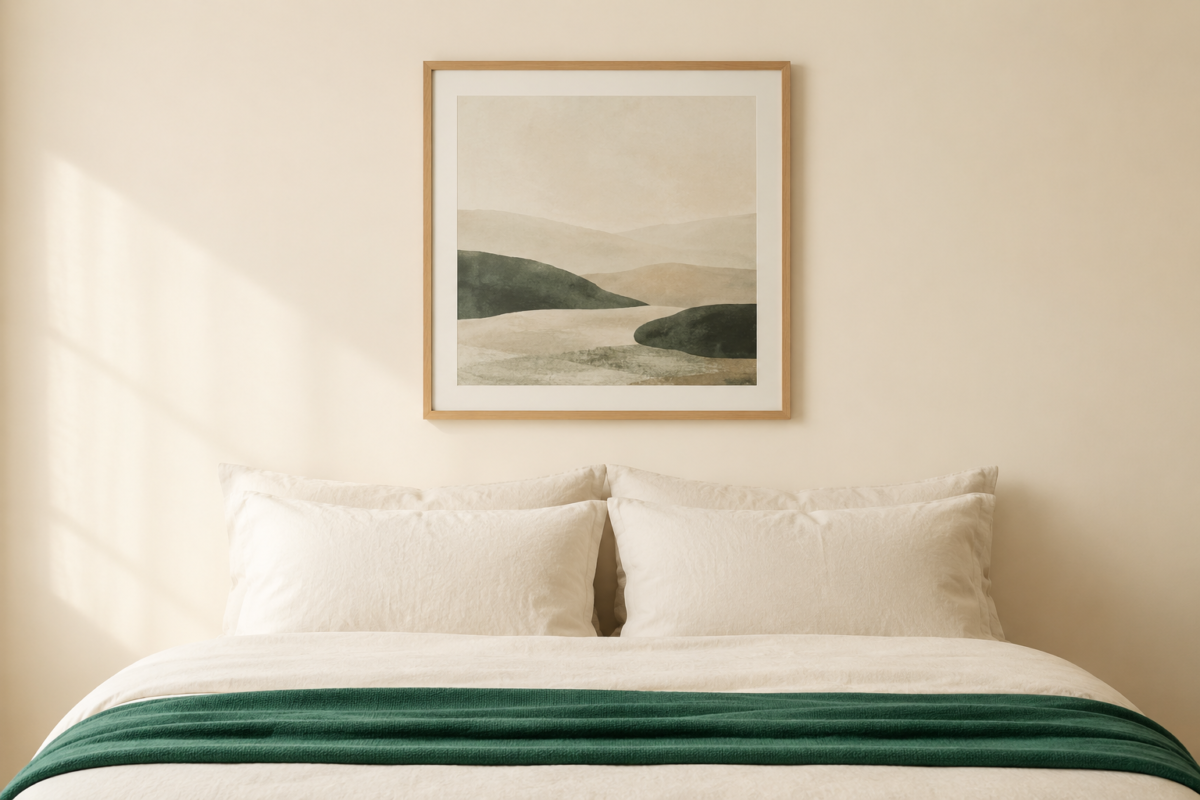
Once lighting and bedding are handled, the next-best use of a limited budget is one piece with real presence, a framed art print, a woven rug, or a substantial throw pillow in a genuinely good fabric, rather than a handful of small trinkets spread across every surface.
A single $40 to $60 art print, properly framed and hung at eye level, reads as considered. Five $8 items scattered across a dresser and a shelf read as cluttered, no matter how individually nice each one is. Small budgets get spent thin more often than they get spent wrong, and thin spending is the harder mistake to see coming, because every individual purchase felt reasonable at the time.
Skip This: Matching Furniture Sets
A matching bedroom set, nightstand, dresser, and headboard all from the same collection, is one of the most common overspends in small bedroom decorating, and it’s rarely necessary. A single well-chosen nightstand in a compatible wood tone or finish reads just as intentional next to an existing dresser as a matched set does, as long as the finishes are close enough in warmth and undertone to not visibly clash.
Save the money a full matching set would have cost and put it toward lighting, bedding, or the one real statement piece from the sections above. A room built from a few genuinely good, mismatched pieces almost always looks more collected than one built from a single discount furniture set.
Skip This: A Full Furniture Overhaul When One Piece Will Do
Before replacing an entire piece of furniture, check whether the actual problem is the piece itself or just how it’s finished. A dated dresser with the wrong hardware often looks like an entirely different piece once the pulls are swapped for something in a warmer finish, a change that usually costs under $20 for a full set of new hardware. A nightstand in the wrong wood tone can sometimes be helped more by a warm bulb nearby than by outright replacement, since warm light shifts how a wood tone reads in the room.
Replace furniture when it’s genuinely too large, too damaged, or structurally in the way of your layout. Don’t replace it just because the finish doesn’t match your new palette when a cheaper fix might solve that instead.
Where Thrifted and Secondhand Actually Work
Secondhand furniture is one of the best budget levers available for a small bedroom, but only for certain categories. Solid wood dressers and nightstands are usually a strong secondhand buy, since older solid wood pieces tend to be better built than new budget furniture at the same price point, and a coat of the right hardware or a light refinish can update the look completely.
Mattresses, pillows, and anything that touches your skin directly are the one category worth buying new every time, regardless of budget. And large upholstered pieces, if your bedroom has room for a bench or a chair, are worth inspecting carefully secondhand, since reupholstering usually costs more than the piece saved you in the first place.
If a full secondhand and thrifted sourcing strategy is something you want to dig into further, the Budget Decor hub’s Thrift & Secondhand category covers sourcing, inspecting, and refinishing older pieces in more depth than fits here.
A Sample Budget Breakdown
At $150: one warm-bulb plug-in sconce or lamp, one linen or cotton duvet cover, one small framed print. This covers the two highest-impact categories and leaves the rest of the room to grow into over time.
At $300: everything above, plus a rug sized correctly for the bed’s footprint and a set of new hardware for an existing dresser or nightstand. This is usually enough to make a rental bedroom feel genuinely finished rather than in-progress.
At $500: everything above, plus one secondhand furniture piece, refinished or fitted with new hardware, and a second textile layer on the bed, like a woven throw or an extra pillow in a different texture. At this level, the room should feel complete rather than still “in progress.”
Frequently Asked Questions
What should I buy first when decorating a small bedroom on a budget? Start with a warm-bulb lamp or sconce and a real linen or cotton duvet cover before anything else. These two purchases change how the whole room reads more than any other category, and everything you buy after them will look better because of it.
Is it worth buying a matching bedroom furniture set? Usually not, especially on a tighter budget. A single well-chosen nightstand in a compatible finish next to an existing dresser looks just as intentional as a matched set, and the money saved goes further spent on lighting, bedding, or one real statement piece.
What’s the biggest waste of money when decorating a small bedroom? Spreading a limited budget across many small, low-impact purchases, several small trinkets or accessories, instead of concentrating it on one or two things with real presence, like lighting, bedding, or a single substantial art piece.
Is secondhand furniture actually a good idea for a small bedroom? Yes, especially for solid wood dressers and nightstands, which are often better built than new budget furniture at the same price. Skip secondhand for mattresses and pillows, and inspect upholstered pieces carefully before buying, since reupholstering often costs more than the piece saves you.
Related Reading
- Lighting is the highest-impact budget purchase in this guide. The small bedroom lighting guide covers the full layering strategy behind it.
- For the palette to build your budget purchases around, see color palettes that work in small bedrooms.
- For the full room sequence this budget guide fits into, the complete small bedroom decorating guide covers lighting, color, and texture in order.
- For more affordable styling approaches for this room, visit the Bedroom Decor category page.
- To see how this fits into organizing every room in a small home, start at the Small Bedrooms hub.