Table of Contents
You already know the room. You know exactly where the bed has to go because there’s only one wall long enough for it. You know the corner by the window collects clothes you meant to fold. And you’ve probably already tried to fix it by buying something, a lamp, a rug, a piece of art, without knowing if it was actually the right first move.
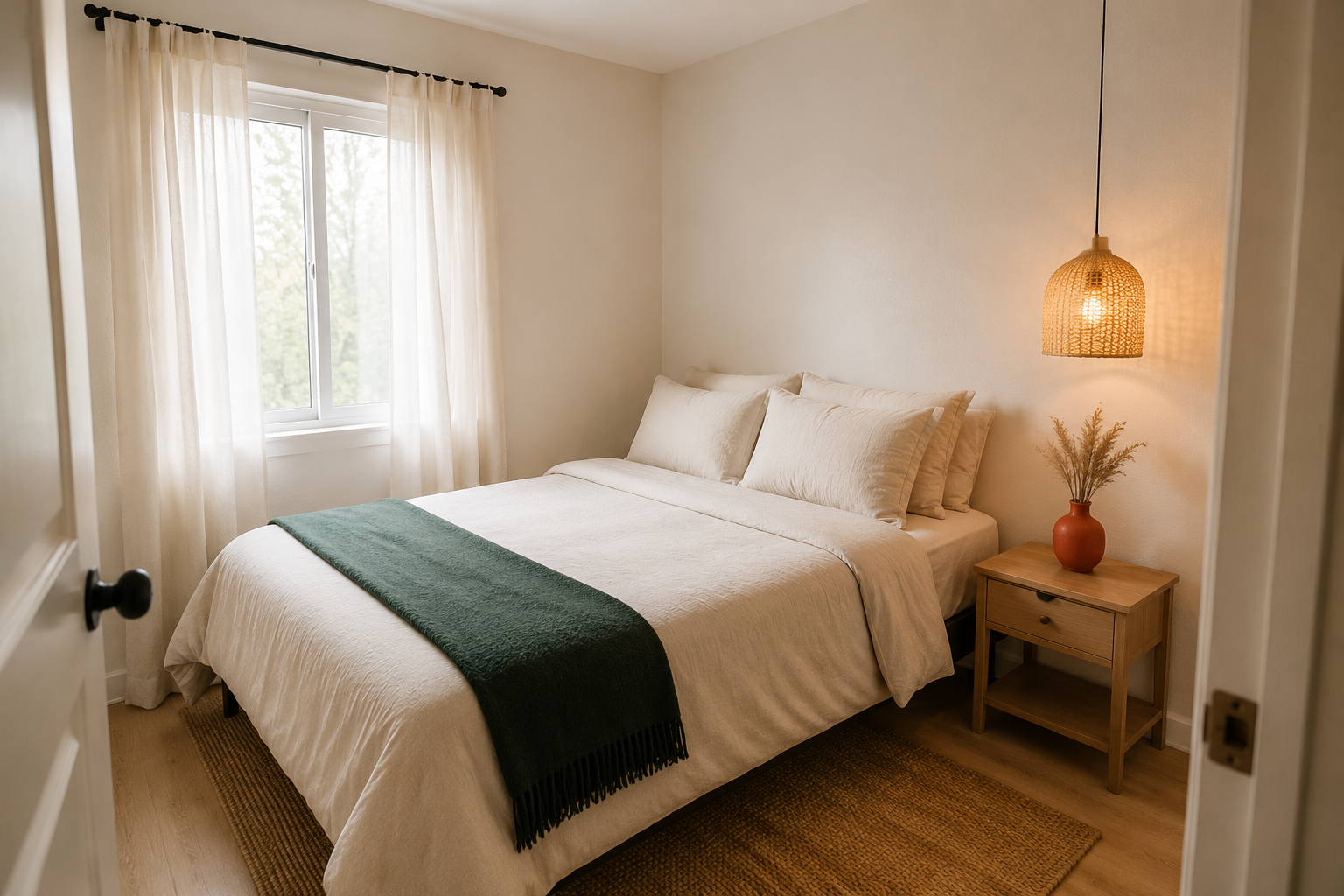
Here’s the order that actually works: light the room correctly first, build your color and texture around that light, then add the finishing touches last. Skip a step and the whole room fights itself. Get the order right and even a 100-square-foot bedroom can feel calm, considered, and genuinely yours.
This guide walks through that exact sequence, with specific choices for rental-friendly bedrooms, not vague inspiration.
Why Lighting Comes First in a Small Bedroom
Lighting comes first because it changes how every other decision reads. A rug looks like a different color under a cool white overhead bulb than it does under a warm lamp, and a wall color you loved on a paint swatch can go gray and flat under the wrong light. Fix lighting before you buy anything else, and every color, texture, and object you add afterward will actually look the way you intended.
Most rental bedrooms start with one overhead fixture and nothing else, which is the single biggest reason small bedrooms feel flat and dorm-like. A single source of light from directly above flattens shadows, washes out texture, and makes a small room feel smaller because there’s nowhere for the eye to rest.
Layer three types of light, not one
A bedroom that feels finished uses three layers working together instead of one bulb doing everything.
- Ambient light is your overall room glow, usually the ceiling fixture or a plug-in pendant. It should be soft enough that you’re not squinting, not so bright it feels clinical.
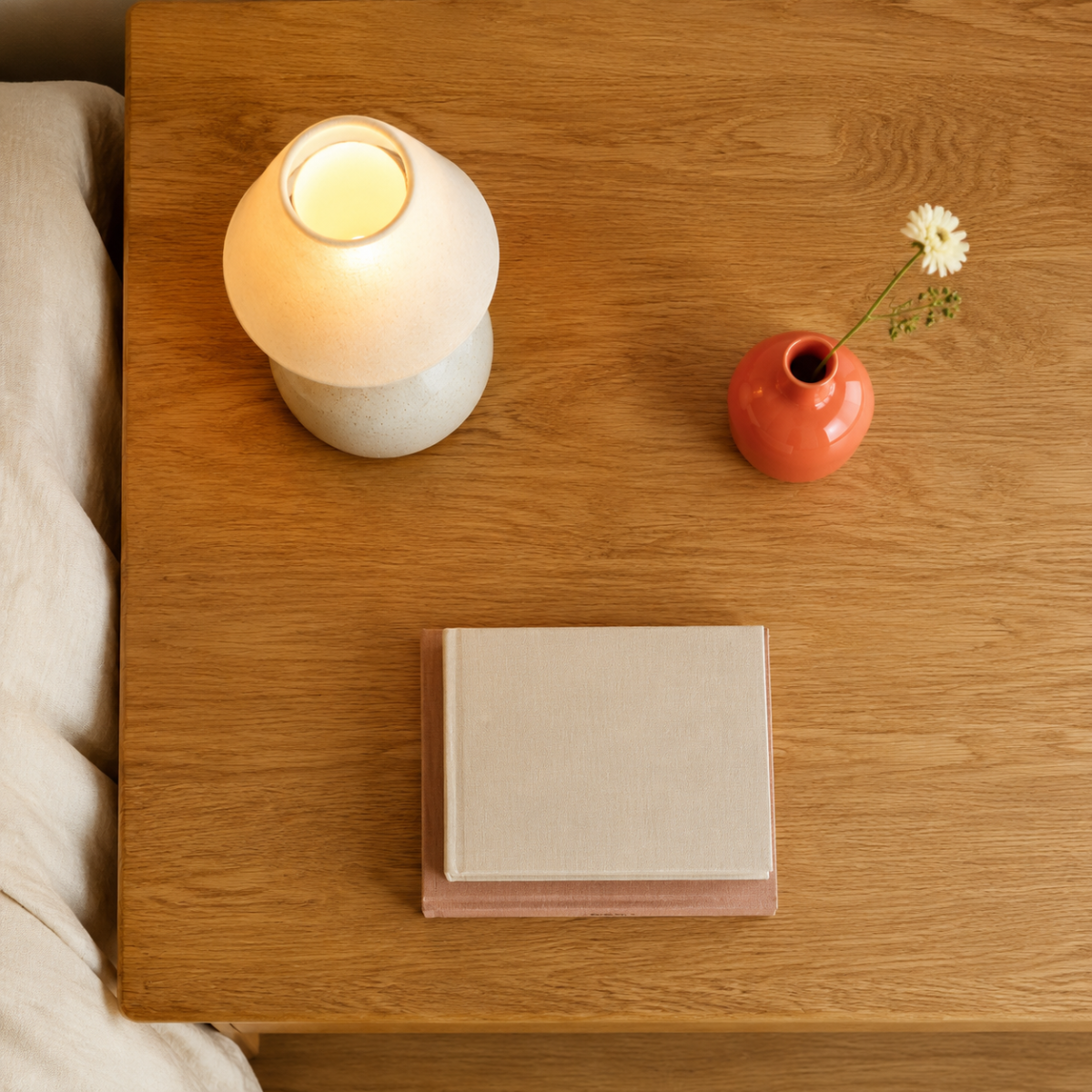
- Task light covers reading and getting dressed. A small clip lamp on the nightstand or a plug-in sconce beside the bed handles this without needing an outlet in the perfect spot.
- Accent light is the layer most small bedrooms skip entirely. A battery-powered puck light behind a dresser, or a small plug-in strip along the top of a bookshelf, adds depth and makes the room look styled instead of just lit.
If your bedroom only has one light source right now, adding even one more lamp on a totally different wall will do more for how the room feels than any single piece of furniture.
Choose your bulb temperature on purpose
Bulb temperature is measured in Kelvin, and it’s the detail most people never think about even though it changes everything else in the room. Warm white sits around 2700K to 3000K and is what makes a bedroom feel like a bedroom: soft, golden, calming. Daylight bulbs sit up near 5000K and belong in a home office, not here. If you swap nothing else in your current setup, swap every bulb in the room to warm white in the same Kelvin range so the light feels consistent from fixture to fixture instead of mismatched.
Rental-friendly ways to add light without an electrician
You don’t need permission from a landlord to fix bad lighting. Plug-in wall sconces mount with adhesive strips and run their cord along the baseboard, so there’s no wiring involved at all. Swap-in pendant kits let you replace a hardwired ceiling fixture with a plug-in version that hangs from an included hook, and most take under fifteen minutes to install without touching any wires. Battery-operated puck lights and stick-on LED strips handle accent lighting anywhere an outlet isn’t close enough to reach.
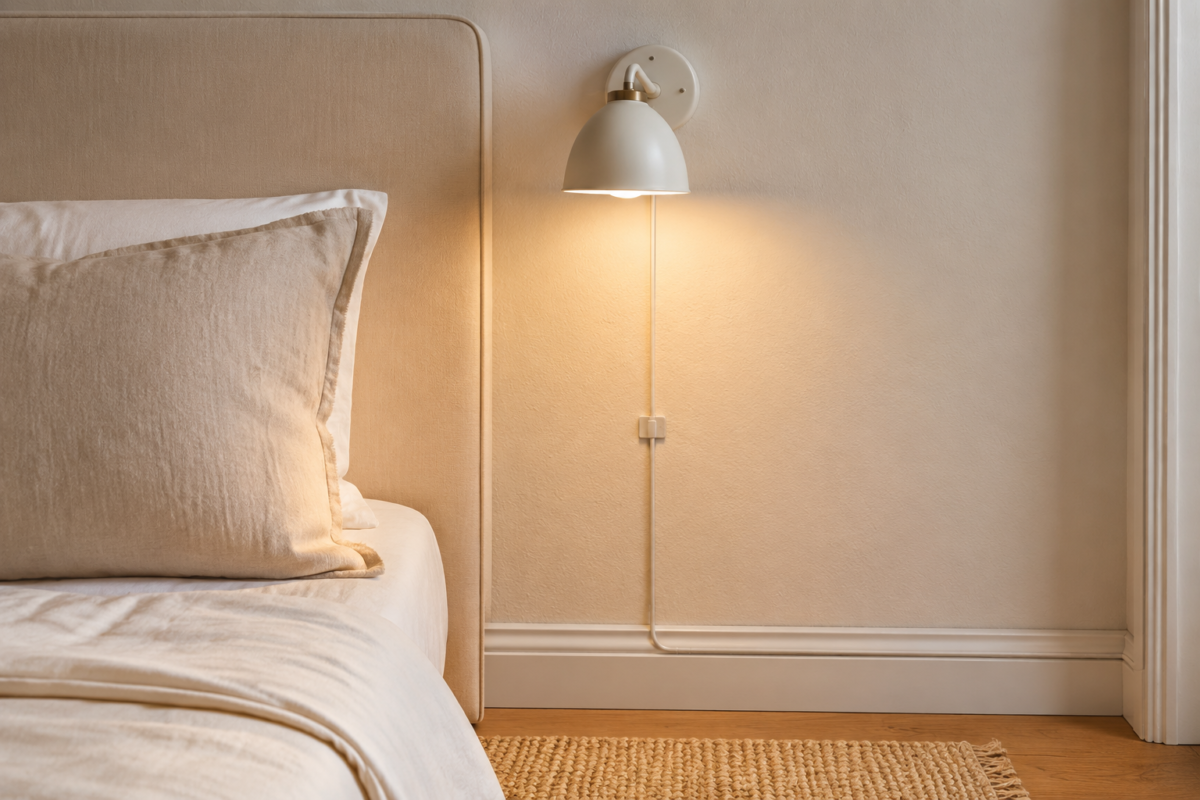
If your budget for this stage is limited to one purchase, put it toward a bedside lamp with a warm bulb before anything else. It does more visible work than almost any other single item in the room.
Building Your Color Story After the Light Is Right
Once your lighting is warm and layered, color decisions get dramatically easier because you’re finally seeing true color instead of whatever the old overhead bulb was doing to it. Choose a dominant neutral for your largest surfaces, a secondary tone for furniture and textiles, and one accent color used sparingly for the smallest, most visible details. In a small bedroom, this restraint is what keeps the room feeling calm instead of busy.
Find your undertone before you pick a color
Every neutral has an undertone, and mismatched undertones are the reason a room full of “neutral” pieces can still look off. Warm undertones lean cream, beige, and soft tan. Cool undertones lean gray, blue-gray, and true white. Hold your bedding, your rug, and your wall color together in daylight before committing to any of them. If one runs noticeably cooler than the others, that’s the piece that will make the room feel unfinished even after everything else is right.
Scale the 60-30-10 rule down to a small room
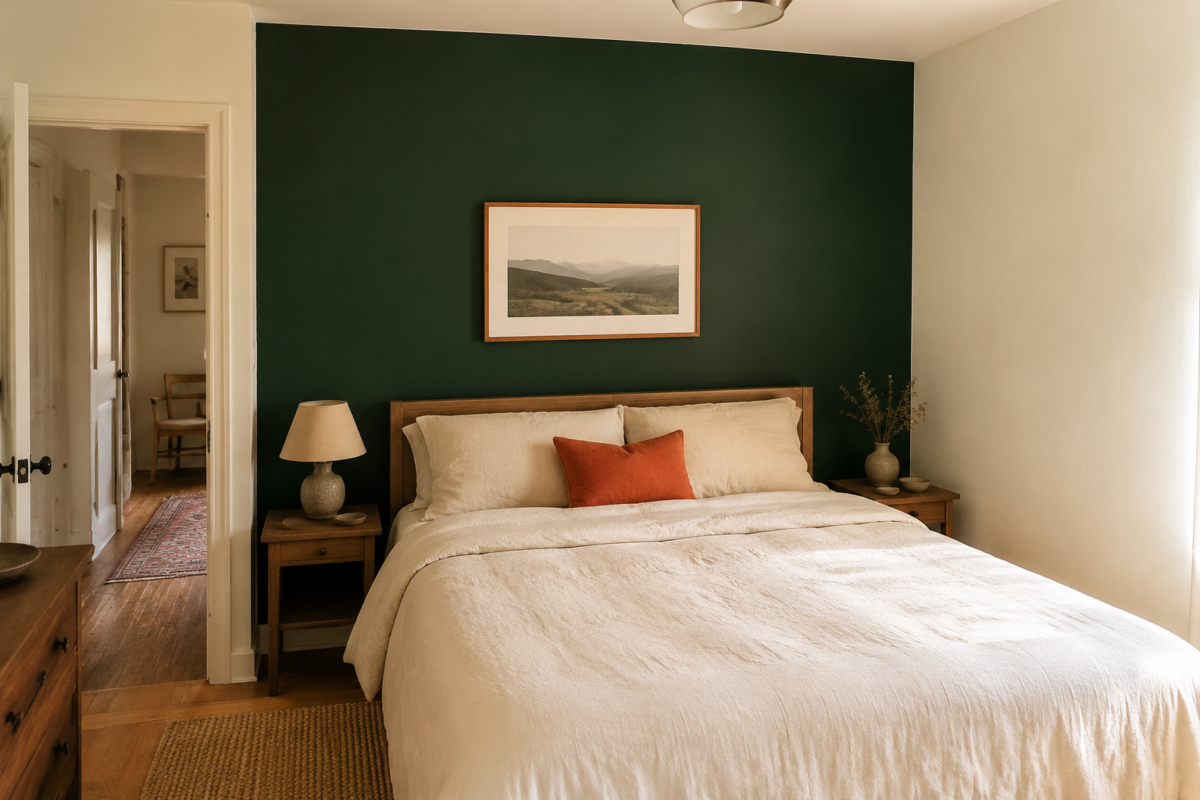
Interior designers use a 60-30-10 ratio: 60 percent dominant color, 30 percent secondary, 10 percent accent. In a small bedroom, that 60 percent is almost always your walls and largest textile, like a duvet cover. The 30 percent shows up in furniture and a rug. The 10 percent, the smallest slice, is where you get to have fun: one accent color on a vase, a throw pillow, or a piece of art, and nowhere else. This ratio is exactly why one bold coral pillow reads as intentional while five different accent colors scattered around the room read as chaos.
Where a small room can actually go bold
Small bedrooms can handle more saturated color than most people expect, as long as it’s contained to one plane. A deep forest green wall behind the headboard only, left as the single dark surface in an otherwise light room, tends to make a small space feel cozy and intentional rather than cramped. The mistake isn’t using a bold color. It’s using it on every surface instead of just one.
If your closet organization or entry setup is still working against you while you’re rebuilding the rest of the room, sorting that first makes the whole space easier to style around, and a full closet organization walkthrough covers exactly how to reset that space before you go further here.
Layering Texture So a Small Room Doesn’t Feel Flat
Texture is what separates a bedroom that photographs well from one that actually feels good to be in. Mix at least three different textures, a soft woven textile, something hard like wood or ceramic, and something with visible grain like linen or nubby cotton, and a small room stops feeling flat even if the color palette stays simple.
Bedding is your biggest texture opportunity
Your bed takes up more visual space than anything else in the room, which makes it the highest-impact place to add texture. A waffle-weave blanket, a quilted coverlet, or a chunky knit throw folded at the foot of the bed does more to make a small bedroom feel finished than almost any wall decor. Layer at least two different weaves on the bed instead of one flat duvet alone: a smooth linen duvet with a textured throw on top reads as considered, while a single flat cover reads as unfinished no matter how nice the fabric is.
Rugs still matter in a tiny footprint
A rug that’s too small is one of the most common mistakes in small bedrooms, and it’s an easy one to fix. The front legs of your bed and any nearby furniture should sit on the rug, not just beside it, or the rug reads as an afterthought floating in the middle of the floor. In a genuinely tight footprint under 100 square feet, a runner placed along one side of the bed instead of a full-size area rug often fits better and still adds the texture and warmth a hard floor is missing.
Window treatments add a soft layer most people skip
Bare windows are one of the fastest ways to make a small bedroom feel unfinished, even when everything else in the room is styled well. Tension-rod curtains install without drilling and take a soft textile layer all the way up the wall, which also has the side effect of making the ceiling feel taller. Linen or cotton in your dominant neutral works better than a printed pattern here, since the window is already competing with your bedding for visual attention.
If you’ve already handled bedding and rugs and want a full room-by-room breakdown of where furniture should physically sit in a tight footprint, the small bedroom layout guide picks up exactly where texture leaves off.
The Finishing Touches That Make the Room Feel Like Yours
Finishing touches come last on purpose. Wall art, personal objects, and small styling details are the layer that makes a room feel like a specific person lives there instead of a catalog photo, and they only read correctly once the light, color, and texture underneath them are already right.
Hang art at eye level, not ceiling height
The single most common mistake with bedroom art is hanging it too high, a habit left over from taller rooms where art sits above furniture. In a small bedroom, the center of your artwork should land around 57 to 60 inches from the floor, roughly eye level for someone standing, or 8 to 10 inches above the headboard if it’s hanging directly over the bed. Command strips rated for the frame’s weight handle this without a single nail hole.
Personal objects, chosen with restraint
A small bedroom can hold surprisingly few personal objects before it starts to feel cluttered again, which is exactly why restraint matters more here than in a larger room. Choose two or three meaningful pieces, a framed photo, a small plant, an object with real history, rather than filling every open surface. Each one should earn its spot instead of just filling empty space.
The final walk-through test
Before you call the room finished, stand in the doorway and look at it the way you did on the very first day you walked in. If your eye lands on the bed first, softened by layered bedding, with light glowing warm from at least two directions and one confident accent color drawing your attention to a single spot in the room, the sequence worked. If your eye instead lands on clutter or a single harsh overhead bulb, go back to whichever step still needs the work: it’s almost always lighting.
A small bedroom done this way, lighting first, then color and texture, then the finishing touches, doesn’t need more square footage to feel complete. It needs the decisions made in the right order.
Most rooms don’t fail because the furniture is wrong or the budget was too small. They fail because someone bought the rug before fixing the light, or picked the paint color under a bulb that made it lie. Work the sequence in order and you’ll spend less overall, because everything you buy after lighting will actually match the room you’re standing in instead of the room a bad overhead fixture was showing you.
Frequently Asked Questions
What should I decorate my small bedroom with first? Start with lighting before anything else. Add a second light source beyond the overhead fixture, switch every bulb to warm white in the 2700K to 3000K range, and get that layer right before choosing paint colors, a rug, or artwork, since all of those will look different once the lighting is correct.
How do I make a small bedroom feel less cramped without renovating? Use one bold or dark color on a single plane, like the wall behind your headboard, rather than spreading multiple colors across the room. Add a rug sized so your bed’s front legs sit on it, hang curtains close to the ceiling to draw the eye upward, and keep personal objects to two or three chosen pieces instead of filling every surface.
Do small bedrooms need dark or light colors? Both can work. Light, warm neutrals on the majority of the room keep it feeling open, while one contained dark or saturated color on a single wall or textile adds depth without shrinking the room visually. The mistake isn’t the color choice, it’s using more than one bold color across multiple surfaces at once.
How high should I hang art in a small bedroom? Center the artwork around 57 to 60 inches from the floor, or 8 to 10 inches above the headboard if it’s positioned directly over the bed. Hanging art higher than this is the most common reason bedroom art looks disconnected from the rest of the room.
What’s the cheapest way to fix bad lighting in a rental bedroom? A single plug-in wall sconce or a bedside lamp with a warm bulb is the lowest-cost, highest-impact fix available, since it doesn’t require an electrician, drilling, or landlord approval, and it changes how every other color and texture decision in the room will actually read.
Related Reading
- If the closet in this room is still working against you, the closet organization walkthrough covers vertical storage, hanger systems, and bin labeling before you style anything else.
- For where the bed, dresser, and nightstand should physically sit in a tight footprint, the small bedroom layout guide picks up right after this one.
- If storage under the bed or in the corners is still unsolved, small bedroom storage ideas covers the systems that make the room easier to keep this way.
- For the full room-by-room framework this guide is built on, visit the Bedroom Decor category page.
- To see how this fits into organizing every room in a small home, start at the Small Bedrooms hub.