Table of Contents
There’s a specific kind of clutter that doesn’t come from a single messy event, it comes from the small, ordinary residue of an ordinary day. A mug left on the coffee table. Shoes by the door instead of put away. Mail set down on the counter to deal with later. None of it looks like much on its own, but left alone night after night, it compounds into exactly the kind of overwhelming mess that eventually demands an entire weekend to fix.
The nightly reset exists to interrupt that pattern before it starts. It’s a short, consistent routine, ten minutes at most, run at the end of each day, that returns a space to a genuine baseline rather than letting the day’s small residue carry over and stack up. It’s not a deep clean, and it’s not meant to be. It’s meant to be small enough that it actually happens, night after night, which is precisely what makes it effective.
Why Ten Minutes Is the Right Amount of Time
The specific length of this routine matters more than it might seem, and ten minutes sits at a deliberate point between too little and too much.
Long enough to genuinely reset a space, short enough that skipping it never feels easier than doing it. A five-minute version often ends right as real progress starts happening, while a thirty-minute version starts to feel like a chore significant enough to skip on a tired night, defeating the entire purpose of a routine meant to run every single day without exception.
A defined time limit keeps the routine from expanding into something bigger. Without a clear endpoint, a quick tidy-up can easily turn into reorganizing a drawer or starting a project that belongs in a weekly or monthly routine instead. Ten minutes keeps the scope intentionally narrow: catch what’s accumulated today, and stop there.
Consistency, not thoroughness, is the actual goal. A rushed, imperfect ten-minute reset done every single night accomplishes more over a month than an occasional, more thorough hour-long cleaning session done once a week, because it prevents buildup from ever reaching a point that requires real effort to undo.
A Room-by-Room Routine That Fits the Window
Splitting the ten minutes across a few key areas, rather than trying to cover an entire home, keeps the routine realistic and focused on the spots that matter most.
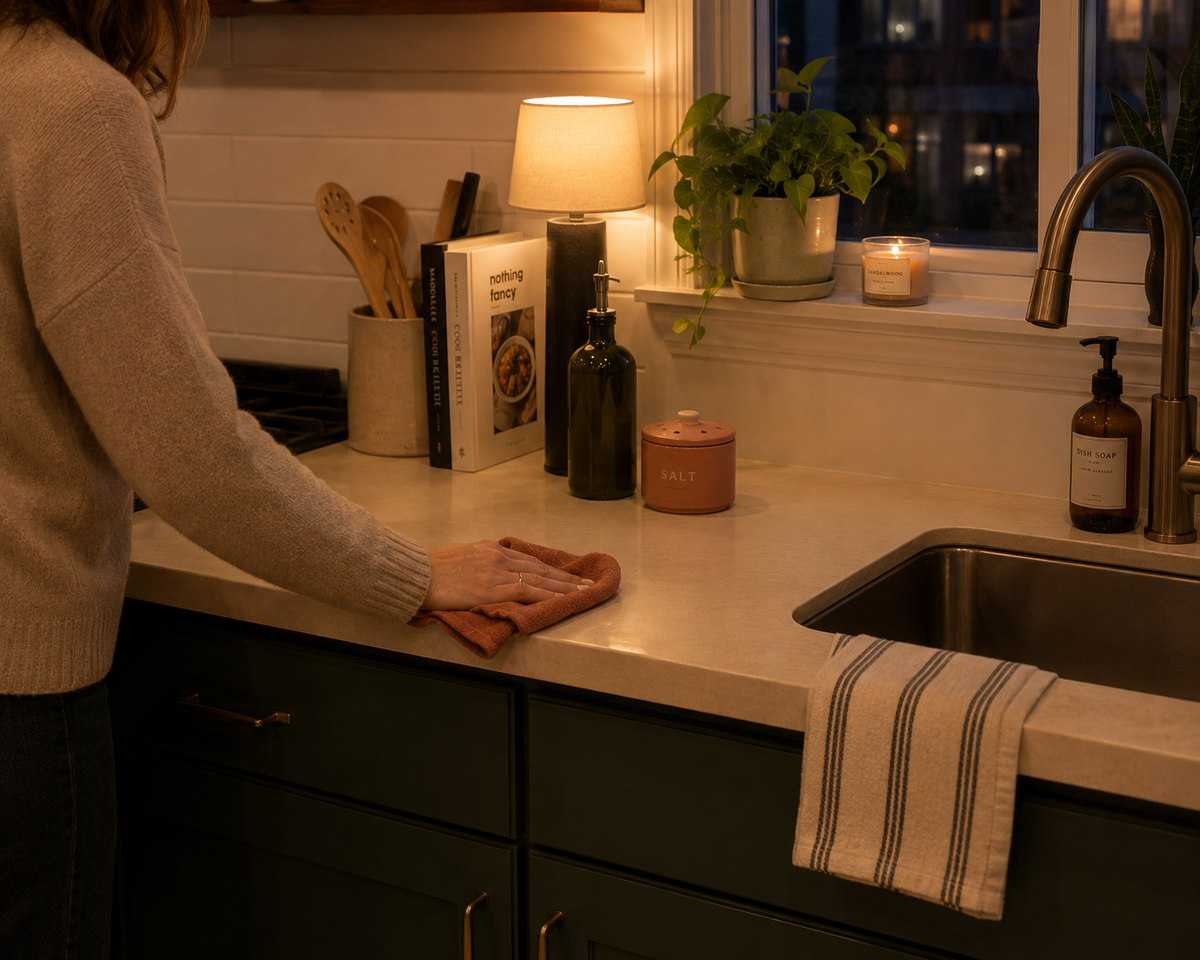
Kitchen, roughly three minutes. Load or unload the dishwasher, wipe down counters, and put away anything left out from the day’s meals. The kitchen tends to accumulate the fastest visible clutter of any room, which makes it worth prioritizing first in the routine.
Living room, roughly three minutes. Return items to their proper spots, blankets folded, remotes in their designated place, anything that migrated from another room back where it belongs. Fluff cushions and do a quick surface clear of the coffee table or any other flat surface that tends to collect the day’s small items.
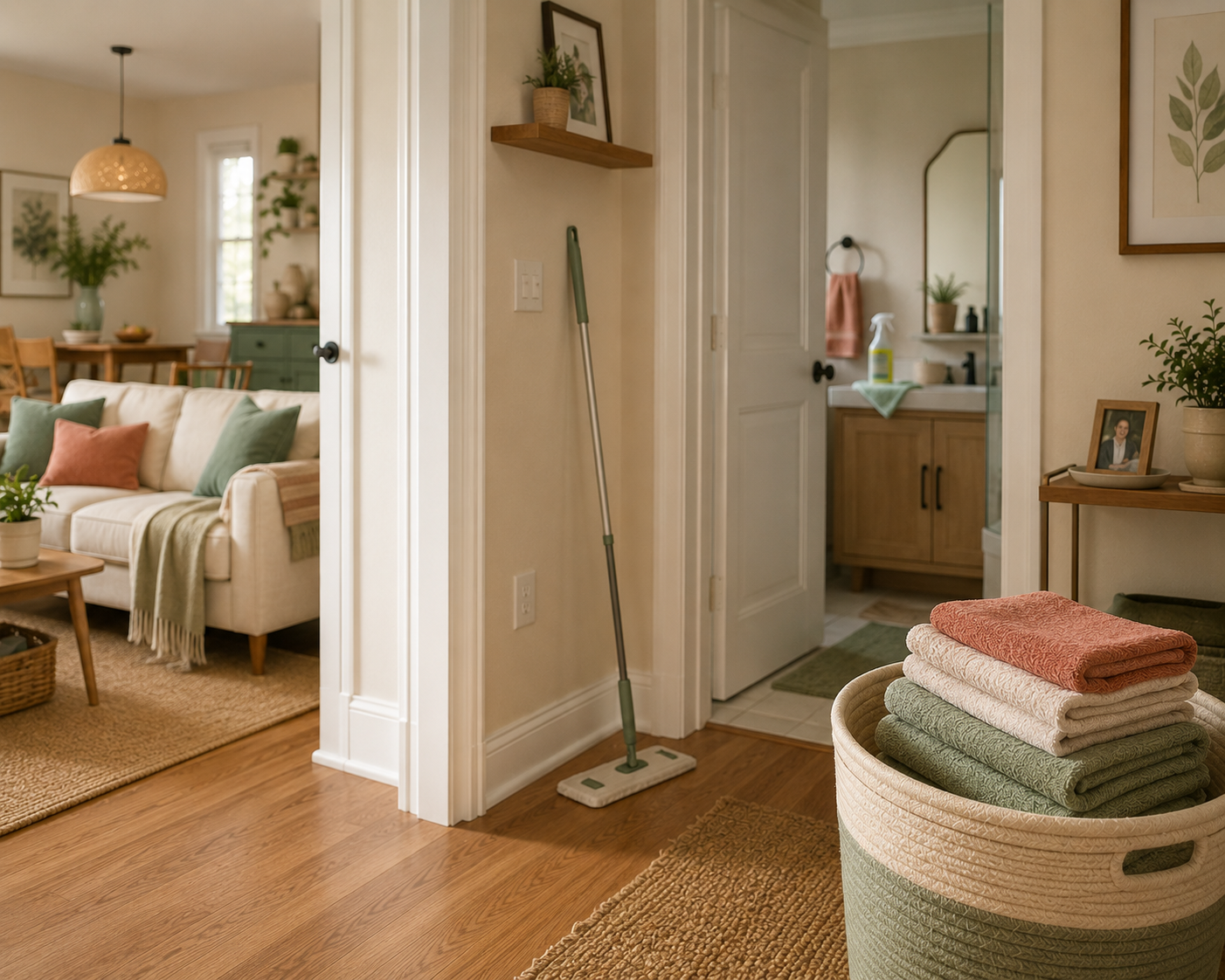
Entry, roughly two minutes. Put away shoes, hang up coats, and clear anything sitting on the floor or a nearby surface that’s accumulated from the day’s comings and goings. This is a small area, but it’s also the first thing seen upon walking in, which makes even a quick pass here worth disproportionate attention.
Bedroom, roughly two minutes. A quick bed straightening (not necessarily a full made bed, just returned to a reasonably tidy state) and clearing any clothes or items that ended up on a chair or the floor rather than their proper spot.
This breakdown is a starting framework, not a rigid formula, since every home’s actual clutter pattern is a little different. Adjusting the time split based on which rooms in your specific space tend to accumulate the most daily mess makes the routine more effective than following a generic split exactly as written.
What to Skip During a Nightly Reset
Knowing what’s explicitly out of scope for this routine is just as important as knowing what’s in scope, since scope creep is one of the fastest ways a ten-minute habit turns into something people start avoiding.
Deep cleaning tasks belong in a weekly or monthly routine, not here. Scrubbing a bathroom, vacuuming an entire apartment, or washing windows are all legitimate tasks, just not ones that fit a nightly reset’s scope. Trying to fold these in defeats the purpose of keeping the routine short enough to actually happen every day.
Reorganizing a bin or drawer system is a separate task, not a nightly one. If a specific storage area needs attention, a bin that’s overflowing, a shelf that’s become disorganized, note it for a dedicated session later rather than trying to fix it during the ten-minute window, which will either blow past the time limit or leave the actual nightly reset incomplete.
Laundry, beyond returning already-clean items to their spots, doesn’t fit this routine either. Starting a load, folding a full basket, or putting away a large amount of clean laundry are all bigger tasks that deserve their own dedicated time rather than competing with the quick, daily scope of a reset.
Making the Routine Actually Happen Every Night
Attach it to an existing end-of-day habit rather than treating it as a separate task to remember. Doing the reset right before brushing teeth, right after the last dish from dinner, or right when a favorite show ends gives it a natural trigger, rather than relying on remembering to do it from scratch each night.
Do it before sitting down for the evening, not after. Once settled in for the night, on the couch, in bed, the motivation to get back up and do even a quick reset drops significantly. Building the habit to happen before that settling-in moment, rather than after, makes it far more likely to actually happen consistently.
Involve the whole household if more than one person lives there. A reset that only one person consistently does isn’t really a sustainable system, it’s one person’s ongoing effort. Splitting the routine, one person handles the kitchen while another handles the living room, for example, both speeds up the process and prevents the whole habit from depending on a single person’s consistency.
Use a visible timer for the first few weeks while building the habit. A phone timer or a kitchen timer keeps the routine honest and helps build an accurate internal sense of what ten minutes actually feels like, which becomes less necessary once the routine is fully established but genuinely helps in the early weeks.
Common Reasons the Habit Doesn’t Stick, and What to Do Instead
A few specific patterns show up repeatedly when a nightly reset habit fails to take hold, and recognizing them makes it easier to troubleshoot rather than simply giving up on the idea entirely.
The routine keeps expanding past ten minutes. If a reset consistently runs fifteen or twenty minutes instead of the intended ten, that’s usually a sign the scope has quietly grown to include tasks that belong elsewhere, a deeper clean, a reorganizing project, rather than the quick daily catch-up it’s meant to be. Pulling the scope back to the original room-by-room framework tends to fix this faster than trying to work faster within an expanded scope.
It gets attached to a trigger that doesn’t happen consistently. A reset tied to “whenever I feel like it” or a vague evening window without a specific anchor point tends to get skipped more often than one attached to a fixed daily event, brushing teeth, finishing the dishes, turning off the TV. If the habit isn’t sticking, checking whether its trigger is genuinely consistent is often the first thing worth adjusting.
One person is doing it alone in a shared household, and burning out. A reset that depends entirely on one person’s ongoing effort, night after night, tends to become a source of resentment rather than a sustainable habit. If this is the pattern, the fix isn’t more willpower, it’s redistributing the routine, covered in more depth in the companion guide on shared household systems.
The bar for “done” feels too high. A reset that needs to look magazine-photo perfect before it counts as complete sets an unreasonably high standard that makes the whole task feel more daunting than it needs to be. A reasonably tidy, genuinely improved space, even if it’s not flawless, is a complete and successful reset.
What Changes Once the Habit Sticks
The routine gets faster over time, not because less needs doing, but because the process becomes more automatic. A reset that takes the full ten minutes in week one often takes closer to seven or eight minutes by week four or five, simply because the sequence of tasks becomes second nature rather than something to think through each time.
The overall home requires less deep cleaning once the nightly habit is established. Since daily clutter never has the chance to accumulate into a bigger mess, the periodic deep cleans that used to feel necessary become lighter and less frequent, since there’s simply less buildup for them to address.
Mornings tend to feel calmer once the previous night’s reset is a consistent habit. Waking up to a space that was returned to baseline the night before, rather than one still carrying the previous day’s clutter, changes how the start of the next day feels, even though the reset itself happens the night before rather than in the morning.
When to Extend the Routine, and When Not To
A genuinely busier-than-usual day might call for a slightly longer reset, and that’s a reasonable, occasional adjustment. If guests were over, or the day involved an unusually messy activity, a reset closer to fifteen minutes rather than ten is a fine, occasional exception rather than a sign the routine itself has failed.
Resist the temptation to permanently extend the routine just because it’s going well. Once a habit feels easy, there can be a pull to add more to it, tackling a bigger project during what was meant to be a quick reset. This tends to undo the exact quality, brevity, that made the habit sustainable in the first place, so it’s worth protecting the ten-minute scope even once the routine feels comfortable.
A missed night doesn’t require a longer makeup session the next day. One skipped reset just means slightly more to handle the following night, not an emergency requiring double time to compensate. Treating an occasional miss as a normal, expected variation keeps the habit sustainable over months rather than becoming a source of guilt or an excuse to abandon it after one off day.
Adjusting the Routine for Different Home Layouts
The room-by-room breakdown above assumes a fairly typical layout, but the underlying principle, catch what’s accumulated, work through the highest-traffic areas first, applies regardless of how a specific home is arranged.
In a studio apartment, where kitchen, living, and sleep zones share one open room, the reset naturally moves faster since there’s no need to travel between separate rooms. The same task categories still apply, dishes, surfaces, floor items, bed straightening, just compressed into a single continuous pass through the space rather than distinct room-by-room stops.
In a home with a dedicated home office or workspace, add a quick minute to clear the desk surface and return any work materials to their spot, particularly important for anyone who works from home, since an unreset workspace can make the boundary between work and personal time feel less defined the next morning.
In a larger home with more rooms, it’s reasonable to rotate which secondary rooms get attention on a given night rather than trying to cover every single room every night within the ten-minute window. A dining room or guest room that sees light daily use doesn’t need the same nightly attention as a kitchen or living room that accumulates clutter constantly.
Frequently Asked Questions
What should I do first during a 10-minute nightly reset? Start with the kitchen, since it tends to accumulate the fastest, most visible clutter of any room over the course of a day. Loading the dishwasher and wiping counters first sets a productive pace for the rest of the routine.
Is a 10-minute nightly reset enough to keep a home genuinely clean? It prevents daily clutter from accumulating, which is different from deep cleaning. Pairing the nightly reset with an occasional, lighter weekly check and periodic deeper cleaning sessions covers both daily maintenance and the less frequent tasks a nightly routine isn’t meant to handle.
What if I don’t have time for a nightly reset some nights? A missed night is a normal, expected exception, not a failure of the system. It simply means slightly more to handle the following night, and treating it as a minor variation rather than a broken streak keeps the habit sustainable over the long run.
How do I get my family or roommates to do a nightly reset with me? Keep the routine simple and split by room or task so everyone has a clear, manageable piece to handle, rather than relying on one person to do the entire reset alone every night. A shared, distributed routine tends to be more sustainable than one person’s individual effort.
Should the nightly reset include laundry or deep cleaning tasks? No. Beyond returning already-clean items to their proper spots, laundry and deep cleaning belong in separate, dedicated routines rather than the nightly reset, which is specifically scoped to stay short enough to happen consistently every day.
Related Reading
- The Complete Guide to Daily Organization Systems — the full system this nightly reset fits into, alongside mail management and shared household routines.
- A Daily System for Mail, Paper, and the Stuff Without a Home — the companion daily habit for the one category of clutter that never actually stops arriving.
- Daily Systems That Work When More Than One Person Lives There — how to distribute this routine across a household rather than relying on one person.
- The Complete Small-Space Decluttering Guide — the decluttering process worth completing before this maintenance routine has a genuinely lighter job to do.
- Parent Category: Daily Organization Systems
- Parent Hub: Organization & Storage