Table of Contents
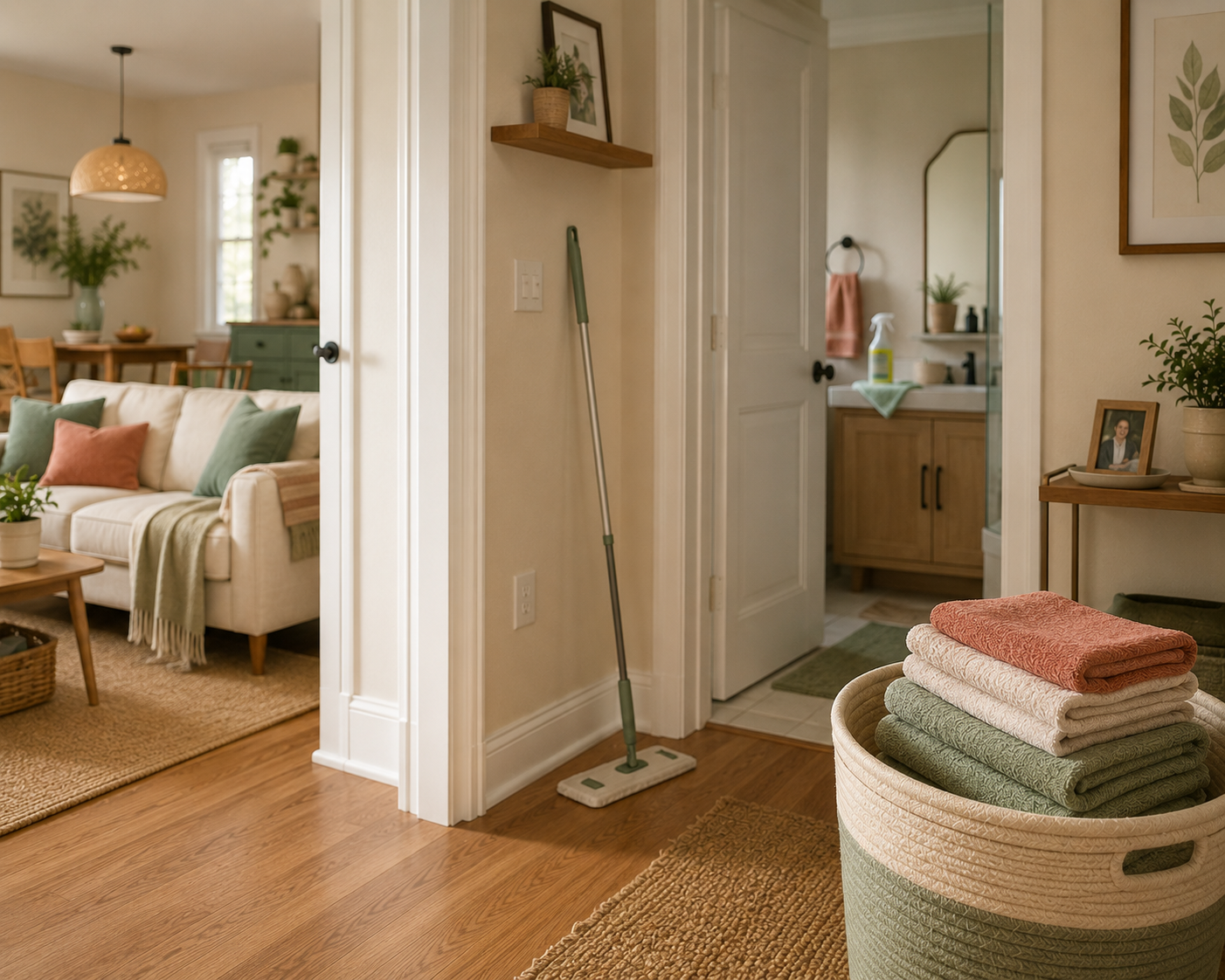
You’ve got a Saturday morning free and no clear plan for it. Maybe that means fifteen minutes before you have somewhere else to be. Maybe it means the whole afternoon. Most DIY project lists don’t account for that difference, they just sort projects by skill level, which leaves you scrolling through a dozen ideas that all assume you have the same three hours no matter what.
DIY-friendly small space updates are best organized by time investment, not difficulty, starting with fifteen-minute fixes, moving into thirty-to-sixty-minute projects, and finishing with full weekend updates. Every project on this list is rental-friendly, meaning no permanent changes, no structural work, and nothing that requires tools or skills beyond a basic drill or adhesive product.
Why Time, Not Skill, Should Decide What You Tackle First
Time is the better sorting principle for DIY projects because skill level rarely changes across this list, most of these projects use the same handful of basic tools and techniques, while the actual time commitment varies enormously and is usually the real deciding factor in whether something gets started at all.
A fifteen-minute cabinet hardware swap and a full weekend closet overhaul use almost identical skills: a screwdriver, careful measuring, and patience. What’s different is how much time each one asks for. Sorting by time means you can actually match a project to the hour you have available, instead of picking something ambitious on a Tuesday evening and abandoning it half-finished.
Fifteen-Minute Fixes
Fifteen-minute fixes are small, single-action updates that need no planning beyond the purchase itself, like swapping hardware, changing a bulb, or adding a liner, and they’re the fastest way to make visible progress on a rental without committing a full afternoon.
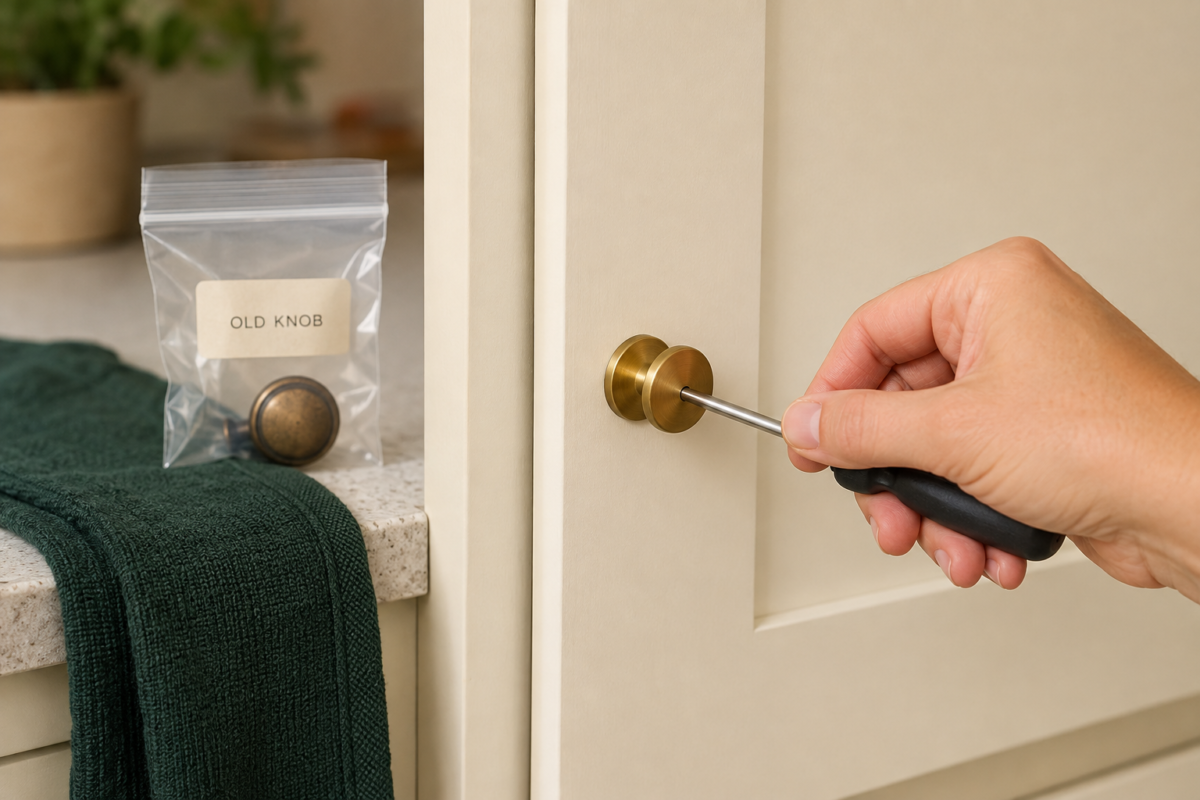
- Swap cabinet and drawer knobs. A single screwdriver and a new set of knobs changes the entire feel of a kitchen or bathroom in the time it takes to remove and replace each screw. Keep the original hardware in a labeled bag for move-out.
- Change your bulbs to warm 2700K. This is the fastest lighting upgrade available and affects how every other project on this list actually looks once it’s done. If you haven’t made this swap yet, it’s worth doing before anything else on this guide.
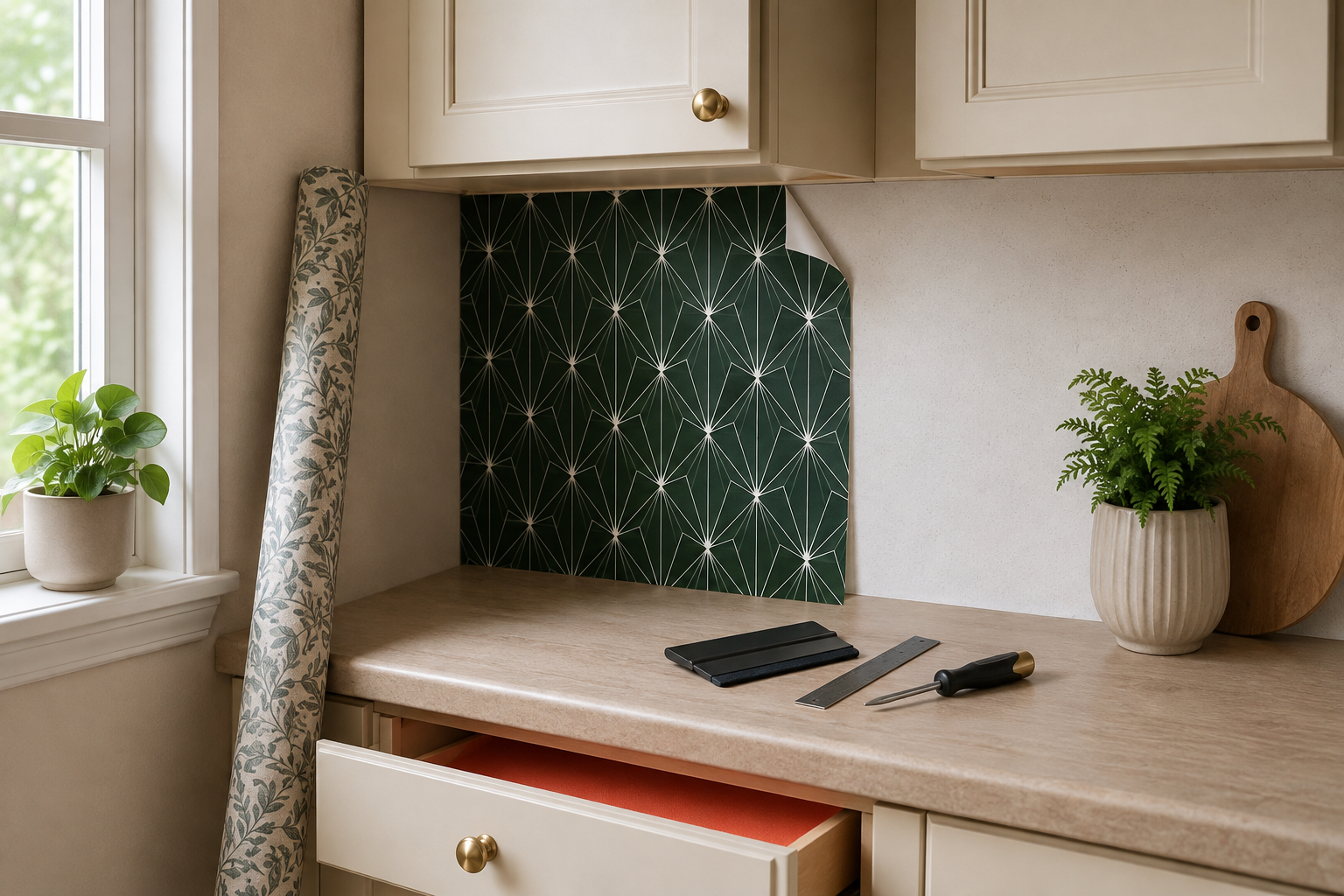
- Add drawer and shelf liners. Peel-and-stick liner paper takes minutes per drawer and instantly makes open cabinets and shelves look considered rather than bare particleboard.
- Install adhesive hooks. Rated adhesive hooks hold coats, bags, towels, and small plants without a single hole, and take under a minute each to place.
- Add felt pads to furniture legs. This one is purely functional, protecting rental floors from scuffs, but it takes almost no time and prevents a genuinely common security-deposit issue.
Any one of these fits into a real fifteen-minute window, including the time it takes to find the tool and clean up afterward.
Thirty-to-Sixty-Minute Projects
Thirty-to-sixty-minute projects involve a little more setup and drying or curing time than a fifteen-minute fix, but they still fit comfortably into a single free hour without needing to be split across multiple days.
- Install a plug-in wall sconce. Mounting takes minutes with a rated adhesive strip, and running the cord neatly along the wall or baseboard adds another ten to fifteen minutes of careful tucking, well within an hour total.
- Apply peel-and-stick tile to a small area. A narrow backsplash strip, a small bathroom accent, or a single stair riser can realistically be finished within an hour, including cutting pieces to fit edges and corners.
- Build a small leaning gallery grouping. Laying out three to five framed pieces, deciding on spacing, and hanging or leaning them takes roughly this long once the frames themselves are already sourced and ready.
- Add closet shelf risers or a hanging organizer. A tension-rod double hanging bar or a stackable shelf riser set installs without tools in most closets and meaningfully increases usable storage within the hour.
- Re-caulk a small area, like around a sink. This is more maintenance than decor, but it’s squarely in this time tier and makes a visible difference in how finished a bathroom or kitchen looks.
These projects reward having your materials on hand before you start. Most of the actual time on this tier goes to setup and cleanup, not the installation itself, so gathering everything first keeps the whole project inside the hour.
Full Weekend Updates
Full weekend updates are larger in scope, usually covering an entire wall, closet, or room feature rather than one section of it, and they benefit from being spread across a day or two rather than rushed into a single sitting, especially when drying time or careful measuring is involved.
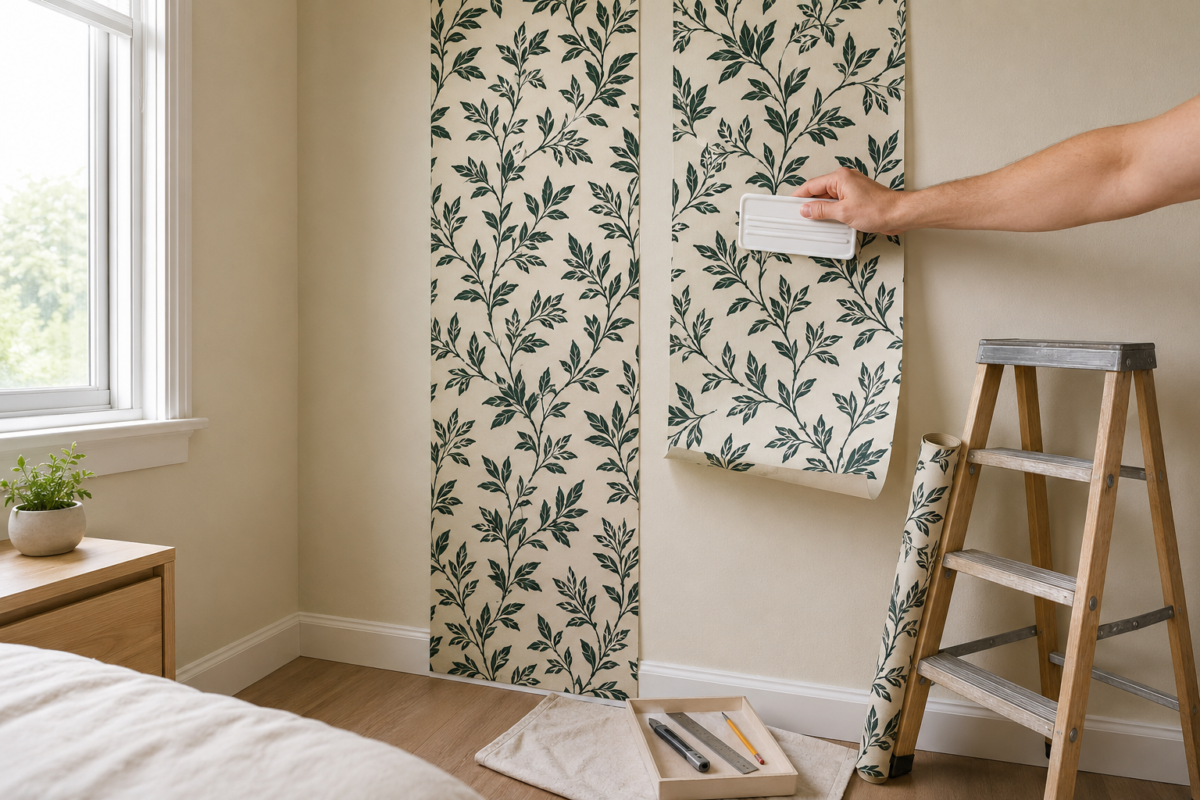
- Cover a full accent wall in removable wallpaper. Measuring, cutting, and applying wallpaper across an entire wall realistically takes several hours for a first attempt, plus time for air bubbles to settle and edges to fully adhere. Plan for one focused afternoon, not a rushed hour before guests arrive.
- Overhaul a full closet with non-permanent components. Combining tension-rod shelving, an over-door organizer, drawer risers, and updated bins into one coordinated system takes real planning time upfront to measure the space correctly, then a solid afternoon of installation.
- Refresh every window’s curtains and hardware at once. Installing rods, hanging curtains, and adding blackout liners or tiebacks across multiple windows in one weekend creates a much more cohesive result than doing one window now and another next month, since all the hardware and fabric choices get made together.
- Apply peel-and-stick tile across a full kitchen backsplash. Unlike the small-area version in the previous tier, a full backsplash involves more precise cutting around outlets and corners, and benefits from doing one section, checking the result, and adjusting before continuing across the whole space.
None of these require permanent changes or tools beyond a basic drill, level, and utility knife, which keeps every project on this list fully rental-friendly even at the largest scale.
How to Judge Which Tier a Project Actually Belongs In
Match the project to the time tier honestly before starting, since the most common DIY frustration on a tight schedule isn’t a project going wrong, it’s starting a weekend-tier project during a fifteen-minute window and having to stop halfway through with tools and materials scattered everywhere.
A rough test that works well: if a project involves drying, curing, or setting time of more than a few minutes, or covers an entire wall, room feature, or closet rather than one section of it, it belongs in the weekend tier even if the individual steps feel simple. Peel-and-stick tile on one small strip is a sixty-minute project. The exact same material across a full backsplash is a weekend project, purely because of scale and the number of edges and corners that need careful cutting.
A Sample Weekend, Broken Into All Three Tiers
A realistic Saturday might start with a fifteen-minute fix, like swapping the bathroom cabinet knobs while coffee brews, move into a thirty-to-sixty-minute project after breakfast, like mounting a plug-in sconce beside the bed, and save the afternoon for the real weekend-tier project, like starting the accent wall wallpaper with enough daylight left to finish properly.
Sunday, in this same rhythm, might handle the second half of a larger project that didn’t quite finish Saturday, plus one or two more fifteen-minute fixes scattered through the day, like adding felt pads to furniture or hanging one adhesive hook that’s been sitting in a drawer for weeks. Spreading projects this way across a full weekend, rather than cramming everything into one day, is usually what actually gets a full round of updates finished instead of abandoned halfway.
Frequently Asked Questions
What DIY project should I start with if I only have fifteen minutes? Swap your cabinet or drawer knobs, or change your bulbs to a warm 2700K tone. Both take well under fifteen minutes and change how the room looks immediately, without needing any planning or measuring beforehand.
How do I know if a project belongs in the sixty-minute tier or the weekend tier? Check the scope and whether drying or curing time is involved. A project covering a small section, like one shelf or a narrow strip, usually fits in an hour. The same technique applied across a full wall, closet, or room feature belongs in the weekend tier.
Are any of these projects not rental-friendly? No. Every project on this list avoids permanent changes and uses rated adhesive products, tension-rod systems, or removable materials specifically so nothing here risks a security deposit or requires landlord approval for most standard rental agreements.
Do I need power tools for the weekend-tier projects? Not typically. A basic drill, a level, and a utility knife cover nearly everything on this list, including the largest weekend projects. None of these require specialized carpentry tools or skills.
Should I do all the fifteen-minute fixes before moving to bigger projects? Not necessarily in that order, but it’s a reasonable default if you’re not sure where to start. Fifteen-minute fixes build momentum quickly and give you a sense of the space before committing real time to a weekend-tier project.
Related Reading
For the full order to style a room once your DIY updates are done, The Complete Guide to Budget Styling a Small Space covers lighting, textiles, and wall decor in sequence.
If your weekend project involves lighting specifically, How to Get Designer Lighting Looks Without the Designer Price covers exactly where sconce and fixture upgrades pay off most.
If you’re building a leaning gallery grouping as one of your sixty-minute projects, Affordable Wall Art and Decor That Looks Curated, Not Cheap covers sourcing and arrangement in detail.
Browse the full DIY-Friendly Updates category for more rental-safe projects, or explore the wider Budget Decor hub for get-the-look guides and thrift-first styling ideas.