Table of Contents
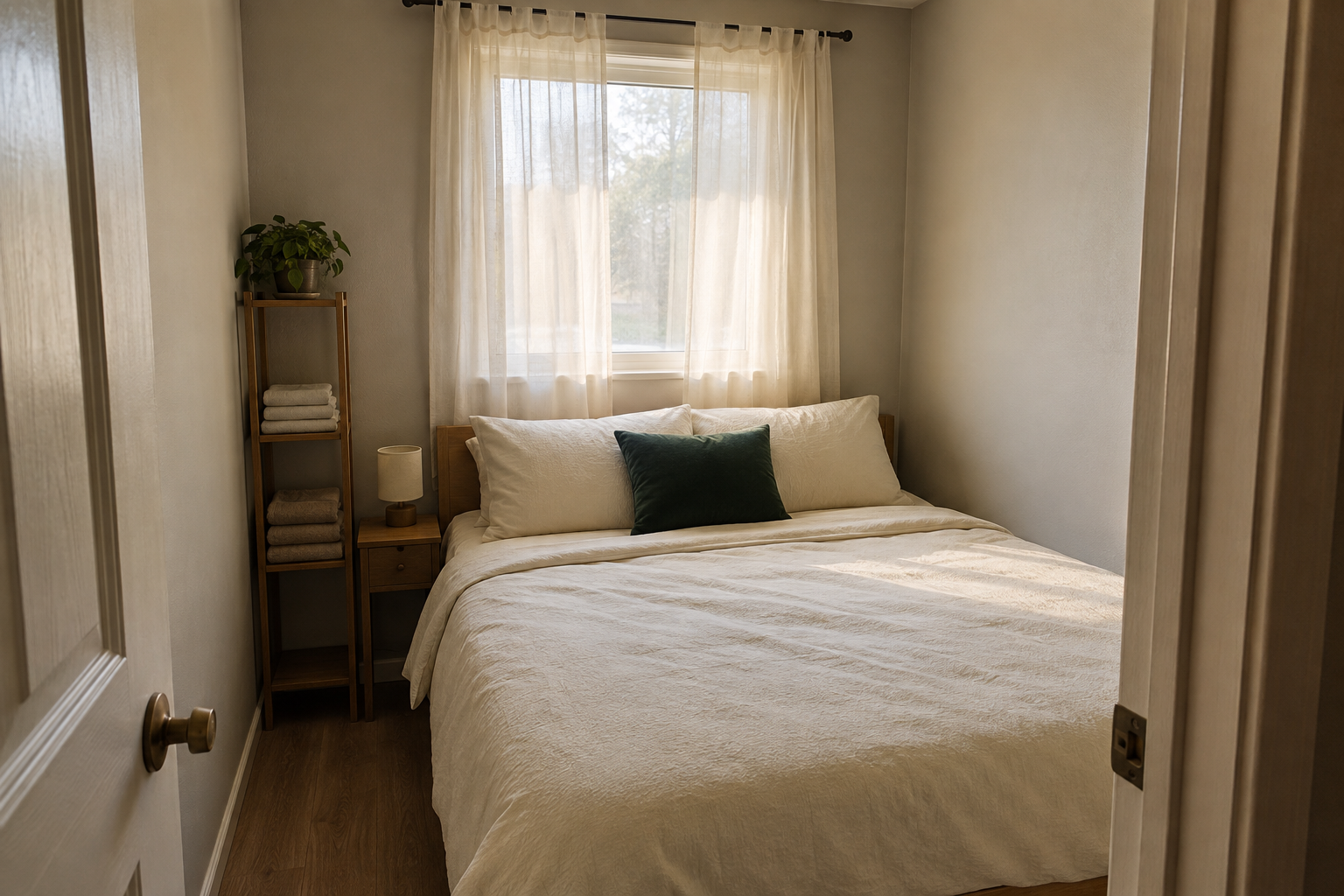
A small bedroom with one window, one door, and not much else can still feel calm and finished — it just needs three decisions made in the right order. Get the layout right first, so the room works with its one window and one door instead of fighting them. Solve storage second, so clothes and belongings have a real home even without a walk-in closet. Add decor last, once the room already functions, so styling finishes the room instead of trying to fix it.
Skip this order and a small bedroom stays uncomfortable no matter how much is spent on it — a beautifully decorated room with the bed blocking the closet door, or expensive storage solutions crammed into a layout that was never planned, both fail for the same reason: the foundational decision came after the decorative one instead of before it.
The Three Things Every Small Bedroom Needs
Every small bedroom needs a layout that respects its one window and one door, a storage plan that doesn’t depend on a walk-in closet, and decor that makes the finished room feel calm rather than cluttered. These three — layout, storage, decor — are the whole plan, in that order.
Layout comes first because it determines everything else: where the bed goes decides where a dresser can fit, which wall is available for storage, and whether the door can open fully. Storage comes second because a small bedroom’s biggest daily frustration is almost always clothes and belongings with nowhere to go, and this needs solving before decor, not alongside it. Decor comes last because a room with a working layout and solved storage needs very little decoration to feel finished — often just a few intentional touches, not a full redesign.
Layout: Working With One Window, One Door, and Not Much Else
The bed should go against the wall with the fewest interruptions — no window, no door, no closet opening — and everything else in the room gets planned around that one decision. In a room with only one window and one door, this usually leaves one, maybe two, realistic wall options for the bed, which makes the layout decision simpler than it feels at first.
Start with the door swing. Confirm which direction the door opens and how far, since furniture placed in that arc makes the door difficult to fully open, which affects both daily use and how the room feels. Then place the bed against whichever remaining wall doesn’t block the door or a closet, ideally not directly under the window, since this limits nightstand placement and can create drafts or light issues depending on the season. Then work outward — a nightstand needs at least 12–18 inches of wall space beside the bed, and any dresser or storage piece should go on a wall the bed doesn’t already claim.
The full Small Bedroom Layout Guide covers specific bed placements for the most common small-bedroom shapes, including narrow rectangular rooms and rooms with an off-center window.
Storage: Solving Storage Without a Walk-In Closet
The best storage plan for a small bedroom starts under the bed, not in the closet, because most closets in small bedrooms are already too small for a full wardrobe, while the space under a bed frame is almost always sitting completely empty. Under-bed storage bins or a storage bed frame reclaim square footage that no other room feature is competing for.
After under-bed storage, the next priority is vertical space — a tall, narrow shelving unit or a dresser that goes up instead of out uses floor space far more efficiently than a wide, low dresser in a small room. Closet organizers (double-hanging rods, over-door hooks, stackable bins) come third, since they maximize what’s already there rather than requiring new floor space at all.
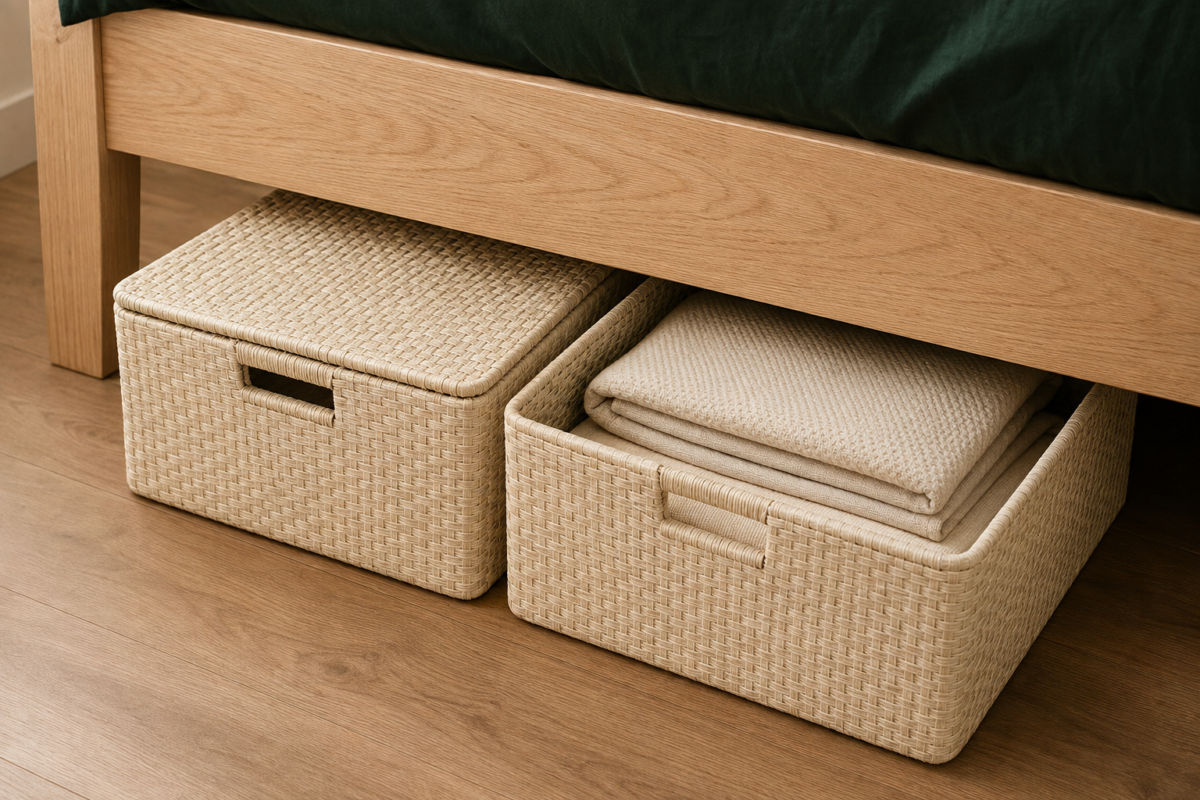
The full Small Bedroom Storage Guide goes deeper on under-bed options, vertical shelving choices, and closet systems that fit a standard small-bedroom closet.
Decor: Making the Room Feel Calm and Finished
A small bedroom feels finished with far less decor than people assume, because a room that already has a working layout and solved storage only needs a few intentional touches to read as complete — not a full styling overhaul. Overdecorating a small bedroom is one of the fastest ways to undo good layout and storage work, since extra objects compete for the same limited visual space that a calm room needs to stay calm.
A workable decor approach for a small bedroom: one layered lighting source beyond the overhead fixture (a bedside lamp with warm light), one textile layer beyond basic bedding (a throw or extra pillow in a color that ties the room together), and minimal wall decor — one piece sized appropriately for the wall, not a cluster of small frames competing with limited space.
The full Small Bedroom Decor Guide covers specific decor choices that make a small room feel calm rather than cluttered, without adding a single extra piece of furniture.
Common Small Bedroom Mistakes
The most common small bedroom mistake is decorating before the layout and storage are solved, which means every decorative choice has to work around problems that better planning would have avoided entirely. A few other patterns worth avoiding:
- Placing the bed under the window by default. This is often the first instinct, but it usually limits nightstand space and blocks natural light from reaching the rest of the room.
- Buying a dresser before measuring the door swing. A dresser that blocks the door from opening fully creates a daily frustration that no amount of styling fixes.
- Ignoring under-bed space. This is consistently the most underused storage area in a small bedroom, and skipping it means solving storage with floor-space furniture that a small room can’t spare.
- Overfilling the walls. A small bedroom with five small frames competing for attention reads as cluttered even when every individual piece is nice — one larger, well-placed piece almost always reads calmer.
Building Your Own Small Bedroom Plan
A workable small bedroom plan fits on one page: your bed placement, your storage priorities, and your decor choices, in that order. Everything else is a refinement once these three are settled.
- Confirm the door swing and any closet door clearance before placing anything.
- Place the bed against the wall with the fewest interruptions — not automatically under the window.
- Solve under-bed storage first, then vertical shelving, then closet organization.
- Add decor last: one lighting layer, one textile layer, minimal wall decor sized to the actual wall.
- Resist adding extra furniture once the room functions — a calm, sparser room usually reads better than a fully furnished one in a small space.
Adjusting the Plan for a Multi-Use Bedroom
If the bedroom also needs to function as a workspace, a guest space, or storage overflow for the rest of the apartment, solve the bedroom’s core layout and storage first, then treat the second function as an addition that has to fit around it, not the other way around. A desk squeezed in before the bed placement is settled often ends up in the room’s only remaining corner, regardless of whether that corner actually has good light or outlet access.
The same order still applies: layout first (where does the bed go, and does a desk or second function genuinely fit without blocking the door or window), storage second (does the added function need its own storage, and does that compete with the bedroom’s existing storage plan), and decor last. A bedroom trying to do two jobs needs this order even more than a single-purpose room does, since there’s less room for error when multiple functions are competing for the same small footprint.
FAQ
Where should the bed go in a small bedroom with one window? Against the wall with the fewest interruptions — ideally not directly under the window, since that limits nightstand placement and can affect natural light reaching the rest of the room.
Is under-bed storage actually enough for a small bedroom? For most small bedrooms, under-bed storage combined with vertical shelving covers the bulk of storage needs, especially when paired with a closet organization system rather than relying on the closet alone.
How much decor does a small bedroom actually need? Less than most people assume. One lighting layer, one textile layer, and one appropriately sized wall piece is usually enough for a small bedroom to feel finished, once the layout and storage are already solved.
What’s the biggest layout mistake in a small bedroom? Placing furniture without checking the door swing first. A dresser or nightstand that blocks the door from opening fully creates a daily frustration that’s easy to avoid by measuring before buying.
Should I decorate a small bedroom before or after solving storage? After. Storage and layout decisions affect where furniture and decor can even go, so solving them first means decor choices work with the room instead of trying to compensate for problems that were never addressed.
Related Reading
- Small Bedroom Layout Guide — bed placement and furniture arrangements that work around one window and one door
- Small Bedroom Storage Guide — storage that doesn’t need a walk-in closet
- Small Bedroom Decor Guide — making a small bedroom feel calm and finished
- Complete Guide to Small Bedroom Layouts — related Taims Space guide.
- Small Bedroom Storage Guide (In the Right Order) — related Taims Space guide.
- Complete Guide to Decorating a Small Bedroom — related Taims Space guide.
- Complete Guide to Organizing a Small Bedroom — related Taims Space guide.
- Lighting Ideas for Small Bedrooms — related Taims Space guide.
Category: Bedroom Layouts Hub: /small-bedrooms/
Reviewed by the Taims Space editorial team.