Table of Contents
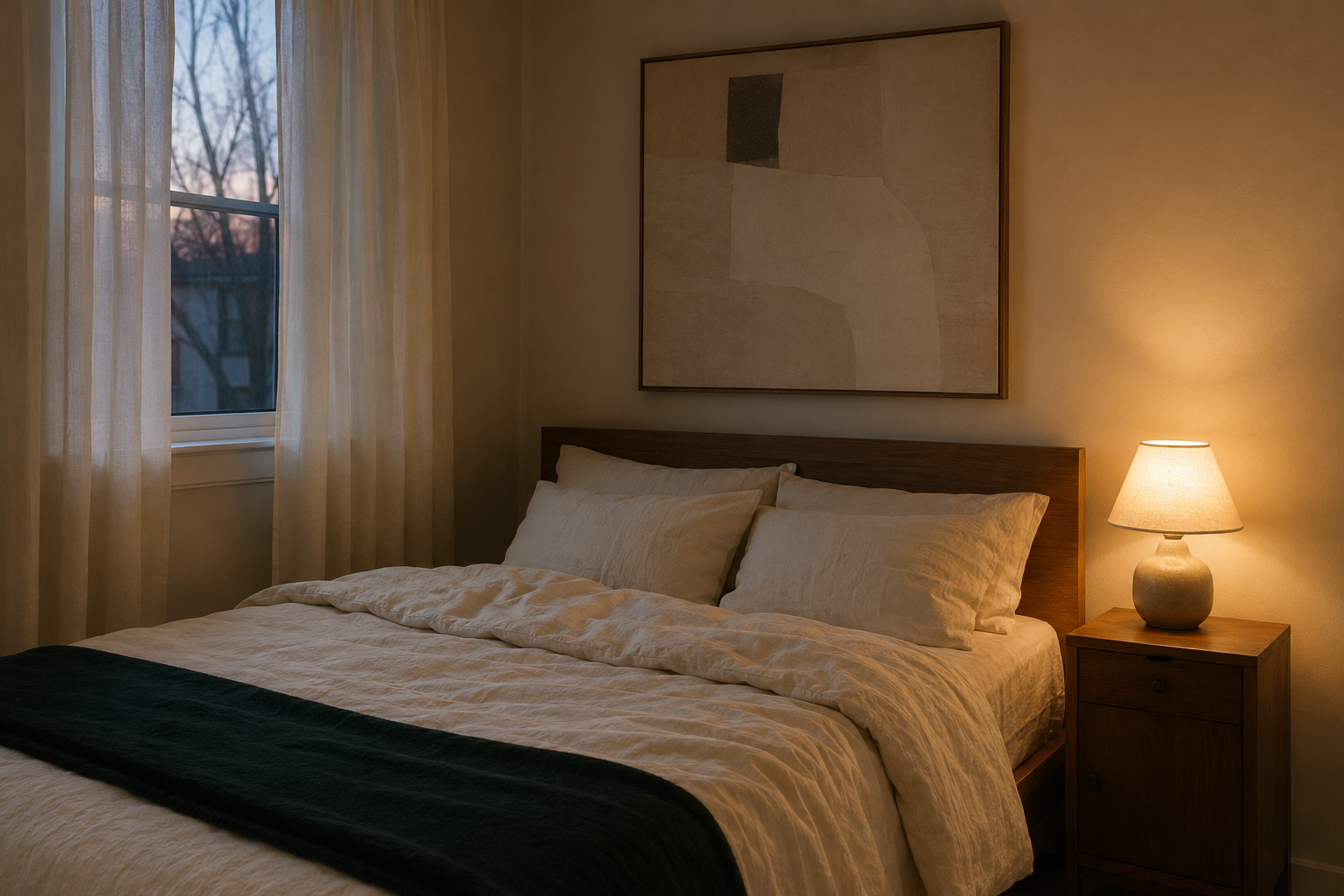
You can walk into a small bedroom that technically has everything — a nice duvet, a few frames on the wall, a plant on the windowsill — and still feel like something’s off. Not cluttered exactly. Not ugly. Just not quite settled. That feeling usually has nothing to do with what’s missing and everything to do with what’s competing for attention that doesn’t need to be.
A small bedroom rarely needs more decor to feel finished. It needs fewer, more deliberate decisions about color, light, and texture, and the willingness to leave a wall a little emptier than instinct says it should be. This guide walks through those decisions — and, just as importantly, what to leave out.
Why More Decor Rarely Helps a Small Bedroom
A small room has a limited amount of visual “airspace,” and every object in it — a frame, a candle, a stack of books on the nightstand — takes up a share of that airspace whether or not it’s doing anything useful. In a large room, a few extra decorative objects barely register. In a small bedroom, the same few objects can be the difference between a room that reads as calm and one that reads as busy, even if nothing about it is technically messy.
This is why the instinct to “finish” a small bedroom by adding more — another throw pillow, another small frame, a second plant — often backfires. The room was probably closer to done than it felt. What it needed wasn’t addition. It was a color decision, a lighting fix, or permission to leave one wall alone.
The Color Decision That Changes Everything
Committing to two or three colors, repeated deliberately across bedding, textiles, and the one or two decor pieces you keep, does more for a small bedroom’s calm factor than almost any single purchase. A room with five or six competing colors reads as busy even when every individual piece is nice on its own — the eye has nowhere to rest, because everything is asking for attention at once.
As a renter, this is also the decision that costs the least and matters the most, since it doesn’t require paint or anything permanent. Pick your dominant neutral (a warm cream, a soft gray, whatever the room’s existing walls lean toward), one deeper accent color for a throw or a couple of pillows, and stop there. Resist adding a third or fourth accent color just because you found something you liked in the store — the calm comes from the restraint, not from finding more things you like.
Layering Light So the Room Feels Warm at Night
A single overhead fixture left as the only light source is one of the fastest ways to make an otherwise well-decorated bedroom feel flat and unfinished, especially in the evening, when overhead light reads as harsh rather than restful. Adding even one additional light source — a bedside lamp, a small plug-in sconce — changes how the entire room feels after dark, often more than any decor purchase would.
Warm-toned bulbs (roughly 2700–3000K) suit a bedroom far better than the cooler daylight bulbs many rentals install by default. This is a five-dollar fix that quietly does more for a room’s evening atmosphere than a new duvet cover.
One Textile Layer Beyond the Basics
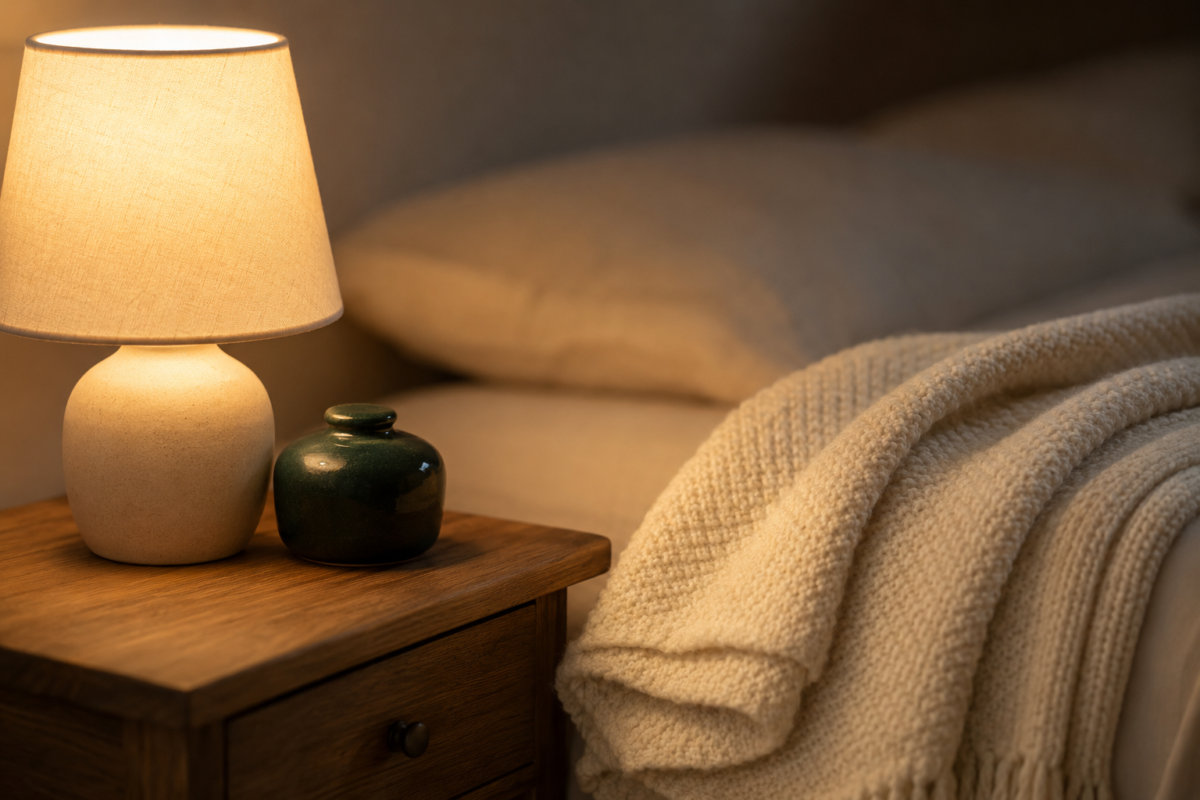
Bedding alone rarely makes a bed feel finished — it’s the layer added on top of the basics that does that work, and one is usually enough. A folded throw at the foot of the bed, one or two textured pillows in your accent color, or a woven blanket draped over a nearby chair all add the visual depth a plain, made bed is missing, without requiring a full bedding replacement.
The mistake worth avoiding here is treating “more pillows” as the solution. A bed with eight decorative pillows to remove every night before sleeping isn’t calm — it’s a nightly chore disguised as styling. One well-chosen textile layer, in a color that ties back to the room’s two or three main colors, does more than a pile of mismatched extras ever will.
The Wall Decor Question
One larger piece of art or a single meaningful object, sized appropriately for the wall it’s on, almost always reads as calmer than a cluster of several small frames — even when the cluster technically contains more “content.” A small bedroom’s wall space is limited, and a gallery wall that would feel intentional in a large living room can feel crowded and busy above a bed that’s already the room’s dominant visual feature.
If you’re drawn to a collected, layered look, one alternative that still respects a small room’s limited wall space: a single larger frame with a leaned, smaller piece beside it on a shelf or nightstand, rather than four or five pieces spread across the wall in a grid. This gives some of the “collected” feeling without asking the wall to hold more than it comfortably can.
Making It Work Without Damaging the Walls
Every decor choice in this guide is achievable without a single nail hole, which matters in a rental where wall damage can mean losing part of a deposit. Command strips and hooks rated for the actual weight of what you’re hanging hold most small bedroom art and mirrors just as securely as a nail, and they remove cleanly when it’s time to move.
For a larger, heavier piece, a leaning approach solves the weight question entirely — a framed piece leaned against the wall on a dresser top or a floor-level ledge shelf carries real visual weight without needing to be mounted at all, and it’s the single easiest decor choice to change your mind about later, since nothing has to come down off a wall. If your lease specifically allows a small number of nail holes (many standard leases do, within reason), that opens up more traditional hanging options too — it’s worth checking before assuming everything has to lean or stick.
Refreshing the Room Without Buying New Things
A small bedroom’s decor doesn’t need a full seasonal overhaul to feel current — rotating what you already own between rooms, or simply swapping which pieces are on display, often accomplishes the same refresh a shopping trip would, for nothing. A throw that’s been living on the living room sofa for six months can move to the bedroom for a season and feel new again, purely from the change of context.
This matters most for the accent textiles covered earlier — the throw, the extra pillow covers, anything that isn’t structurally part of the bed. Keep a small rotation of two or three options in a closet or storage bin, and swap them in occasionally rather than assuming “refreshing the room” always means a purchase. The color and restraint principles from earlier in this guide still apply during a rotation — swap toward your existing palette, not away from it, or the room loses the cohesion that made it feel calm in the first place.
What Calm Actually Means in a Bedroom
A bedroom is one of the only rooms in a home whose entire job is rest, which makes visual calm a functional decision here in a way it isn’t quite the same in a living room or kitchen. A visually busy bedroom doesn’t just look less put-together — it can genuinely make it harder to unwind at the end of a day, simply because there’s more for the eye (and, by extension, the mind) to process before settling.
This is worth remembering when you’re deciding whether to add one more thing to a small bedroom that’s already functioning fine. The question isn’t just “would this look nice here?” It’s “does the room need this to feel finished, or would leaving this wall, this shelf, this corner alone actually serve the room better?” More often than people expect in a small bedroom, the honest answer is the second one.
A Simple Nightly Reset
A finished-feeling small bedroom stays that way with a short nightly habit, not a big weekend reorganization — putting away the day’s clothes, clearing anything that landed on the dresser or nightstand that doesn’t belong there, and leaving the surfaces exactly as calm as you decorated them to be. This takes a few minutes and prevents the slow creep where a beautifully decorated room quietly turns back into a catch-all within a couple of weeks.
The habit matters more than any specific decor choice in this guide, honestly. A room with the perfect color palette and lighting still feels chaotic if the nightstand disappears under mail and loose change every few days. Decor sets the stage. The nightly reset is what keeps the room actually living up to it.
FAQ
Do I need to repaint to make a small bedroom feel calmer? No. Color restraint through bedding, textiles, and the pieces you choose to keep does most of the work, and it’s fully reversible — which matters if repainting isn’t an option in your rental anyway.
How many decorative pillows should a small bed actually have? One or two beyond your standard sleeping pillows is usually enough. More than that turns into a nightly chore of removing and replacing them, which works against the calm feeling decor is supposed to create.
Is a gallery wall a bad idea in a small bedroom? Not necessarily, but it needs restraint. A cluster of many small frames can feel busy above a bed in a small room — a single larger piece, or a smaller grouping of two or three pieces at most, usually reads calmer.
What’s the cheapest change that makes the biggest difference in a small bedroom? Swapping to warm-toned bulbs (2700–3000K) in your existing lamps and fixtures. It costs very little and changes how the entire room feels, especially in the evening.
How do I know if my small bedroom needs more decor or less? If you’re adding things and the room still doesn’t feel finished, the problem is more often unresolved color or lighting than a lack of objects. Try addressing those two first before adding anything new.
Can I decorate a small bedroom without buying anything new? Often, yes. Rotating textiles between rooms, rehanging existing art in a leaner arrangement, and swapping bulbs for a warmer color temperature all refresh a room using what you already own, at little to no cost.
Is it worth hiring help to hang art in a rental if I’m worried about damage? Rarely necessary. Weight-rated command hooks handle most bedroom art and mirrors safely, and leaning a piece against the wall avoids the question of wall damage entirely for anything you’re unsure about.
Related Reading
- The Complete Small Bedroom Guide — the full layout → storage → decor sequence this guide fits into
- Small Bedroom Layout Guide — bed placement and furniture arrangements that work around one window and one door
- Small Bedroom Storage Guide — storage that doesn’t need a walk-in closet
- Complete Guide to Decorating a Small Bedroom — related Taims Space guide.
- Lighting Ideas for Small Bedrooms — related Taims Space guide.
- Color Palettes for Small Bedrooms — related Taims Space guide.
- Small Bedroom Decor on a Real Budget — related Taims Space guide.
- Complete Guide to Small Bedroom Layouts — related Taims Space guide.
Category: Bedroom Decor Hub: /small-bedrooms/
Reviewed by the Taims Space editorial team.