Table of Contents
Somewhere between “this is definitely not my kitchen” and “I’m not touching a single thing I might lose my deposit over,” there’s a real middle ground. Most renters just don’t know how wide it actually is.
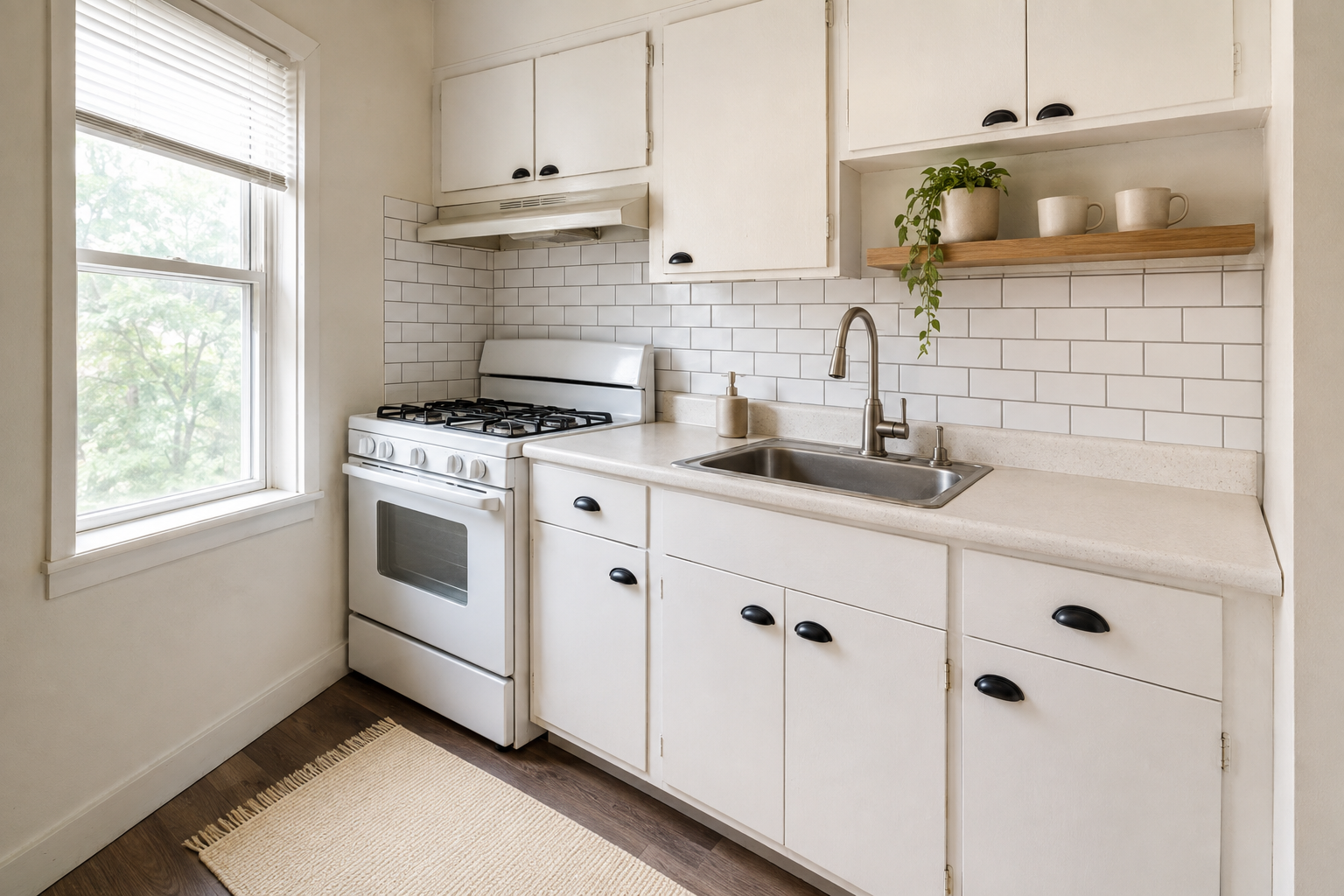
The honest version: a huge share of what makes a kitchen feel personal has nothing to do with permanent changes. Backsplash, hardware, lighting, and the objects on your open shelves do more visual work than the actual bones of the room, and every one of those layers can go on now and come off completely clean later. The trick isn’t finding workarounds for renovation. It’s understanding that most of what people assume requires permission never did.
This guide covers the upgrades that genuinely hold up to a move-out inspection, roughly ranked by how much visual impact they deliver for the risk and cost involved, plus the handful of products that only claim to be damage-free and shouldn’t be trusted with a security deposit.
What “Damage-Free” Actually Means for a Rental
A genuinely damage-free upgrade is fully removable within a normal lease term, leaves no residue, discoloration, or adhesive marks, and restores the surface underneath to its original condition without professional repair. That’s a higher bar than “removable,” which a lot of products claim while leaving behind a faint outline, a peeled patch of paint, or a sticky residue that still costs part of a deposit to fix.
The safest category, almost without exception, is anything designed specifically for renters: products explicitly tested and marketed for rental use, with manufacturer guidance on surface prep and removal. The riskiest category is anything repurposed from a use it wasn’t designed for, like using a general craft adhesive to mount something meant to be permanent.
Before applying anything to a wall, cabinet, or surface, two quick checks save most of the regret later. First, test on a hidden spot, like inside a cabinet or behind an appliance, and leave it for the same amount of time you’d realistically leave the real installation. Second, read your specific lease’s language on alterations rather than assuming a general “no modifications” clause covers surface-level, removable changes, since many leases distinguish between structural changes and cosmetic ones.
The Highest-Impact, Lowest-Risk Upgrades
These are the changes that move a kitchen the furthest from “builder-grade rental” toward “actually mine,” ranked by how much they change the room relative to the effort and risk involved.
Peel-and-stick backsplash behind the stove or sink is close to the single highest-return upgrade available. Applied over a clean, primed, non-textured surface and removed within the manufacturer’s recommended window, most quality peel-and-stick tile comes off without residue. A typical run behind a standard stove costs well under $50 and takes an afternoon, and it changes how “finished” the entire kitchen reads more than almost any other single change on this list.
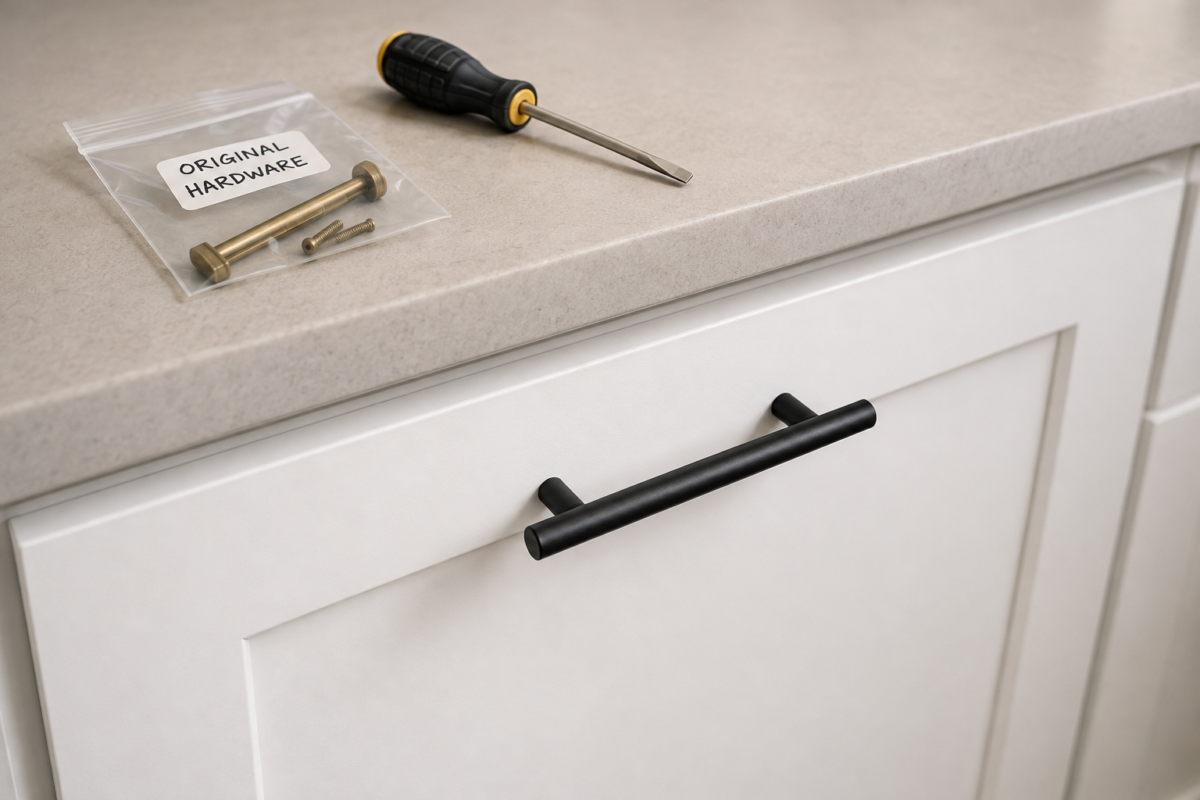
Cabinet hardware swaps are the second-highest return for the least effort. New pulls and knobs change the entire visual read of a cabinet front in under an hour, using a drill only to widen or reposition existing holes if needed, which is itself reversible with basic wood filler on move-out. Keep the original hardware in a labeled bag rather than discarding it, since putting the originals back on is what makes this fully reversible.
Removable wallpaper, used sparingly on a single accent wall, the inside of open shelving, or even lining a single cabinet interior, adds pattern and personality without the commitment of a full-room application. Smaller applications are also lower-risk, since there’s less surface area for something to go wrong during removal.
A runner rug or floor mat in front of the sink or stove is zero-risk by definition, since nothing touches the floor’s finish, and it does real work softening a kitchen that’s otherwise all hard surfaces.
Open shelf styling, meaning the objects placed on any existing open shelving, is entirely reversible because nothing gets installed at all. A small collection of coordinated jars, a plant, and a stack of matching bowls can visually anchor a kitchen more than people expect from something this low-commitment.
What to Skip: Upgrades That Only Claim to Be Reversible
A few categories consistently disappoint renters who assumed “removable” meant fully damage-free, and it’s worth naming them directly.
Contact paper applied straight to unsealed or painted wood cabinets is the most common regret. On a properly sealed, smooth laminate surface it usually comes off fine. On unsealed wood or certain painted finishes, it can pull paint or finish off with it, leaving a patchy surface that’s more work to fix than the cabinet started with.
Heavy-duty adhesive hooks rated below the actual weight they’re holding fail in a specific, frustrating way: not by falling off cleanly, but by peeling paint or drywall texture off with them when the adhesive finally gives. Always round up on the weight rating, and never mount one over painted drywall that’s less than a year cured.
Peel-and-stick tile applied over textured or heavily patterned existing tile rarely lays flat and rarely removes cleanly, since the adhesive has to work around every ridge and grout line of the original surface. This works best over a smooth, flat backsplash or painted drywall, not over existing textured tile.
Any “temporary” paint product used on cabinets, despite marketing claims, tends to require sanding or professional-grade stripping to fully remove, which puts it closer to a real renovation decision than a rental-friendly one. If cabinet color is the goal, hardware and open shelving styling get most of the visual impact without touching the actual cabinet finish.
Sequencing the Upgrade So It Actually Looks Intentional
Rental kitchen upgrades read as intentional, not thrown-together, when they’re layered in a specific order rather than done all at once. Doing everything simultaneously often produces a kitchen that looks like a mood board exploded in it. A staged approach lets each layer settle and reveals what the space actually still needs before the next purchase.
Start with hardware, since it’s the cheapest, fastest, and lowest-risk change, and it immediately shifts how the existing cabinets read. Move to backsplash next, since it’s the single biggest visual transformation and benefits from a kitchen that already has updated hardware around it. Add textiles, meaning a runner rug and any window treatment, once the hard surfaces are settled. Finish with open shelf and counter styling, the smallest individual changes but the ones that make the space feel lived-in and finished rather than staged.
Skipping straight to styling before the hardware and backsplash are done tends to produce a kitchen that photographs fine in one corner and still reads as unfinished builder-grade everywhere else the camera doesn’t point.
Lighting and Small-Scale Fixture Upgrades
Lighting rarely makes anyone’s first list of rental upgrades, but it changes how a kitchen feels more than most people expect, and almost every option here is fully reversible.
Plug-in under-cabinet lighting solves the harsh, single-overhead-fixture problem that most rental kitchens share. A slim LED strip, mounted with adhesive clips rather than screws, plugs into an existing outlet and adds warm, even light directly onto the counter where you actually need it. No electrician, no wiring changes, and it unplugs and comes down in minutes.
Swapping a ceiling fixture’s bulb and shade, where the fixture itself has a removable glass shade, is a smaller but real upgrade. A warmer color-temperature bulb, in the 2700K to 3000K range, softens the sterile, blue-white light a lot of builder-grade fixtures ship with, and it’s as reversible as unscrewing a bulb.
A plug-in pendant light kit, hung from a hook rather than hardwired, works in kitchens with an outlet positioned high enough on the wall or ceiling to route the cord discreetly. This is a more involved project than the others on this list, and it’s worth confirming your lease allows a ceiling hook before committing to it.
Battery-powered puck lights inside open shelving or along the underside of a cabinet add a soft glow without any outlet or wiring at all. They’re the lowest-commitment option here and a reasonable starting point if you’re not sure how far you want to take the lighting layer.
None of these require touching a single wire, and together they solve the specific problem that paint and backsplash can’t: how the kitchen actually looks and feels once the sun goes down and the only light source is whatever fixture the lease came with.
Frequently Asked Questions
Will my landlord notice if I put up peel-and-stick backsplash? Most landlords won’t notice during a normal tenancy, since the tile looks intentional rather than temporary. What matters is removal before move-out inspection, done within the manufacturer’s recommended timeframe so no residue or discoloration remains.
Can I paint kitchen cabinets in a rental and still get my deposit back? Generally no, unless your specific lease explicitly allows it. Cabinet paint requires sanding, priming, and multiple coats to apply well and an equal amount of work to reverse, which puts it outside the fully reversible category most renters should stick to.
How long can peel-and-stick tile stay up before it becomes hard to remove? Most manufacturers recommend removal within one to two years for the cleanest results. Beyond that window, adhesive can bond more permanently to the surface, especially in kitchens with regular heat and grease exposure near the stove.
Is it worth swapping cabinet hardware if I’m only renting for a year? Yes. The swap takes under an hour, costs relatively little, and the new hardware moves with you to the next place. It’s one of the few upgrades with essentially no downside even on a short lease.
What’s the single best upgrade for someone with a tiny budget and a strict landlord? Cabinet hardware and open shelf styling together. Both are fully reversible, require no wall or surface alteration at all if drilling isn’t allowed, and combined they change the kitchen’s overall feel more than their low cost would suggest.
Related Reading
- The Complete Small Kitchen Guide — the full storage → organization → style sequence this guide completes
- Small Kitchen Storage Guide — the vertical storage additions worth solving before layering on style
- Small Kitchen Organization Guide — the drawer systems and habits that keep the kitchen functional underneath the new finishes
- Complete Guide to Rental Kitchen Upgrades — related Taims Space guide.
- Removable Backsplash Options — related Taims Space guide.
- Cabinet Hardware Swaps That Come Off Clean — related Taims Space guide.
- Peel-and-Stick Upgrades Worth the Money — related Taims Space guide.
- Complete Guide to Decorating a Small Kitchen — related Taims Space guide.
Category: Rental Kitchen Upgrades Hub: /small-kitchens/
Reviewed by the Taims Space editorial team.