Table of Contents
Save enough Pinterest photos of the same kind of room and a pattern shows up fast. It’s never twelve different items making the photo work. It’s one, sometimes two, and everything else in the frame is doing quiet supporting work around it. Getting the look for less starts with finding that one item, not with trying to recreate the whole photo piece by piece.
Getting the look for less means identifying the single hero piece actually carrying a room’s visual impact, whether that’s a light fixture, a furniture silhouette, or a color choice, then finding an affordable version that matches its shape and finish. Everything else in the photo can usually be approximated loosely or skipped, because it isn’t doing the visual work you think it is.
What “The Look for Less” Actually Means
Getting the look for less isn’t about finding cheap versions of everything in a photo. It’s about correctly identifying which single item is responsible for the room reading as expensive or considered, then spending your actual budget only on matching that one thing closely. Every other item in the photo gets loose, affordable treatment instead.
This distinction matters because most budget attempts at recreating a room fail for the opposite reason people assume. It’s rarely that the affordable version of an item looks bad. It’s that the wrong item got the careful matching, while the actual hero piece got skipped or approximated. A perfectly matched throw pillow can’t rescue a room if the light fixture, which was the real reason the original photo worked, never got addressed at all.
How to Identify the Hero Piece in Any Room
A hero piece is the one element that would change the entire feel of the room if it were removed or swapped, unlike supporting elements, which barely register if they’re changed or missing. In most styled photos, this is a lighting fixture, one specific furniture silhouette, a rug, or a single strong color choice, and it’s rarely more than one item at a time.
Test this against a photo you already love. Mentally remove one item at a time and ask whether the room still feels like the same room. Remove a decorative bowl or a small stack of books and the room barely changes. Remove the sculptural floor lamp or the curved sofa and the entire photo stops working. That second category is the hero piece.
Hero pieces tend to fall into a short list of repeating categories:
- A lighting fixture with an unusual shape or material, like a sculptural floor lamp or a fixture with a distinctive shade shape.
- One furniture silhouette, usually a sofa, chair, or bed frame with a distinctive curve, arm shape, or leg style that reads as designed rather than generic.
- A rug with a strong pattern or unusual weave, especially in rooms where the furniture itself is fairly plain.
- A single bold color choice, often on one wall, one piece of furniture, or one large textile, used as the room’s one clear accent.
- An architectural or structural detail, like an arched doorway or a fireplace, which can’t be replicated in a rental but does explain why a photo isn’t fully reproducible, and shouldn’t be chased.
The Squint Test: A Fast Way to Isolate the Hero Piece
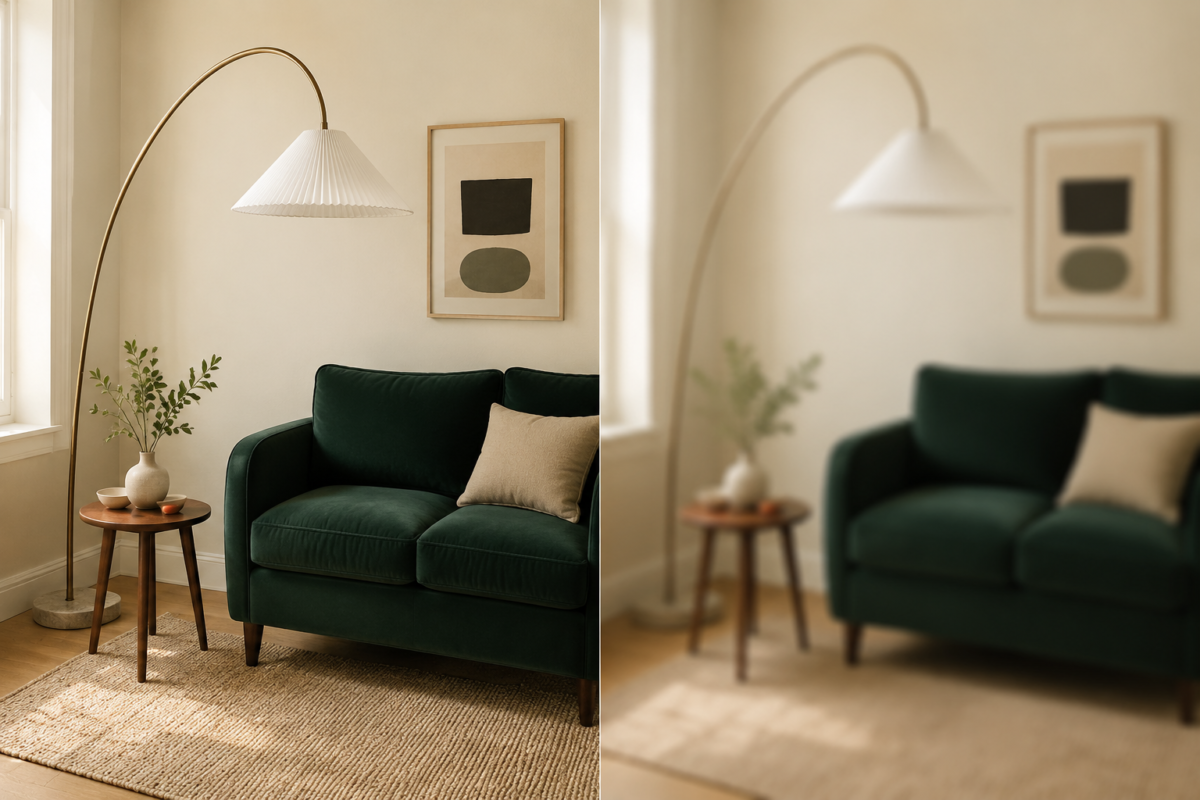
Squint at the photo, or blur your eyes slightly, and notice which single shape or color still reads clearly. That shape is almost always the hero piece, because it’s the element with enough visual weight to survive when all the fine detail gets stripped away.
This works because it forces your eye to stop cataloguing individual objects and instead register the room the way it actually reads at a glance, which is closer to how anyone experiences a room in real life. Nobody walks into a space and consciously inventories every throw pillow. They register one or two strong shapes first, then the details fill in afterward, if at all.
Try it on three or four saved photos in a row. The hero piece is usually obvious within a few seconds once you’re specifically looking for shape and color instead of individual objects.
Where to Find Affordable Versions of the Hero Piece
Search by silhouette and material, not by brand name, since most affordable versions of a hero piece exist under completely different product names and will never show up if you search for the designer piece by name alone. Describe the shape in plain terms instead, like “curved arm boucle loveseat” or “fluted ceramic table lamp,” and search marketplaces and general retailers using that description.
A few sourcing approaches consistently work better than searching for the exact original:
- Search by shape descriptor, not brand. “Arched floor lamp” finds far more affordable matches than the specific designer name of the fixture you’re trying to copy.
- Check secondhand marketplaces before new retailers. Distinctive furniture silhouettes, especially chairs and lamps, show up used at a fraction of the original cost, particularly in larger cities with more turnover.
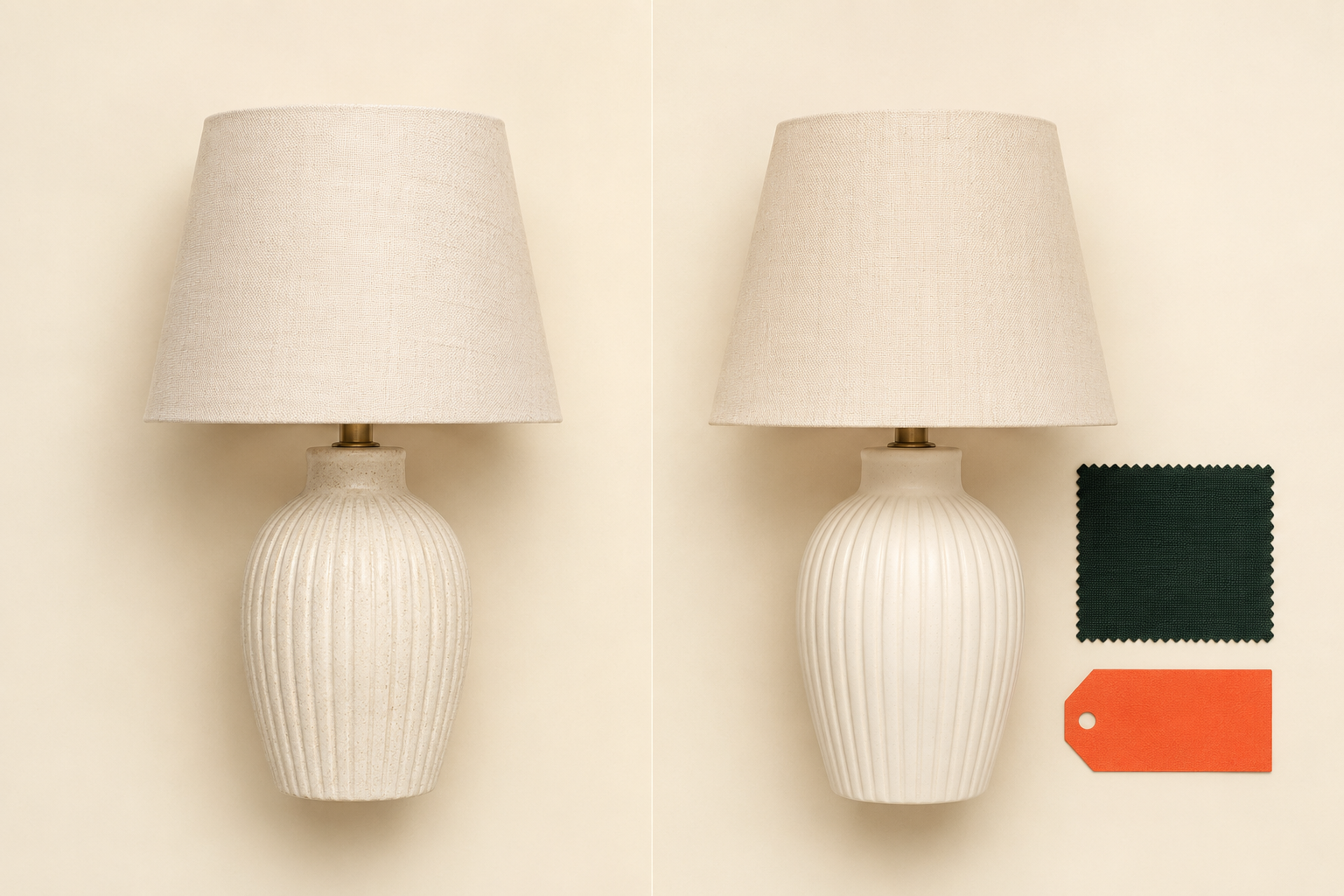
- Prioritize matching the silhouette over the material. A resin or ceramic version of a fluted lamp base reads nearly identically to a more expensive stone version from a normal viewing distance, even though the materials are completely different.
- Look at big-box and mass retailers’ higher tiers first. Most major home retailers now stock a “elevated” or “designer collaboration” tier that specifically chases these silhouettes at a fraction of the original price, and it’s usually the fastest match.
- Save the exact measurements of the original piece, not just the photo, before searching. A lamp that’s the right shape but six inches too short won’t read the same way once it’s actually in your room.
What You Can Safely Skip Once You’ve Matched the Hero Piece
Skip trying to match every smaller object in the photo once the hero piece is handled, since supporting items like books, small trays, and minor decor objects barely register compared to the one piece actually carrying the room. Fill those spots with whatever you already own or can find cheaply, without spending real research time trying to match them closely.
This is where most of the actual budget savings happen. If the floor lamp is correctly matched, the exact ceramic bowl beside it on the side table can be almost anything with a similar general shape and color, and the room will still read as intentional. Chasing an exact match on every visible object in a saved photo is where budgets and patience both run out, usually before the one item that actually mattered gets addressed.
A Worked Example
Picture a saved photo of a small living room: a curved boucle loveseat in warm cream, a sculptural floor lamp with a fluted ceramic base, a low wooden coffee table, a small stack of books, one ceramic bowl, and a plant in the corner. Run the squint test and two shapes survive the blur clearly: the curved loveseat silhouette and the fluted lamp base. Those are the hero pieces. Everything else, the books, the bowl, the coffee table, and the plant, disappears into soft shapes that don’t carry the photo on their own.
From here, the budget plan is straightforward. Spend real research time finding an affordable curved boucle loveseat and a fluted ceramic lamp base, searching by shape rather than brand, and checking secondhand listings first. For the coffee table, any low wooden table in a similar tone works, since it barely registered in the squint test. For the books, bowl, and plant, use whatever you already own. The finished room, done this way, reads remarkably close to the original photo, because the two elements actually carrying the visual weight got the careful treatment, and nothing else needed it.
Frequently Asked Questions
How do I know if I’ve found the actual hero piece in a photo? Run the squint test. Blur your eyes slightly while looking at the photo, and whichever shape or color still reads clearly is almost always the hero piece. If nothing stands out clearly, the room likely relies on a color palette or overall mood rather than one specific item.
Is it better to search secondhand or new for an affordable version? Check secondhand marketplaces first, especially for furniture with a distinctive silhouette. Used listings often include exactly the kind of shape-forward piece that’s hardest to find affordably new, at a much lower price.
Should I try to match the exact material of the hero piece? No. Matching the silhouette matters far more than matching the material. A different material in the same general shape, like resin instead of stone, reads nearly identically from normal viewing distance.
What if a room doesn’t have one obvious hero piece? Some rooms rely on an overall color palette or a consistent material story instead of one standout object. In that case, focus on matching the dominant wall or textile color closely, and treat every individual object more loosely.
How many items should I actually try to match closely in one photo? One or two, at most. Trying to closely match every object in a saved photo is the single most common reason budget recreations run out of time and money before the item that mattered most gets addressed.
Related Reading
If you’re deciding where to spend once you’ve identified a room’s hero piece, The 5 Places Worth Spending More When You’re on a Budget covers which categories are worth the extra cost.
For the full order to style a room in from scratch, The Complete Guide to Budget Styling a Small Space walks through lighting, textiles, and wall decor in sequence.
If your hero piece is a single wall or corner rather than one object, How to Style One Focal Point When You Can’t Redo the Whole Room covers how to build the rest of the styling around it.
Browse the full Get the Look for Less category for more room-specific dupe breakdowns, or explore the wider Budget Decor hub for thrift-first and DIY-friendly styling guides.