Table of Contents
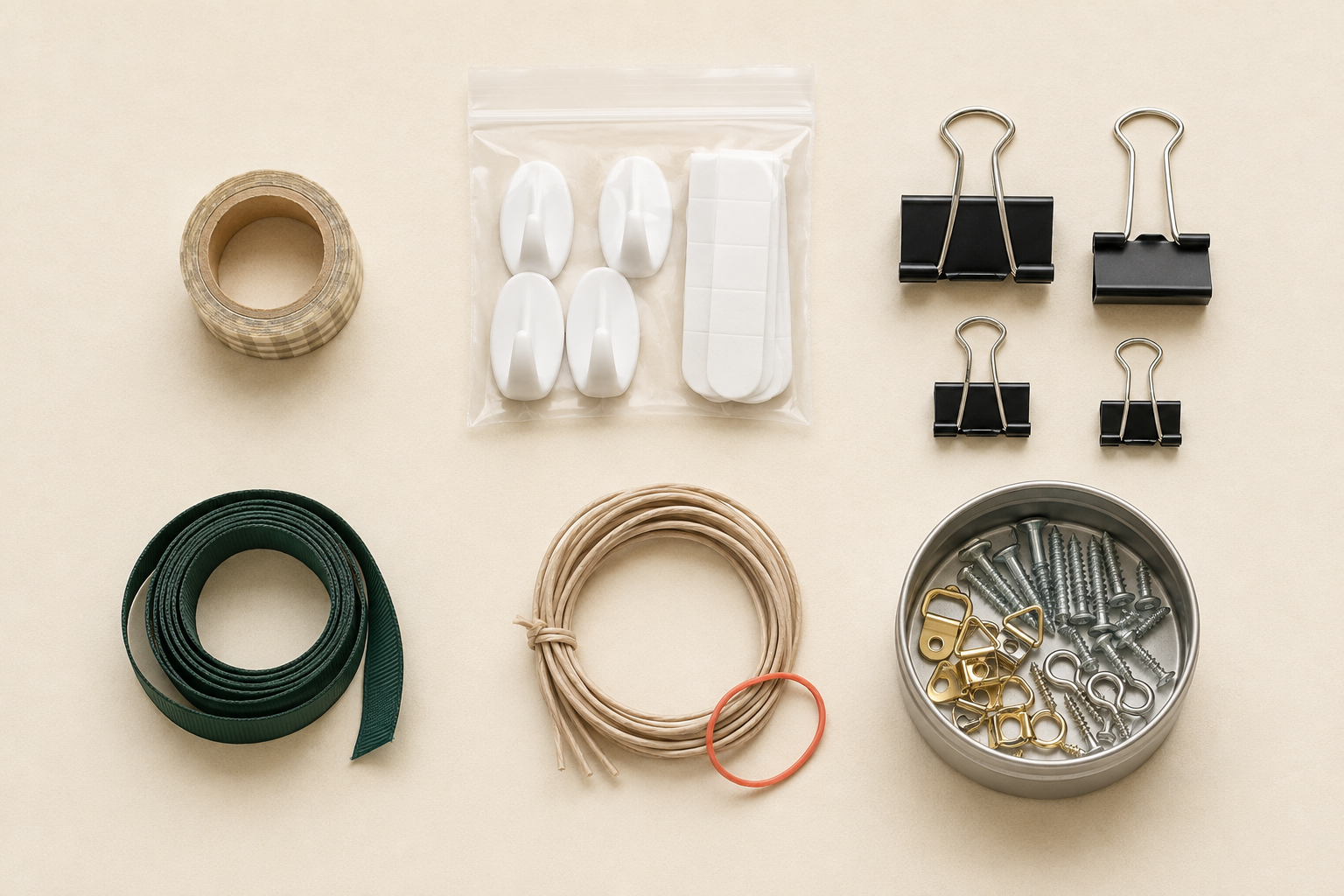
Open most junk drawers and there’s already a small hardware store in there. Tape, binder clips, spare screws, a tangle of rubber bands, maybe a pack of adhesive hooks bought for a project that never happened. None of it looks like decor. Most of it is decor, or at least the tool that gets decor done, once you know what it’s actually for.
Real, visible small space updates are possible using nothing but items already sitting in a typical junk drawer, like tape, binder clips, adhesive hooks, rubber bands, and spare hardware, without a single power tool. Each of these ordinary items solves a specific, common small-space problem, once you know which one to reach for.
Tape: The Most Underused Tool in the Drawer
Tape solves more small styling and organization problems than almost any other item in a typical junk drawer, since different tape types each handle a specific job, from temporary hanging to cord management to keeping a rug from sliding.
- Washi or painter’s tape works for temporarily hanging lightweight paper art, labeling storage bins clearly, or marking exact spacing before committing to a permanent hanging arrangement, since it removes cleanly without damaging rental walls.
- Double-sided tape holds a rug corner flat against hardwood or laminate flooring, stopping the curling and sliding that makes an otherwise nice rug look sloppy underfoot.
- Packing or duct tape, used sparingly on the underside of furniture, keeps a wobbly drawer track or loose cabinet liner in place until a proper fix is possible.
- Clear tape bundles loose cords along a baseboard or desk leg, keeping a tangle of charging cables from becoming the first thing anyone notices in an otherwise styled corner.
None of these require measuring twice or committing to anything permanent, which makes tape the lowest-risk starting point on this entire list.
Adhesive Hooks and Strips: Hanging Without Holes
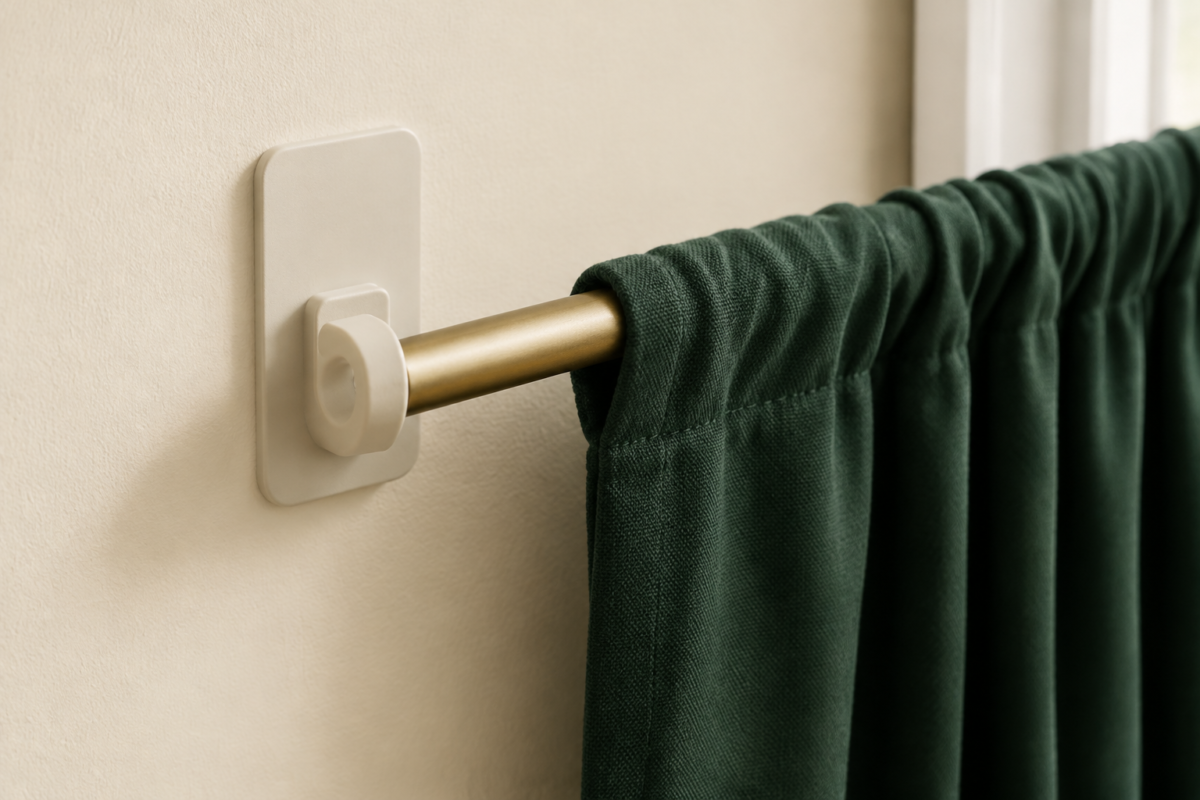
Rated adhesive hooks and strips hold real, meaningful weight, generally five to sixteen pounds depending on the specific product, which is enough for most lightweight decor, curtain rods, and even small mirrors without a single hole in a rental wall.
This is the closest thing to a genuine tool substitute on this list. A rated adhesive hook mounted properly, on a clean, flat, dry wall surface, holds a curtain rod, a small mirror, a set of hanging plants, or a lightweight shelf just as securely as a wall anchor would for most everyday use. The key word is rated. Check the weight limit printed on the packaging and stay under it, and give the adhesive its full recommended set time, usually an hour or more, before hanging anything.
Binder Clips and Clothespins: Small Hardware, Bigger Uses
Binder clips and clothespins solve cord, curtain, and labeling problems that would otherwise require a trip to buy a specific product, since their clamping function works just as well on a curtain fold as it does on a stack of papers.
- Pinch curtain panels into soft pleats at the top of the rod using clothespins, creating a more tailored, higher-end look than flat fabric bunched onto plain rings.
- Clip cords to the back or underside of furniture using a binder clip’s handles as a simple cord guide, keeping cables from dangling visibly along a desk or console.
- Label storage bins temporarily by clipping a small tag or folded piece of tape to a bin’s edge, useful for testing a labeling system before committing to a permanent version.
- Hold curtain liners in place behind a main curtain panel without sewing, using small clips along the top edge where the rod hides the hardware from view.
These tend to be the most overlooked items in this entire list, mostly because they’re filed mentally under “office supply” rather than “styling tool.”
Rubber Bands, Twist Ties, and Zip Ties: The Tiny Fixes
Rubber bands, twist ties, and zip ties handle the small, unglamorous fixes that quietly make a space function better, even though none of them ever appear in a styled photo.
A rubber band wrapped around a paint can lid keeps drips contained during a small touch-up project. A twist tie bundles the excess cord length behind a lamp or router into a neat coil instead of a visible tangle. A zip tie, trimmed close after fastening, secures a loose closet rod bracket or holds a runner rug’s edge flat along a stair nosing until a more permanent fix is possible. None of these fixes are exciting, but they’re the difference between a corner that looks finished and one that has a small, nagging flaw nobody’s addressed yet.
Spare Hardware: What’s Already in the Tin
A tin of mismatched spare screws, nails, and picture hooks, the kind almost every household accumulates from furniture assembly and past projects, usually has exactly what’s needed for small fixes and lightweight hanging without a single new purchase. Check this tin before buying anything for a small project. It’s frequently already solved.
A slightly loose cabinet handle just needs a screw a size larger than the stripped original, something almost every spare-hardware tin already has a few of. A single picture hook, rated for lightweight frames, is often sitting unused from a project finished months ago. Going through this tin before a shopping trip regularly turns up exactly what a small project needs, at no cost and no delay.
What Still Needs an Actual Purchase
A few small space needs genuinely can’t be solved from a junk drawer, most commonly a properly rated adhesive product for anything heavier than a light frame, or a tension rod sized correctly for a specific closet or window. Buying the right rated product for these two cases is worth it. Everything covered above handles the rest.
Frequently Asked Questions
How much weight can adhesive hooks actually hold? It depends on the specific product, but most rated adhesive hooks hold between five and sixteen pounds. Always check the weight limit printed on the packaging and stay under it, and let the adhesive fully set before hanging anything.
Can I really hang curtains without drilling into a rental wall? Yes, using a rated adhesive hook or bracket designed for curtain rod weight, or a tension rod sized to fit snugly inside the window frame. Both avoid drilling entirely and remove cleanly at move-out.
What’s the most useful junk drawer item for small space projects? Rated adhesive hooks and strips, since they come closest to replacing an actual tool by holding real weight without any drilling, which solves the largest share of rental-friendly hanging and mounting needs.
Should I check my junk drawer before buying supplies for a small project? Yes, almost always. Spare screws, extra picture hooks, and leftover tape from past projects solve a surprising number of small fixes without any new purchase, and it takes only a minute to check before heading to the store.
Related Reading
For the full range of DIY projects sorted by how much time each one takes, The Complete Guide to DIY-Friendly Small Space Updates covers everything from fifteen-minute fixes to full weekend projects.
If your no-tools project involves hanging art or building a gallery grouping, Affordable Wall Art and Decor That Looks Curated, Not Cheap covers sourcing and arrangement once the hardware is sorted.
For more damage-free hanging methods specifically built for rentals, Rental-Friendly Decor That Actually Looks Intentional covers every removable option by wall type.
Browse the full DIY-Friendly Updates category for more rental-safe projects, or explore the wider Budget Decor hub for get-the-look guides and thrift-first styling ideas.