Table of Contents
Move-out day has a way of turning small, forgotten decisions into real money. That adhesive hook from eight months ago, the one you genuinely can’t remember installing. The corner of removable wallpaper that never quite stayed down. Most security deposit deductions don’t come from one obvious disaster. They come from a handful of small projects nobody double-checked before starting.
A DIY project is genuinely deposit-safe when it can be fully removed in under ten minutes, leaves no visible mark from three feet away once it’s gone, and uses a product rated specifically for removable or temporary use rather than a general adhesive or paint product used carefully. Projects that fail any one of these three checks carry real risk, even when they look harmless while they’re up.
The Reversibility Test
Run every project through three questions before starting, since a project that fails even one of these usually carries more deposit risk than it looks like on installation day, when everything is fresh and undamaged and the actual test only happens months later at removal.
- Can it be removed in under ten minutes, without tools beyond your hands? A project that needs scraping, sanding, or a putty knife to come off has already failed this test, regardless of how it looked going up.
- Does removal leave a mark visible from three feet away? Stand back after removing a test patch, in a closet or other hidden spot, and check from a normal viewing distance rather than up close. A faint residue outline invisible up close can still be obvious from across a room under the right light.
- Is the product specifically rated for removable or temporary use? A general-purpose adhesive, even applied lightly, isn’t the same as a product engineered to release cleanly. If the packaging doesn’t say removable, temporary, or rental-safe, don’t assume it behaves that way.
A project that passes all three is genuinely low-risk. A project that passes one or two, but not all three, deserves a real test patch in a hidden spot before it goes anywhere visible.
Projects That Reliably Pass
Rated adhesive hooks and strips, tension rod systems, and true removable wallpaper are the DIY categories that most consistently pass all three reversibility checks, because each was specifically engineered for temporary use rather than adapted from a permanent product.
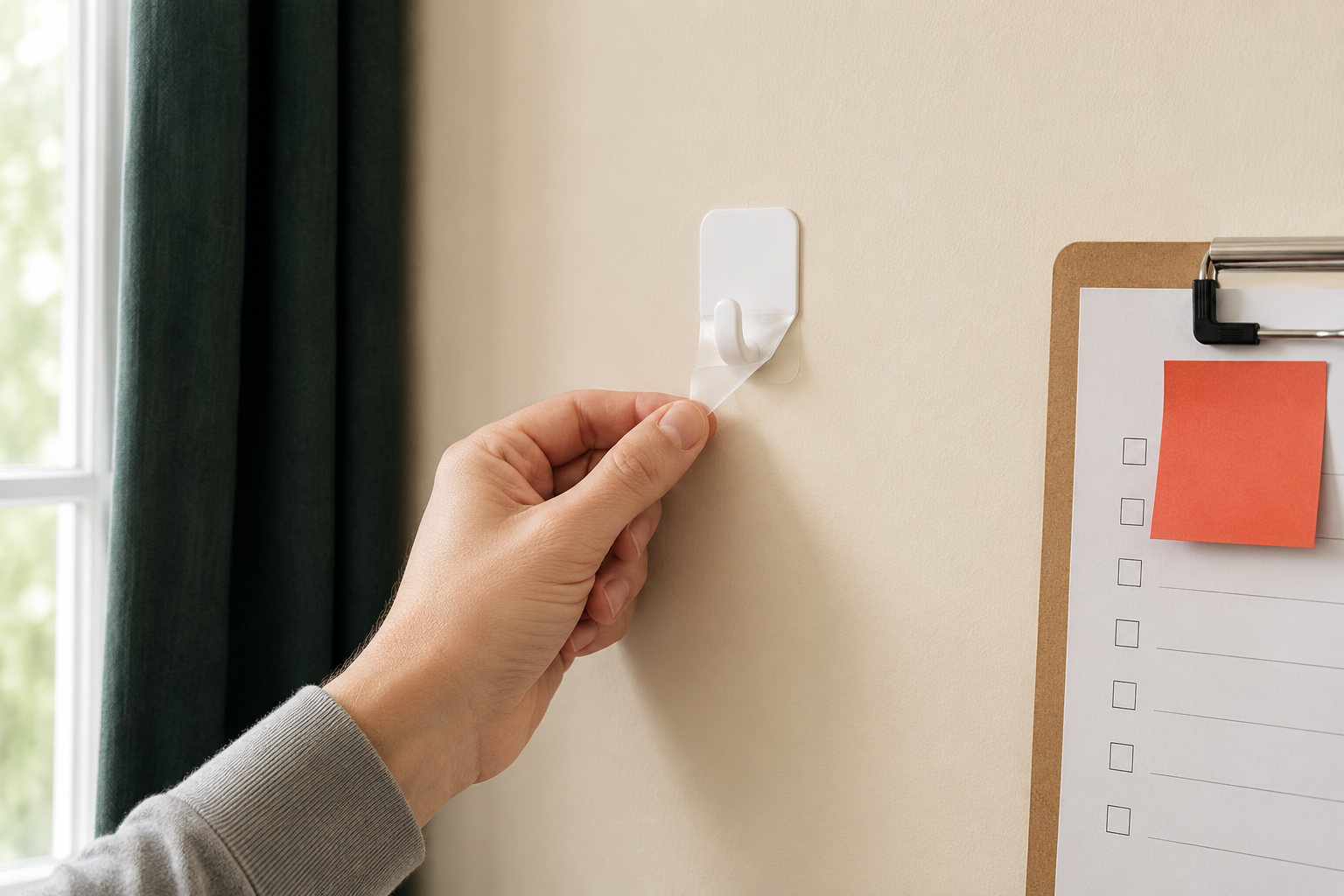
- Rated adhesive hooks and strips, used within their printed weight limit and given full set time before hanging anything, remove cleanly from most painted walls when pulled slowly and at the angle shown on the packaging.
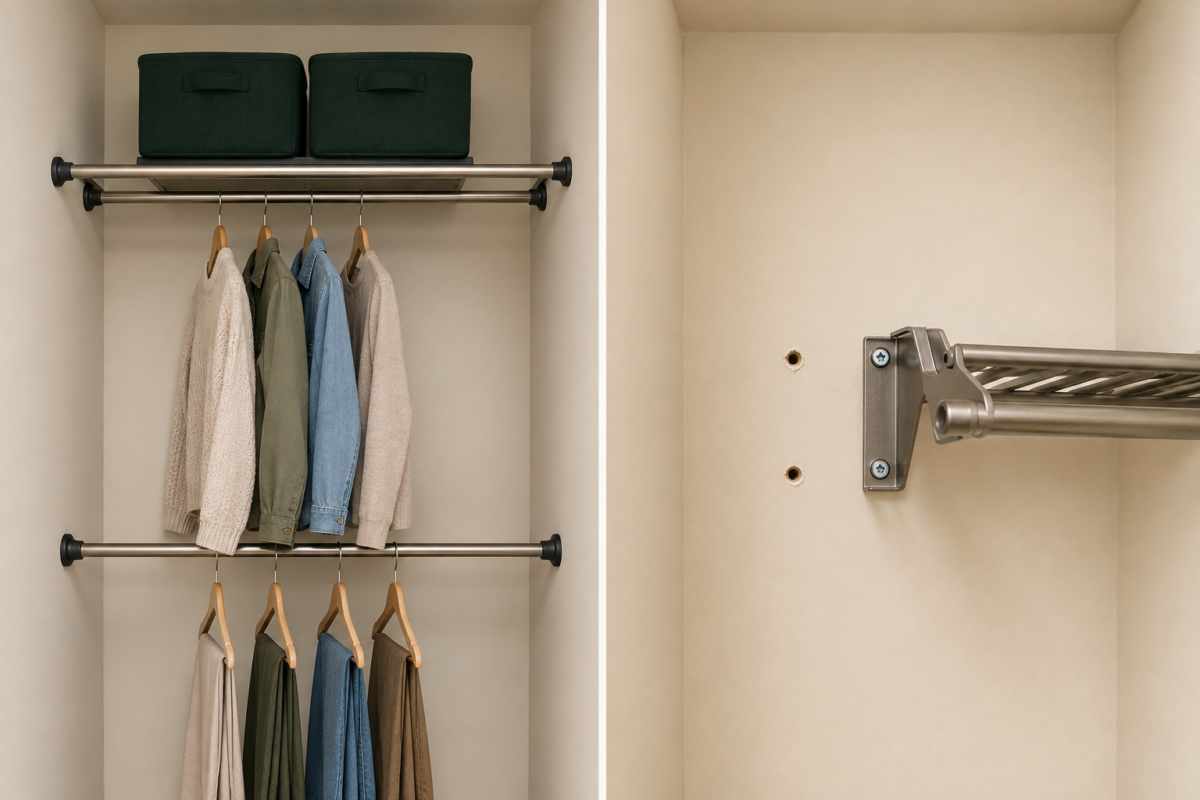
- Tension rods, sized correctly for a closet, window, or shelf opening, install and remove with zero adhesive or hardware at all, making them close to risk-free by design.
- True removable wallpaper, tested first on a small, hidden section like inside a closet, peels away cleanly from most painted drywall when it’s genuinely designed for temporary use rather than mislabeled contact paper.
- Cabinet and drawer hardware swaps, as long as the original hardware is kept in a labeled bag for reinstallation before move-out. This one isn’t about adhesive at all, just remembering where the original screws went.
- Magnetic organizers on a refrigerator or other metal surface. These use no adhesive at all and carry essentially no removal risk.
Projects That Are Riskier Than They Look
Paint, even primer marketed as landlord-friendly, general contact paper on unprimed or textured surfaces, and adhesive products mounted on tile, stone, or textured walls are the categories most likely to cause real, chargeable damage, since each of these interacts with the surface in ways that are hard to fully reverse regardless of how carefully the product is applied.
- Paint, including small accent sections. Even a single small painted panel changes the wall’s finish permanently unless it’s repainted back to the exact original color and sheen before move-out, which is harder to match than most renters expect.
- Contact paper on unprimed or textured surfaces. Contact paper applied to a rough or textured wall, rather than a smooth cabinet or shelf surface, often tears rather than peels cleanly, leaving adhesive residue embedded in the texture.
- Adhesive products on tile, stone, or heavily textured walls. Standard rated adhesive strips are tested and rated for smooth, painted drywall specifically. The same product on tile or stone can pull off glaze or leave a residue that’s genuinely difficult to remove.
- Anything requiring caulk removal or replacement. Re-caulking around a sink or tub changes the existing seal, and a rushed or uneven job is one of the more commonly flagged issues at move-out inspections, since it’s both visible and functional.
- Nail holes larger than a small picture hook. A handful of small picture-hook holes is standard wear in most lease agreements. Larger holes from shelf brackets or anchors typically are not, and patching them convincingly takes real skill most renters don’t have on hand.
What to Document Before You Start
Take dated photos of every wall, cabinet, and fixture before starting any DIY project, and again immediately after removing it, since move-out disputes over deposit deductions usually come down to whether either side has clear evidence of the wall’s original condition, and most renters only think to document damage, not the absence of it.
A few habits make this painless rather than a chore. Photograph the full wall, not just the specific spot, so lighting and angle can be matched later if needed. Keep original hardware in a labeled bag or small container as soon as it’s removed, not loose in a drawer where it can get lost before move-out. And test any new removable product on a small hidden section first, checking it against the three-question reversibility test above before committing to anything visible.
Frequently Asked Questions
How do I know if a product is actually rated for removable use, not just marketed that way? Check the packaging specifically for the words removable, temporary, or rental-safe, and check the manufacturer’s stated removal method. If a product only mentions strength and holding power without any removal guidance, it’s likely a general adhesive rather than a true removable one.
Is it safe to paint a single accent wall in a rental? Generally, no, unless your lease specifically allows it and you’re confident you can repaint it back to the exact original color and sheen before move-out. Matching an existing paint color precisely is harder than most renters expect, and any noticeable mismatch is typically chargeable.
What should I do if I’m not sure whether a surface is safe for adhesive products? Test on a small, hidden section first, like inside a closet or behind furniture, and wait the full recommended time before checking for residue or damage. This catches most surface compatibility problems before they show up somewhere visible.
Are a few small nail holes actually a problem at move-out? Usually not. Most standard lease agreements treat a small number of picture-hook-sized holes as normal wear. Larger holes from shelf brackets, anchors, or heavier hardware are more often treated differently, so it’s worth checking your specific lease language if you’re unsure.
Related Reading
For the full range of DIY projects sorted by time investment, The Complete Guide to DIY-Friendly Small Space Updates covers everything from fifteen-minute fixes to full weekend projects.
If you’re working entirely from what’s already on hand, DIY Updates That Require Zero Power Tools covers which household items double as reliable, removable hardware.
For more damage-free styling methods specific to rentals, the Rental-Friendly Decor category in the Apartments & Rentals hub covers wall-hanging and layout options by wall type in more depth.
Browse the full DIY-Friendly Updates category for more rental-safe projects, or explore the wider Budget Decor hub for get-the-look guides and thrift-first styling ideas.