Table of Contents
The advice to “just put it in the attic” assumes an attic exists. In an apartment, a small rental, or a starter home without a garage, seasonal storage has to come from somewhere inside the living space itself, which means every square foot doing double duty matters. The good news is that a home doesn’t need a basement to rotate seasonal items well. It needs a ranked list of where the space actually is, starting with the biggest opportunity and working down to the smallest.
This guide ranks the storage options available in most small homes from highest capacity to lowest, so the biggest win gets used first before turning to smaller fixes.
First: Under-Bed Storage, the Single Biggest Untapped Space
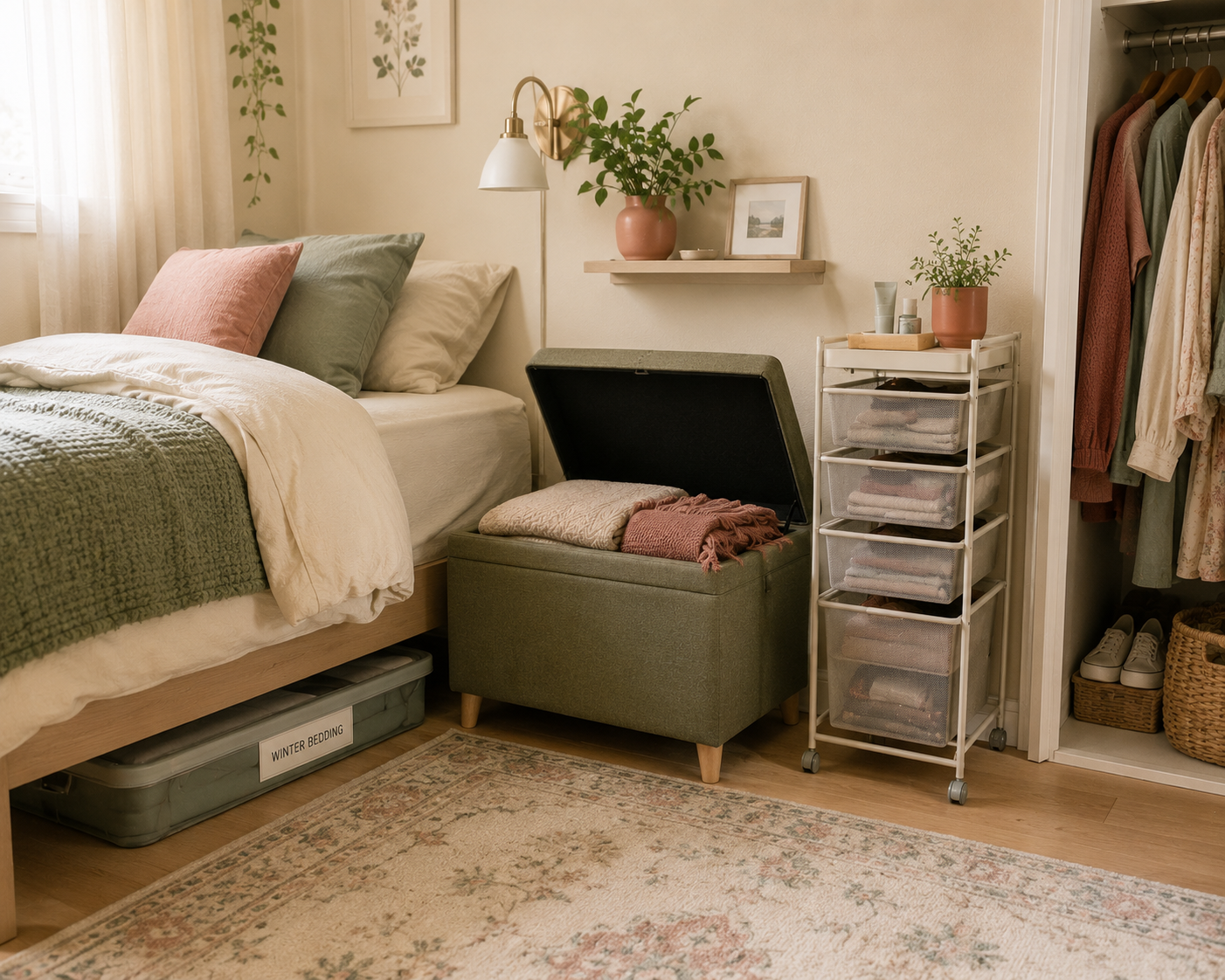
A standard bed frame sits 12 to 14 inches off the floor, which adds up to a genuinely large storage footprint that goes almost entirely unused in most homes. A queen bed alone offers roughly 30 square feet of storage space underneath it, more than most closets provide in total.
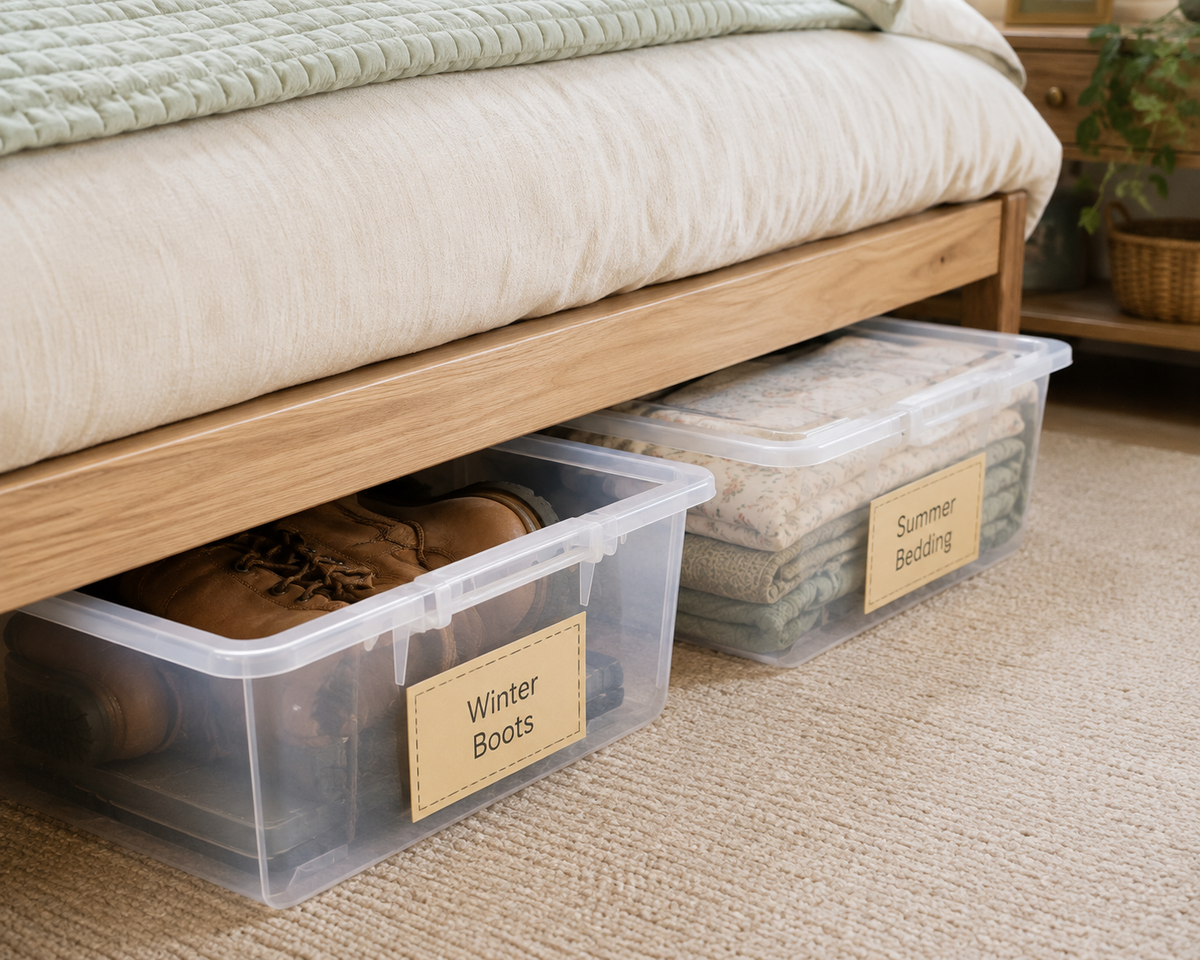
Flat storage bins, sized to fit the specific clearance under a given bed frame, hold folded seasonal clothing, extra bedding, and structured items that shouldn’t be vacuum-compressed. For soft, bulky items, a vacuum-sealed bag compresses down further and slides into the same space with room to spare, since compression can shrink a bulky comforter down to roughly the thickness of a large pillow.
Measure the actual clearance before buying anything, since platform beds and some low-profile frames offer far less room than a standard frame with box spring and legs. A bin that’s an inch too tall won’t slide under cleanly and will need to be forced, which damages both the bin and the underside of the bed frame over repeated use.
Label bins by season and category rather than a general label, so retrieving the right one at the next seasonal swap doesn’t mean pulling every bin out to check. “Winter boots” and “summer bedding” tell you exactly what’s inside; “misc” doesn’t, and a bin labeled that way tends to get skipped and re-shoved back under the bed unopened.
Second: Closet Shelf and Ceiling Space That Currently Sits Empty
Above a standard closet rod, most closets have several feet of vertical space that goes completely unused, either because there’s no second shelf, or because the existing shelf holds a loose pile rather than organized bins. Stackable, uniform bins turn that flat space into two or three defined storage tiers instead of one shifting pile that inevitably topples.
The space above the closet door itself, typically 6 to 8 inches of clearance between the door frame and the ceiling, is another spot that sits empty in almost every small closet. A slim floating shelf, some versions using adhesive strips rather than screws for rental-friendly installation, turns that dead strip into dedicated space for genuinely occasional items: holiday decor, an out-of-season handbag rotation, spare bedding for guests.
Because this zone is harder to reach than under-bed storage, reserve it for items you access only a few times a year rather than anything in regular rotation. Climbing on a chair to reach a bin every week defeats the purpose of a system meant to make seasonal rotation easier, not harder.
Third: Furniture That Does Double Duty as Storage
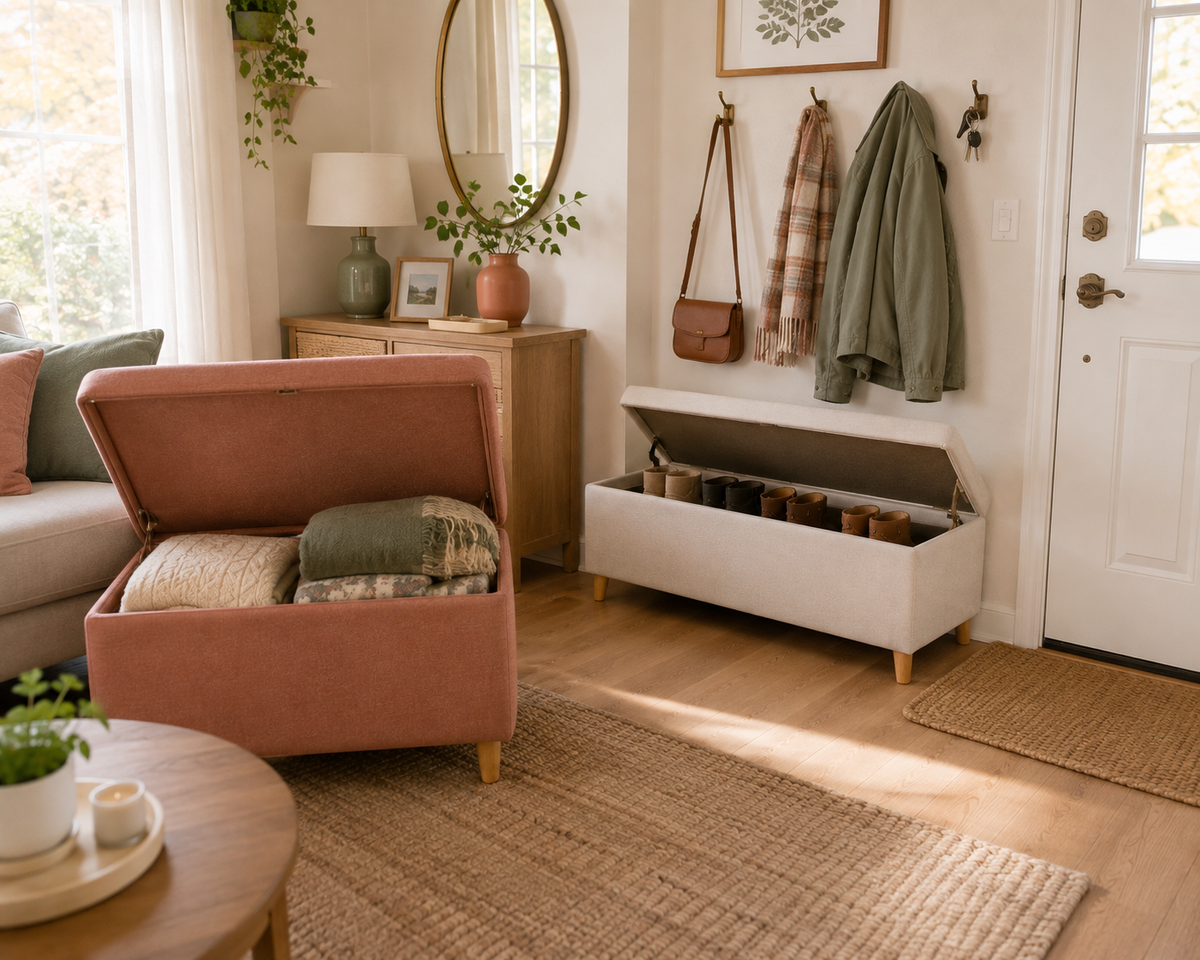
When under-bed and closet space run out, the next tier of storage comes from furniture built specifically to hide a season’s worth of items in plain sight. A storage ottoman at the foot of a bed or in a living room holds a season’s worth of compressed vacuum bags while functioning as seating or a surface the rest of the year, which matters most in a small home where visible bins would clutter a room that needs to read as calm rather than functional-looking.
A bed frame with built-in drawers underneath solves the same problem as a flat under-bed bin, but without needing to slide anything in and out from floor level, which some people find easier for frequent access. A storage bench in an entryway or bedroom works similarly, holding seasonal shoes or accessories inside while providing a place to sit while putting them on.
This tier costs more upfront than bins alone, since it means buying furniture rather than a simple container. But in a genuinely small home where every piece of furniture needs to earn its footprint twice over, the extra cost often pays for itself by removing the need for a separate storage solution entirely.
Fourth: Walls and Doors for Smaller, Lighter Items
Once the higher-capacity zones are in use, walls and doors handle the smaller, lighter items that don’t need a full bin to themselves. Command-style adhesive hooks, rated for 5 to 7 pounds each, hold bags, scarves, or a hanging accessory organizer without needing any drilling, and remove cleanly from a rental wall when it’s time to move.
An over-the-door organizer with clear pockets works well for flatter seasonal items: gloves and hats in winter, sun hats and swimsuits in summer, anything that doesn’t need the depth of a full storage bin. Because this option depends entirely on the door itself, it’s the last tier to reach for rather than the first, since its total capacity is smaller than any of the options above it.
This tier is best thought of as the finishing touch on a seasonal storage system rather than its foundation. A home that tries to rely on hooks and door organizers alone for a genuinely full seasonal wardrobe will run out of room fast, since neither option holds nearly as much as the under-bed or closet zones.
What to Do When All Four Tiers Are Full
If under-bed storage, closet shelving, furniture storage, and wall space are all genuinely maxed out, that’s usually a sign the volume of seasonal items has outgrown what the home can reasonably hold, not that a fifth storage tier needs to be invented. This is the moment to declutter rather than buy another bin.
Sort through whatever’s stored and ask a simple question of each category: was this used even once during its last season in rotation? Anything that sat in storage untouched for a full cycle, then came out and still didn’t get worn or used, is taking up space in a home that has already used up its four best storage options. Donating that portion frees up room for the items that actually earn their place in the rotation, without needing to find a fifth place to hide things a small home was never going to have room for in the first place.
A Different Approach for Renters Who Move Often
Everything above assumes storage that stays put between seasons, but a household that moves every year or two, common among renters, students, and military families, benefits from thinking about seasonal storage slightly differently. The priority shifts from maximizing capacity to maximizing portability, since anything installed for this apartment needs to come apart cleanly for the next one.
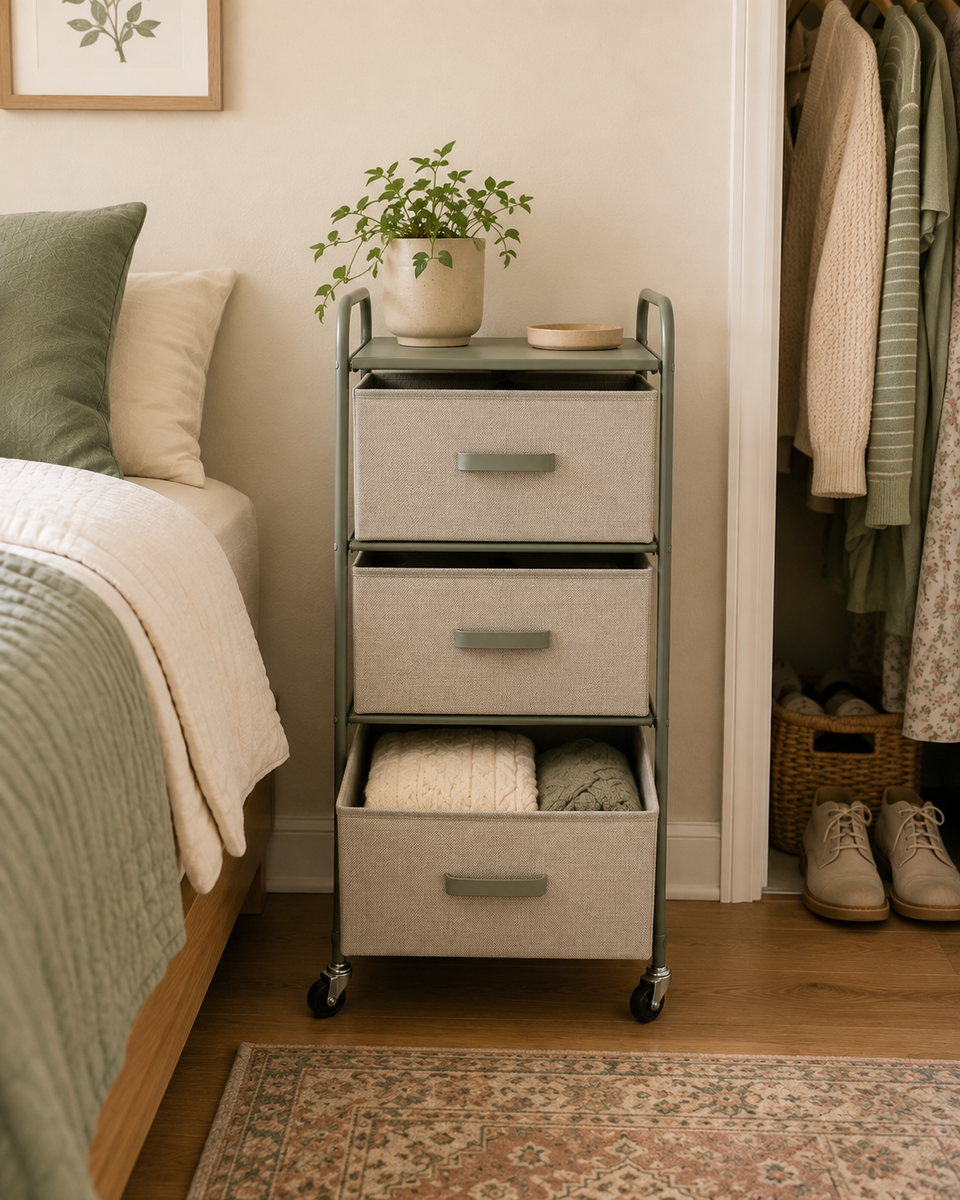
Favor freestanding options over anything that needs mounting wherever possible: a rolling cart with drawers over a wall-mounted shelf, a tension rod over a permanently installed one, adhesive hooks rated for clean removal over anything requiring a drill. All of these move with you rather than getting left behind or damaged during a move.
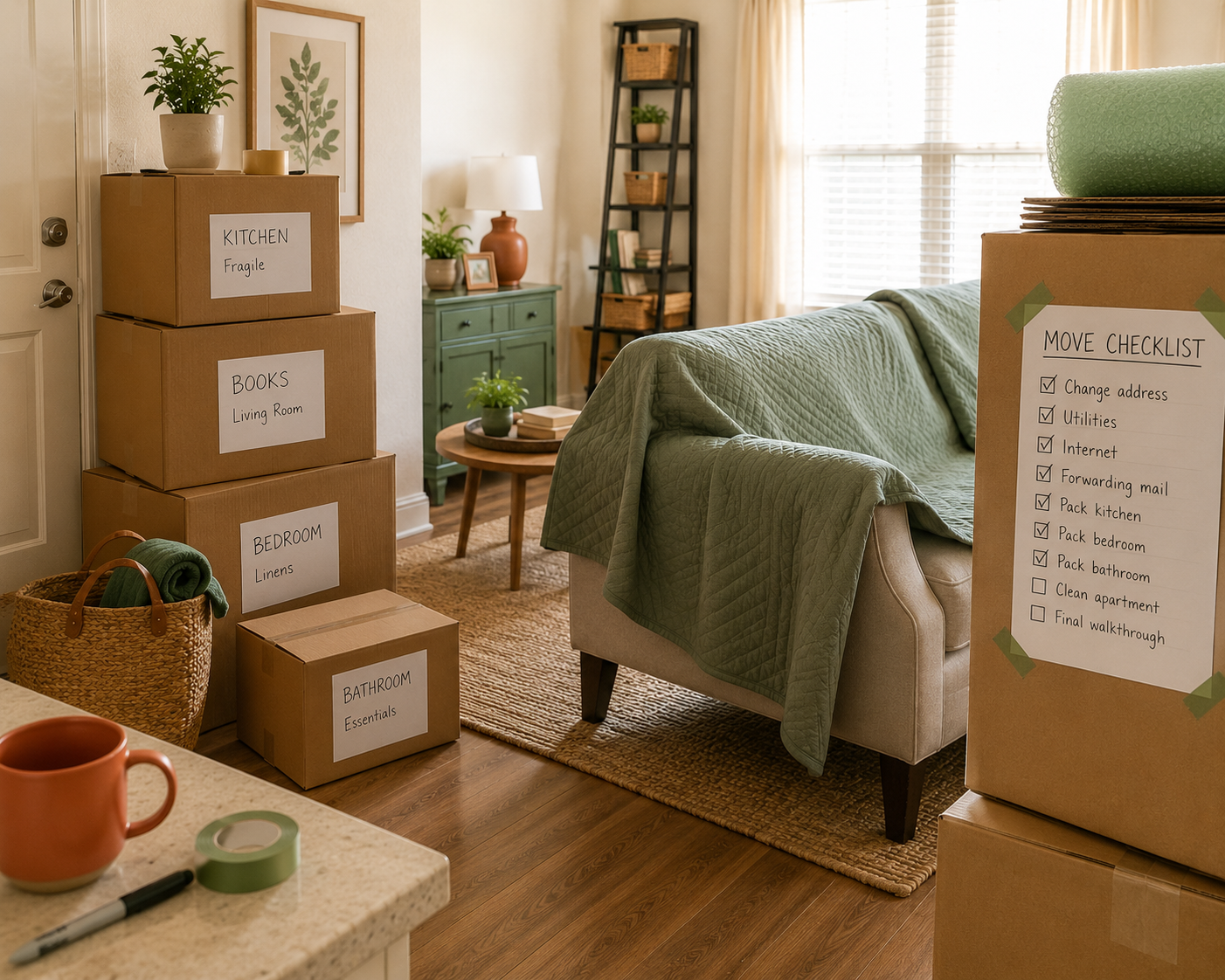
Keep an inventory of what’s in each labeled bin, even a simple photo taken on a phone before sealing it, so that after a move, finding a specific seasonal item doesn’t mean opening every box in a new, unfamiliar layout. This small extra step at pack time saves real frustration during the following season’s swap, especially in the first year at a new place before the new storage layout becomes second nature.
Keeping the System From Sliding Back Into Clutter
A seasonal storage system that works well in its first year sometimes drifts by year two or three, as new items get added without ever being assigned a tier, and bins that once had clear labels start accumulating a little of everything. A quick check at each seasonal swap, does this bin still hold only what its label says, catches that drift before it becomes a full re-sort project.
If a labeled bin has genuinely outgrown its contents (more winter sweaters than fit comfortably, for instance), that’s a signal to either declutter the category or add a second bin specifically for the overflow, rather than letting items spill into whatever bin happens to have room. Keeping categories distinct, even when it means slightly more bins overall, is what keeps a seasonal storage system fast and reliable years into using it, rather than slowly turning back into the same undifferentiated pile it replaced.
FAQ
Which storage tier should I set up first if I’m starting from scratch? Under-bed storage almost always offers the most capacity for the least cost, so it’s worth setting up first before investing in furniture or closet additions.
Can I combine vacuum bags and bins in the same under-bed space? Yes. Vacuum bags work well for soft, compressible items like sweaters and bedding, while bins are better for anything structured that shouldn’t be compressed, like folded jeans or shoes. Many small homes use both side by side under the same bed.
How do I know if my bed has enough clearance for under-bed storage? Measure from the floor to the lowest point of the bed frame’s underside. Standard frames typically offer 12 to 14 inches, enough for most shallow storage bins, but platform beds and some low-profile frames offer little to no clearance.
Is it worth buying storage furniture just for seasonal rotation? If under-bed and closet space are already full and more storage is genuinely needed, storage furniture (an ottoman, a bench, a bed with built-in drawers) often costs less over time than a smaller home would spend on a separate storage unit or shelving system.
Related Reading
For the full four-decision framework this storage system supports, The Complete Seasonal Reset Guide covers decluttering, storing, swapping in, and maintenance in more depth.
For the specific spring tasks that put this storage system to use, The Spring Reset Checklist for a Small Home covers clearing out winter buildup room by room.
And for the fall version of the same swap, The Fall Reset Checklist Before Everything Moves Indoors covers getting a small space ready for the season it gets used most.
For the full category, browse Seasonal Resets under the Seasonal & Maintenance hub, home to every reset checklist and maintenance routine on the site. If closet-specific storage is the bigger challenge, the Organization & Storage hub covers closet systems and decluttering in more depth.