Table of Contents
Every decluttering method eventually arrives at the same drawer, the same box, the same shelf of things that have nothing to do with practicality and everything to do with who gave them to you or what they remind you of. Standard decluttering advice tends to treat these items the same way it treats an old kitchen gadget: sort quickly, decide fast, move on. That approach rarely works here, and pushing through it fast often means either forcing a decision you’ll regret or giving up on the category entirely and shoving the box back in the closet unopened.
This challenge slows down on purpose. It’s built around four categories, photos and papers, gifts, childhood belongings, and inherited items, each handled at its own pace with a specific, gentle framework for making the decision rather than a strict timeline to hit.
Before You Start: A Different Kind of Rule
The tests used for practical clutter (haven’t worn it in a year, it’s expired, it’s broken) don’t apply here, since sentimental value has nothing to do with use or condition. Instead, this challenge uses one core question for every item: does keeping this actually honor the memory, or has it become an obligation to store something out of guilt rather than love.
That distinction matters. An item you love looking at, that genuinely brings back a warm memory when you see it, has earned its place regardless of whether it’s “useful.” An item you feel you’re not allowed to get rid of, even though it doesn’t bring you anything when you see it, tucked away and never looked at, is a different situation entirely. The goal of this challenge isn’t to talk you out of keeping things that matter. It’s to separate what genuinely matters from what’s simply been sitting there because letting go felt too complicated to face.
Give yourself permission to go slowly. There’s no requirement to finish this in a weekend, or even in a month. Some households work through sentimental items over several separate sessions spread across weeks, picking it back up only when there’s genuine emotional bandwidth for it, not because a schedule demands it.
Photos and Papers: Often the Easiest Sentimental Category to Start With
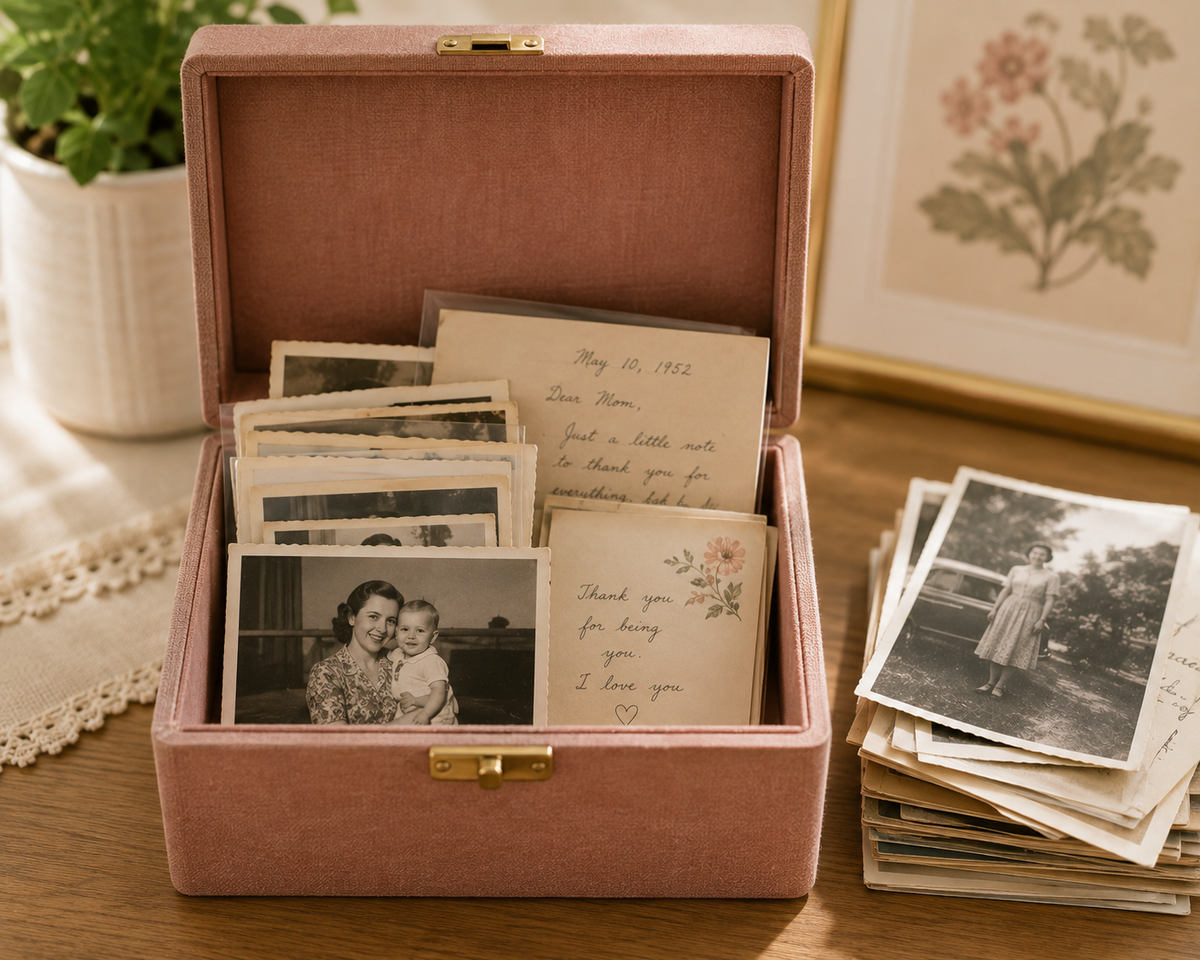
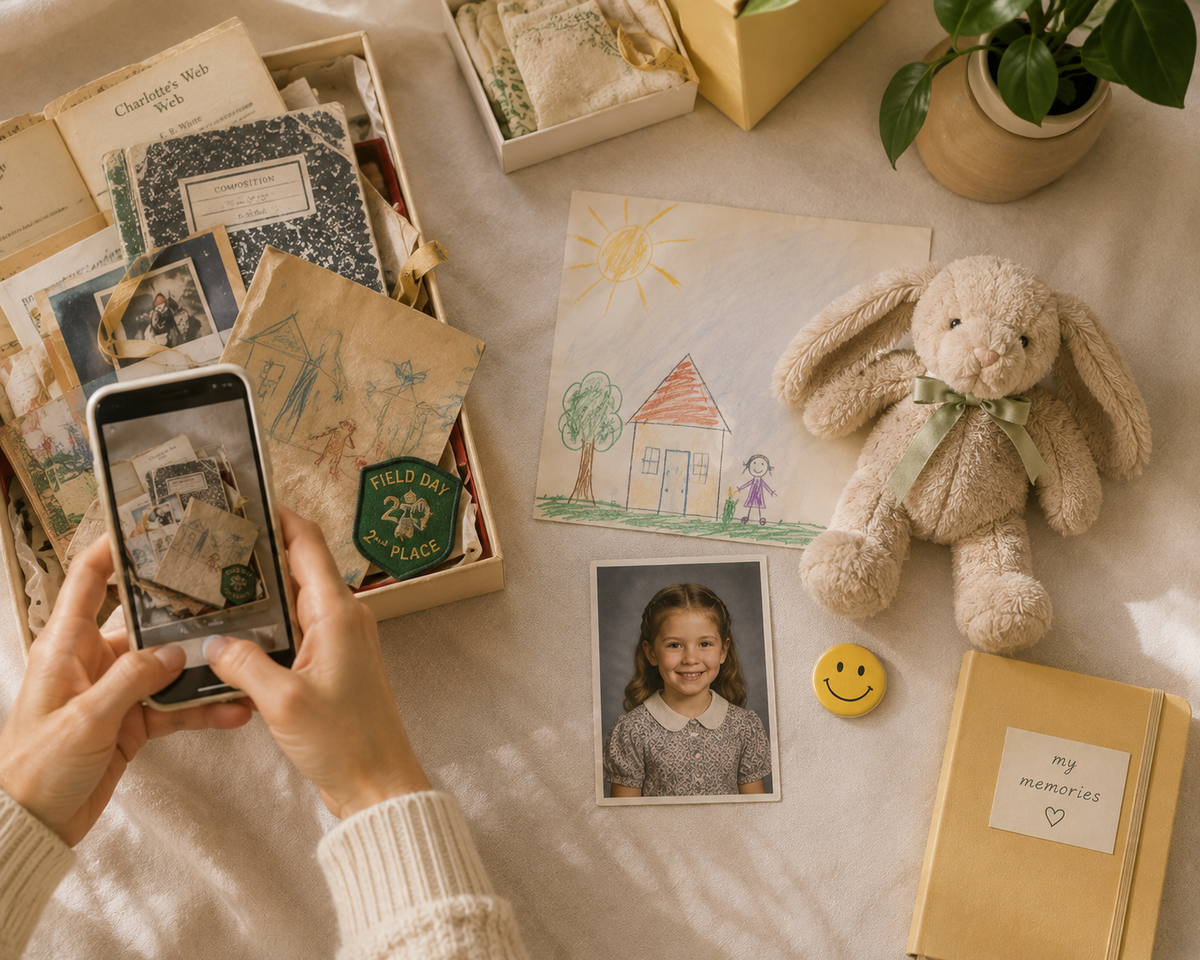
Photos and cards tend to be a gentler entry point into this challenge than physical objects, since a photo can often be preserved in a smaller, curated form rather than requiring an all-or-nothing decision. A shoebox of hundreds of photos rarely needs to be kept in its entirety to preserve what matters. Selecting a smaller set that genuinely represents the memory, and photographing or scanning the rest before letting go of the physical originals, keeps the meaning without requiring the full physical volume.
Cards and letters work similarly. Rereading each one and asking whether it holds a specific memory or feeling worth returning to, versus simply existing because throwing away a card someone wrote feels wrong on principle, helps separate what’s genuinely worth keeping from what’s been kept out of a sense of duty rather than real attachment.
For anything selected to keep, a dedicated album, box, or digital folder gives these items a real home rather than letting them remain scattered loose across drawers and shelves. Having one specific place for the items you’ve chosen to keep also makes it easier to actually enjoy them occasionally, rather than having them buried and forgotten in a box that never gets opened.
Gifts: Separating the Object From the Person Who Gave It
Gifts carry a specific kind of weight, since letting go of one can feel like rejecting the person who gave it rather than simply the object itself. It helps to separate those two things: the relationship and the gift are not the same, and choosing not to keep an item doesn’t diminish what the person or the occasion meant.
Ask whether the gift is something you’d genuinely choose for yourself if you saw it today, separate from who gave it. If the answer is yes, it earns a place. If the answer is no, but guilt is the only thing keeping it around, consider whether a photo of the item, kept alongside a note about who gave it and why, could preserve the memory just as well as the physical object sitting untouched in a drawer.
For gifts from someone who’s passed away, this decision often carries more weight than a typical gift from someone still around to see whether it’s kept or not. There’s no need to rush this specific subcategory, and it’s entirely reasonable to set it aside for a separate, even slower pass rather than working through it at the same pace as everything else in this challenge.
Childhood Belongings: Yours or a Child’s
Childhood items, whether they’re your own from decades ago or a child’s from more recently, come with a particular kind of complexity, since they often represent a stage of life rather than a single moment or person. A full box of every school assignment or every stuffed animal a child has ever owned rarely needs to be kept in full to preserve what that stage of childhood meant.
For a parent working through a child’s outgrown items, it helps to choose a smaller, meaningful selection rather than keeping everything: a few favorite drawings, one or two beloved toys, rather than every single item from every year. Photographing the rest, especially anything too bulky to reasonably store long-term, preserves the memory of that stage without requiring the full physical volume to travel from home to home for the next twenty years.
For your own childhood belongings, the same principle applies, with one addition: give yourself real permission to keep an unusual amount of something if it’s genuinely meaningful, even if it doesn’t seem “useful” or “practical” by any conventional measure. This category doesn’t need to be minimized for the sake of minimizing it. It needs to reflect what actually matters, whether that ends up being a small handful of items or a slightly larger collection than a typical decluttering guide would recommend.
Inherited Items: The Hardest Category, Handled Last
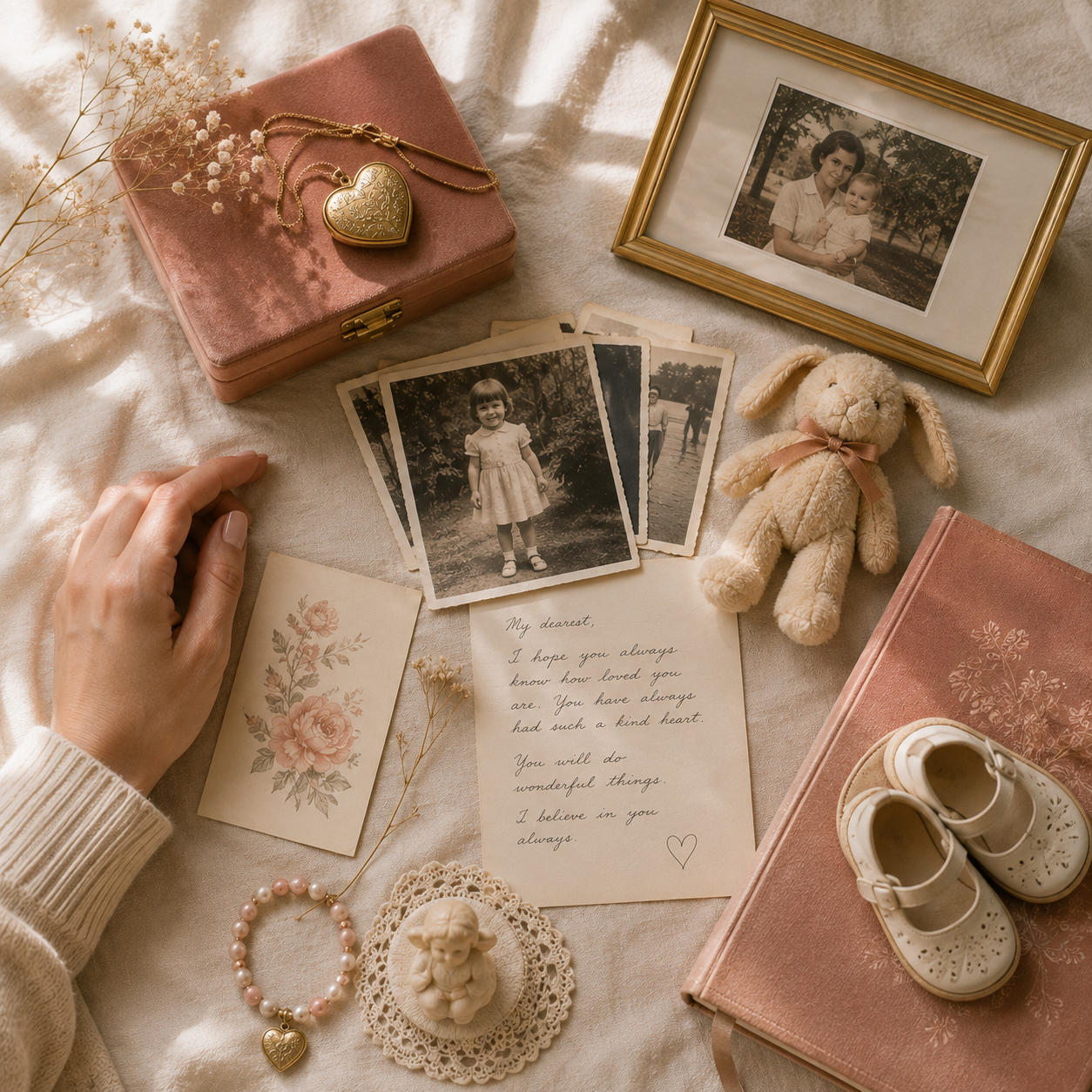
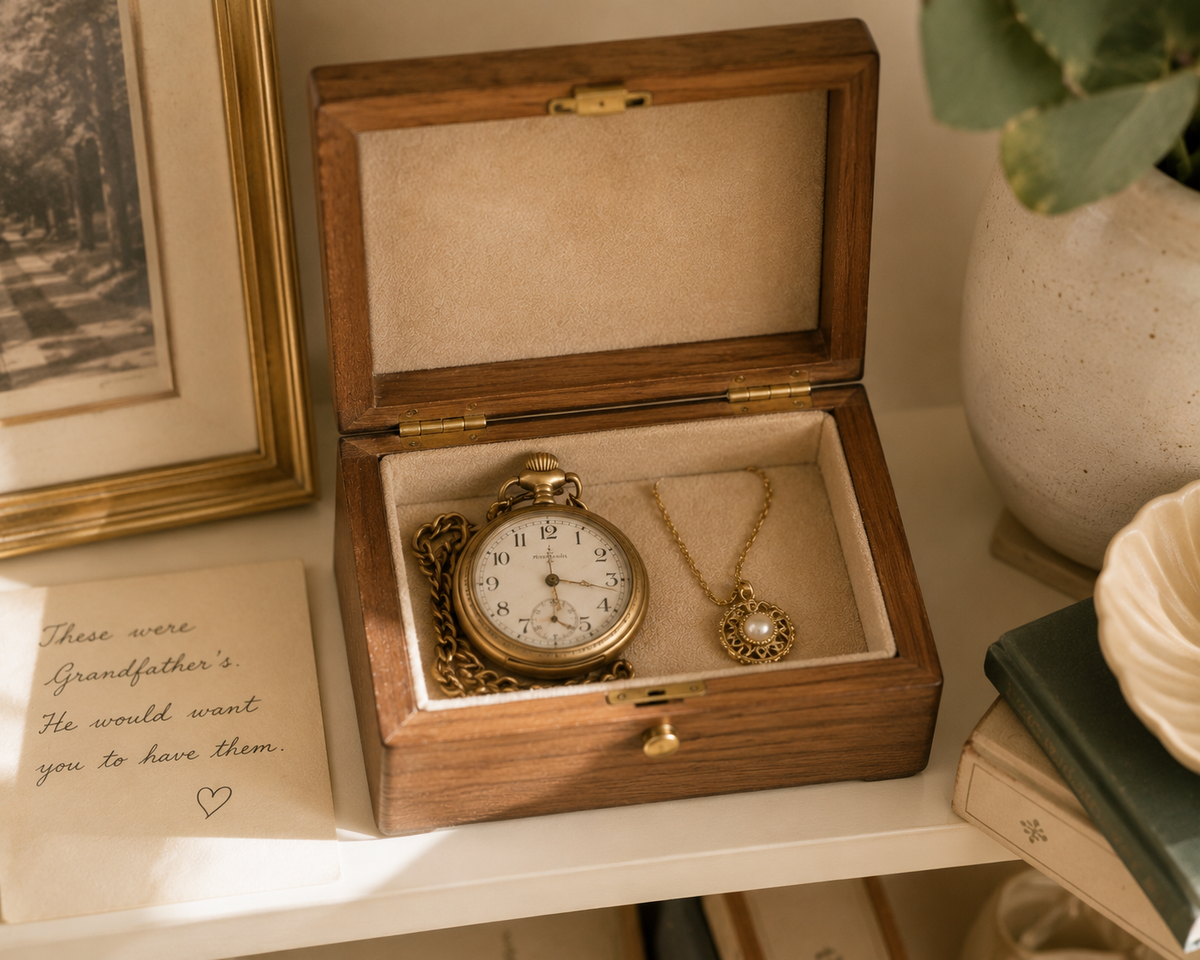
Inherited items, belongings passed down from a parent, grandparent, or another loved one, often carry the heaviest emotional weight of any category in this challenge, since the decision can feel tied not just to the item itself but to the relationship with the person who left it behind. This category deserves to be handled last, and slower than anything else here.
A useful distinction: an item inherited because it was specifically meaningful to you and the person who gave it feels different from an item inherited simply because it existed and someone had to take it. Both are valid reasons an item ended up in your home, but only the first necessarily means it needs to stay. For items in the second group, it’s reasonable to let go without guilt, especially if keeping them has become more of a burden than a comfort.
If a specific inherited item is too difficult to decide on right now, it’s entirely fine to set it aside in its own dedicated space and revisit the decision months or even years later, rather than forcing a choice this challenge doesn’t need to demand. Sentimental decluttering isn’t a race, and an inherited item that still needs more time deserves that time rather than a rushed decision made simply to finish the challenge.
Making Room for This Category Without Feeling Rushed
Unlike practical clutter, sentimental items rarely benefit from a strict deadline, and pushing this category to fit inside a fixed challenge timeline often backfires. If a full sentimental declutter feels like too much right now, even breaking it into a single category, just photos this month, just gifts next month, is a genuinely complete way to work through this challenge over a longer stretch of time.
It’s also worth acknowledging that some sentimental decisions may never fully resolve, and that’s a reasonable outcome too. An item that’s been set aside for years without a final decision isn’t a failure of this process. It simply means that particular item still holds a kind of significance that hasn’t settled into a clear yes or no, and there’s no requirement to force that resolution before it’s genuinely ready.
If the emotional weight of this category feels heavier than expected, particularly around items connected to loss, it’s worth giving yourself permission to pause the challenge entirely rather than pushing through. This kind of decluttering touches real grief and real love, and there’s no version of a productivity challenge that should override taking the time this actually needs.
FAQ
Is it wrong to get rid of a gift from someone I love? No. The relationship and the object are separate things, and choosing not to keep a physical item doesn’t diminish what the person or the gift meant. A photo of the item, alongside a note about who gave it, often preserves the memory just as well.
How do I decide what to keep from a large collection of childhood items? Choose a smaller, genuinely meaningful selection rather than keeping everything, and consider photographing the rest before letting go of the physical originals, especially anything bulky or difficult to store long-term.
What if I’m not ready to make a decision on an inherited item? Set it aside in its own space and revisit it later, whether that’s a few months or a few years from now. This category doesn’t need to be resolved on any particular timeline.
Should sentimental decluttering follow the same rules as decluttering everything else in my home? No. This category deserves a slower pace and a different core question, focused on whether an item is kept out of genuine meaning versus obligation, rather than the practical tests (used recently, still functional) that work for everyday clutter.
Related Reading
For where this gentler pace fits into a larger decluttering effort, The Complete 30-Day Decluttering Challenge covers every stage, with sentimental items intentionally saved for last.
If you’re working through just one room this weekend, A One-Weekend Decluttering Challenge for One Room covers a faster version for everyday categories, with sentimental items best set aside for a separate, slower pass like this one.
And if your schedule doesn’t allow for a dedicated weekend or month right now, A Decluttering Challenge for When There’s No Free Weekend breaks the process into short sessions that fit around a busy schedule.
For the full category, browse Decluttering Challenges under the Seasonal & Maintenance hub, home to every reset and decluttering guide on the site.