Table of Contents
Two rooms with an identical budget can look completely different, because one of them spent all of it in the wrong places. The room that looks pulled-together isn’t the one where every single item cost more — it’s the one where the money went to the two or three things people actually notice, and everything else stayed simple on purpose.
This guide breaks that decision down room by room: what’s worth spending real money on, what’s safe to buy cheap, and how to tell the difference when you’re standing in a store trying to decide.
The Core Rule: Spend on Contact, Save on Everything Else
Spend your money on anything you physically touch, sit on, or stand close to every day, and save on anything that just exists in the background of the room. A sofa cushion gets tested by your body weight every evening. A decorative bowl on a shelf gets looked at, not touched — and a $12 version photographs identically to a $60 one.
This single filter — “will I touch this daily, or just see it?” — resolves most spend-or-save decisions faster than comparing prices ever will.
Worth spending on, almost always:
- Seating you sit on daily (sofa, desk chair, dining chairs)
- Your mattress and pillow, if it’s within scope
- Lighting fixtures you’ll use every evening
- Bedding you sleep in
Safe to buy cheap, almost always:
- Decorative objects (vases, bowls, small sculptures)
- Picture frames
- Storage bins and baskets, as long as they’re sturdy enough for their contents
- Small plants and planters
Small Bedroom: Spend Here, Save There
In a small bedroom, spend on the mattress and the lighting, and save on almost everything visible around the bed. Nobody evaluates a bedroom by its nightstand — they evaluate it by how it feels to fall asleep in, which comes down to comfort and light, not decor.
Spend on: the mattress (if you’re due for a replacement), a bedside lamp with warm-toned light, and blackout or room-darkening curtains if your rental gets early sun.
Save on: nightstands (a small thrifted table works as well as a $150 one), a headboard (a leaned canvas or fabric panel gets 80% of the visual effect for a fraction of the cost), and bedroom wall art (one meaningful piece beats a gallery wall of budget prints).
A frequent mistake here is spending on a statement headboard before addressing lighting. A room with bad overhead lighting and an expensive headboard still looks unfinished. A room with warm, layered lighting and a leaned canvas against the wall looks intentional.
Small Living Room: Spend Here, Save There
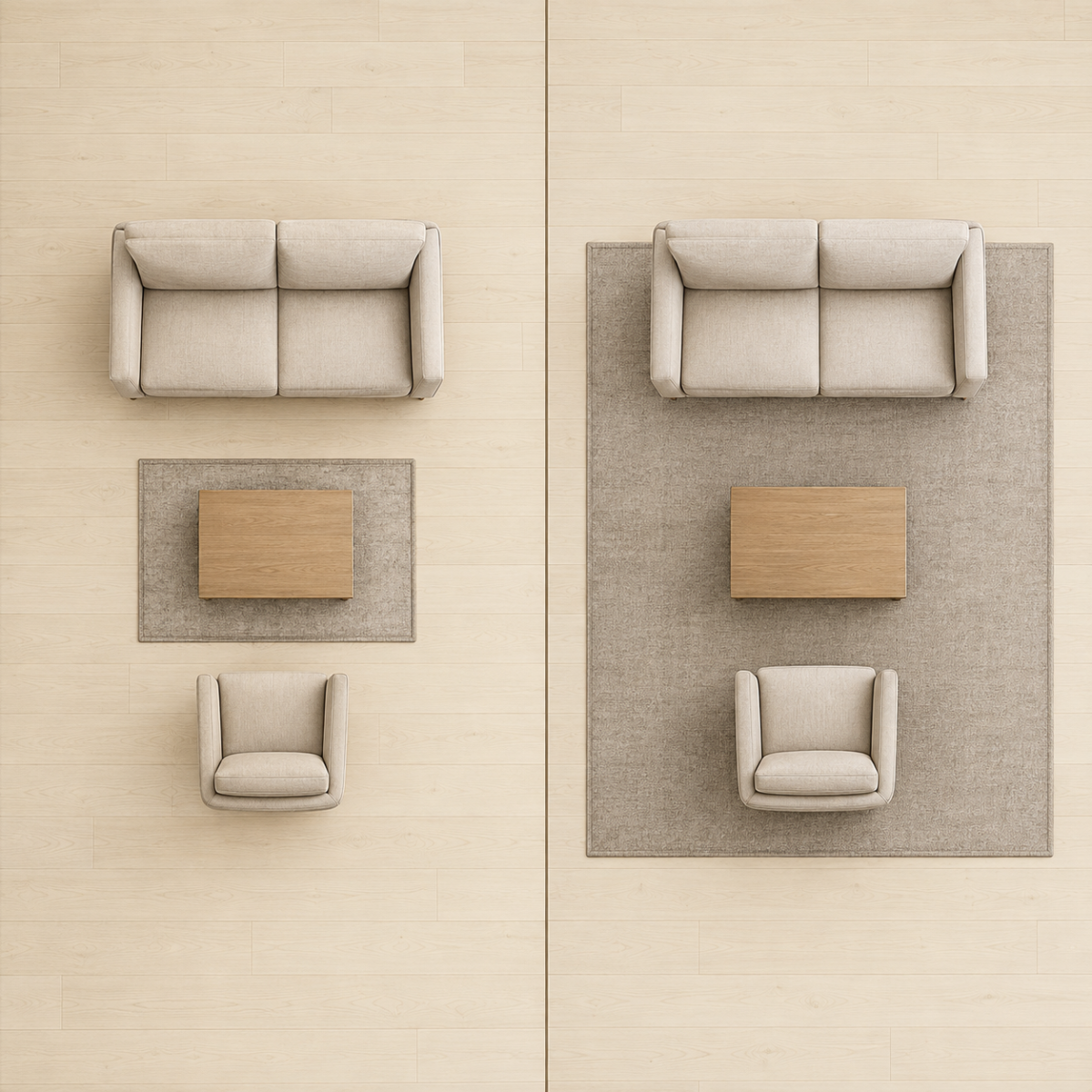
In a small living room, spend on seating and a rug, and save on the coffee table and wall decor. These two anchor pieces are what your body and your eyes interact with most, and everything else in the room is judged relative to them.
Spend on: the sofa or main seating piece, and a rug large enough that at least the front legs of your furniture sit on it (an undersized rug is one of the most common budget-decorating mistakes, and it reads as “cheap” even when nothing in the room actually was).
Save on: the coffee table (a thrifted or flat-pack option styled well looks identical to an expensive one in photos), throw pillow covers (buy inserts once, rotate covers seasonally for far less than replacing whole pillows), and wall art (one larger piece from a print shop beats several small expensive framed prints).
Small Kitchen: Spend Here, Save There
In a small kitchen, spend on lighting and one or two tools you use daily, and save on almost every decorative surface item. A kitchen’s “decor” is really its functional objects, styled well — which means the biggest visual upgrade often costs nothing beyond organizing what you already own.
Spend on: under-cabinet lighting (renter-friendly, plug-in versions exist and change the whole room for $20–$40), and the one or two tools you genuinely use every day (a good knife, a coffee maker you actually like looking at on the counter).
Save on: decorative canisters (a matching set from a budget retailer looks as coordinated as an expensive one), a fruit bowl or tray, and open-shelf styling objects — these are the cheapest, lowest-risk items in the entire kitchen to buy budget.
Small Home Office: Spend Here, Save There
In a small home office, spend on the chair, and save on the desk. You sit in the chair for hours; you look at the desk for seconds at a time. This is the clearest spend-versus-save decision in the whole guide, and it’s also the one people get backwards most often, buying an expensive desk and a $40 chair that starts hurting by month two.
Spend on: an ergonomic desk chair, and a monitor riser or laptop stand if you’re working from a small desk without room for a second monitor at eye level.
Save on: the desk itself (a simple flat-pack desk works identically to an expensive one for most small-space setups), desk organizers, and a desk lamp (unless your space has genuinely poor natural light, in which case lighting moves into the “spend” column).
The Splurge Test
Before spending above your usual budget on any single item, run it through three questions: will I use this daily, does the cheap version actually fail at its job (not just look slightly less nice), and would I still buy this if nobody else ever saw it? If the answer to at least two of these is yes, it’s a reasonable splurge. If the answer to all three is no, it’s decorative — and decorative items are exactly where a budget room should stay budget.
This test works because it separates “this would look nicer” from “this would actually function better.” A nicer-looking lamp that gives the same light as a cheap one is a decorative upgrade. A better mattress that changes how you sleep is a functional one. Only one of those justifies spending more.
Signs You’re Saving in the Wrong Place
If your room still feels unfinished after buying several things, the problem usually isn’t that you didn’t spend enough overall — it’s that the money went to the wrong categories. A few signs this is happening:
- You’ve bought multiple decorative accessories but the seating still feels uncomfortable or looks worn.
- The room has good individual pieces that don’t relate to each other because there was no style plan before shopping (see the Complete Budget Decor Guide for that step).
- You spent on a statement item (a bold rug, a large art piece) before addressing basic lighting, so the statement piece is competing with poor light instead of being shown off by good light.
- You keep buying small “finishing touches” every month and the room still doesn’t feel done — usually a sign that a foundational piece (seating, lighting, or the rug) still isn’t right, and no amount of small accessories will fix that.
A quick way to check: stand in the doorway of the room and notice what your eye goes to first. If it’s a decorative object rather than the seating or the light, the spend has drifted toward the wrong category, even if the total amount spent was reasonable.
Adjusting This Plan Seasonally
The spend-versus-save split above assumes a first pass at styling a room, but it’s worth revisiting once or twice a year instead of treating it as a one-time decision. Textiles are the cheapest category to rotate seasonally — a lighter rug and thinner throw pillows in summer, warmer tones and heavier textures in winter — and rotating them is almost always the better move over buying an entirely new set each season.
The categories in the “spend” column rarely need seasonal changes. A good chair or a well-placed lamp works the same in July and January. Save your seasonal budget for the swap-friendly categories: textiles, small accessories, and anything already on the “safe to buy cheap” list above.
FAQ
What’s the single most important thing to spend more on in a small space? Seating, in almost every room. It’s the surface you interact with the longest and the hardest one to fake comfort on with a cheaper version.
Is it ever worth buying an expensive rug? Size matters more than price for a rug’s visual impact. A larger, moderately priced rug that properly grounds your furniture beats a smaller, more expensive one that leaves furniture floating at the edges.
How do I know if I’m overspending on decor? If you’re regularly buying decorative objects (vases, frames, small sculptures) but your seating or lighting still feels wrong, the budget is going to the wrong category. Redirect it toward whatever you actually use daily.
Should renters spend more or less than homeowners on styling? Slightly differently, not necessarily more or less. Renters should shift some of the “wall decor” and “lighting” budget toward reversible versions of those categories, since permanent installs aren’t an option.
What’s a reasonable starting budget for restyling one room this way? $300–$500 covers a meaningful spend-where-it-matters refresh for most small rooms — enough for one quality seating or lighting upgrade plus a rug or textile refresh, without touching furniture you don’t need to replace.
Related Reading
- The Complete Budget Decor Guide — the full styling → swap → DIY sequence this guide fits into
- Get the Look for Less Guide — specific affordable dupes for popular expensive looks
- DIY-Friendly Updates Guide — which small projects are worth doing yourself
- Complete Guide to Budget Styling a Small Space — related Taims Space guide.
- Five Places Worth Spending More — related Taims Space guide.
- How to Style One Focal Point — related Taims Space guide.
- Layering Texture on a Budget — related Taims Space guide.
- Furniture Quality Checks Before You Buy — related Taims Space guide.