Table of Contents
You’ve probably bought bins before. Maybe a lot of them. And somewhere between the excited Target run and three weeks later, the home slid back to roughly where it started, just with more empty containers now taking up space too.
That’s not a willpower problem. It’s a sequencing problem. Decluttering, organizing systems, and storage each solve a different layer of the same underlying issue, and buying storage before decluttering, or building a system before deciding what actually deserves a home in the first place, means solving the wrong problem first. The bins don’t fail. They just get asked to hold a mess that never got sorted through to begin with.
This guide lays out the order that actually holds up, because getting the sequence right matters more than any single product or technique on its own. Declutter first, since organizing what you don’t need just wastes effort on things that should have left the house entirely. Build daily systems next, since those are what keep a decluttered space from quietly refilling itself. Add storage last, once you actually know what’s staying and how much of it there is.
Skip a step, or do them out of order, and you’ll be redoing the earlier work once the later steps expose what was never actually solved.
Why Sequence Matters More Than Motivation
A lot of organization content treats the whole process as one big undifferentiated project: clean everything, sort everything, buy bins, done. In practice, that approach usually produces a home that looks organized for about a week and then slides right back, because it skipped the step that actually determines whether anything sticks.
Here’s the pattern that plays out constantly: someone buys a full set of matching bins, sorts their belongings into them, and feels genuinely accomplished. Three months later, half the bins are mysteriously overflowing again, not because the bins failed, but because nothing was actually decluttered first. The bins organized clutter. They didn’t remove it. And organized clutter is still clutter, just prettier and harder to notice.
The fix is sequence, not more effort. Each step in this guide sets up the one after it, so nothing gets solved twice.
Step One: Decluttering Comes Before Everything Else
A home can’t be genuinely organized until the volume of stuff in it matches the amount of storage space actually available, which means decluttering has to happen before any storage system gets built. This is the step most people want to skip, since it’s the least immediately satisfying compared to buying a pretty new shelf, but it’s the one that determines whether everything after it actually works.
The mistake most decluttering attempts make is treating it as a single, exhausting weekend project that has to finish everything at once. That approach burns out fast and often stalls halfway through, leaving half the house sorted and half still chaotic. A method that works room by room, category by category, and in smaller, sustainable sessions holds up far better than an all-or-nothing purge.
The other common mistake is decluttering by moving things rather than actually removing them. Shoving unwanted items into a closet, a garage, or “the spare room to deal with later” isn’t decluttering. It’s relocating clutter to a spot where it’s temporarily out of sight, and it almost always resurfaces later as a bigger, more overwhelming project than it would have been the first time around.
The dedicated decluttering guide below covers the specific method that avoids both of these traps, including how to sort by genuine use rather than sentiment or guilt, and how to actually get unwanted items out of the house instead of just out of view.
Step Two: Build Daily Systems Before Adding Storage
Once the genuine clutter is gone, the next step isn’t buying storage. It’s deciding how the remaining stuff should actually move through daily life, because a system built around real habits is what keeps a decluttered home from quietly refilling with the same patterns that created the mess in the first place.
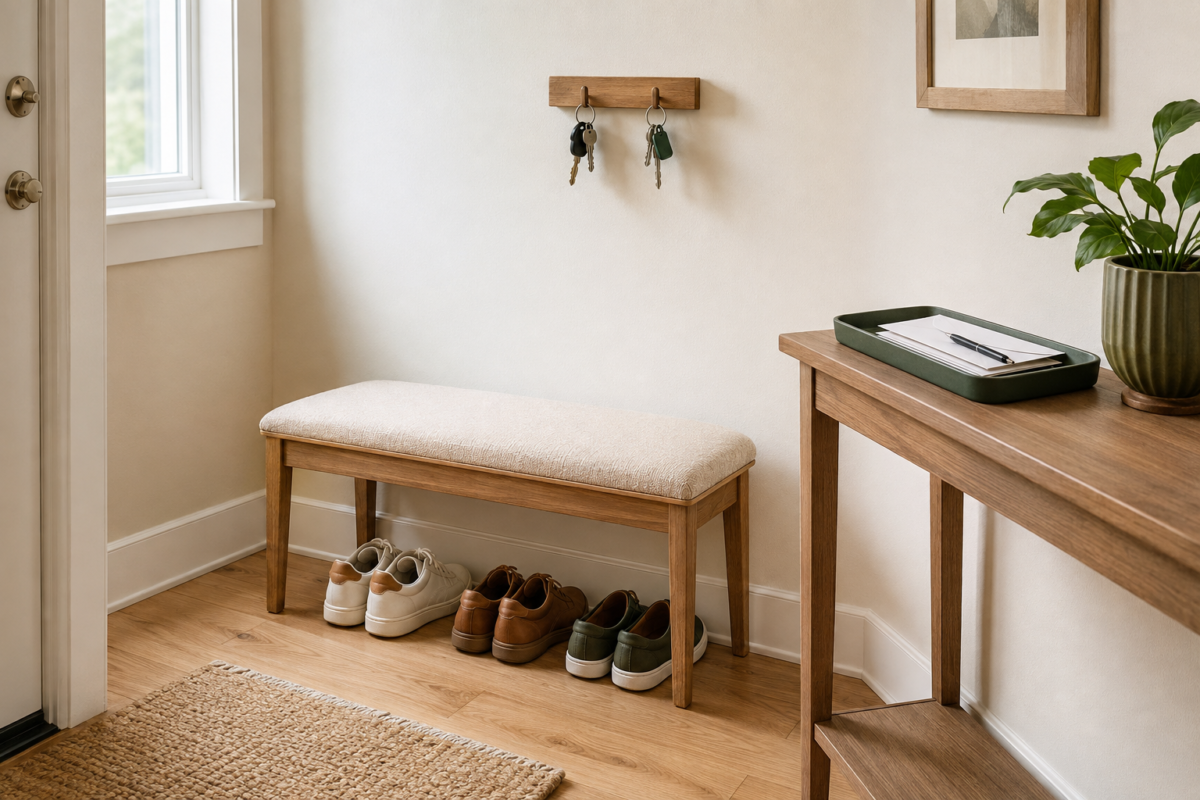
A system, in this context, just means a consistent answer to “where does this go” for the categories of stuff that touch your home every single day: mail, keys, shoes, laundry, dishes. Without a fixed answer, these categories drift toward whatever surface is closest, which is exactly how a freshly organized counter ends up covered in mail again within two weeks.
The systems that hold up long-term share one trait: they match how you actually move through your home, not how an idealized version of your routine would move through it. A “shoes off at the door” system only works if there’s an actual designated spot for shoes right at the door, not a vague intention to put them away eventually in a closet down the hall. A mail system only works if the drop spot is somewhere you pass by naturally, not a spot that requires an extra trip.
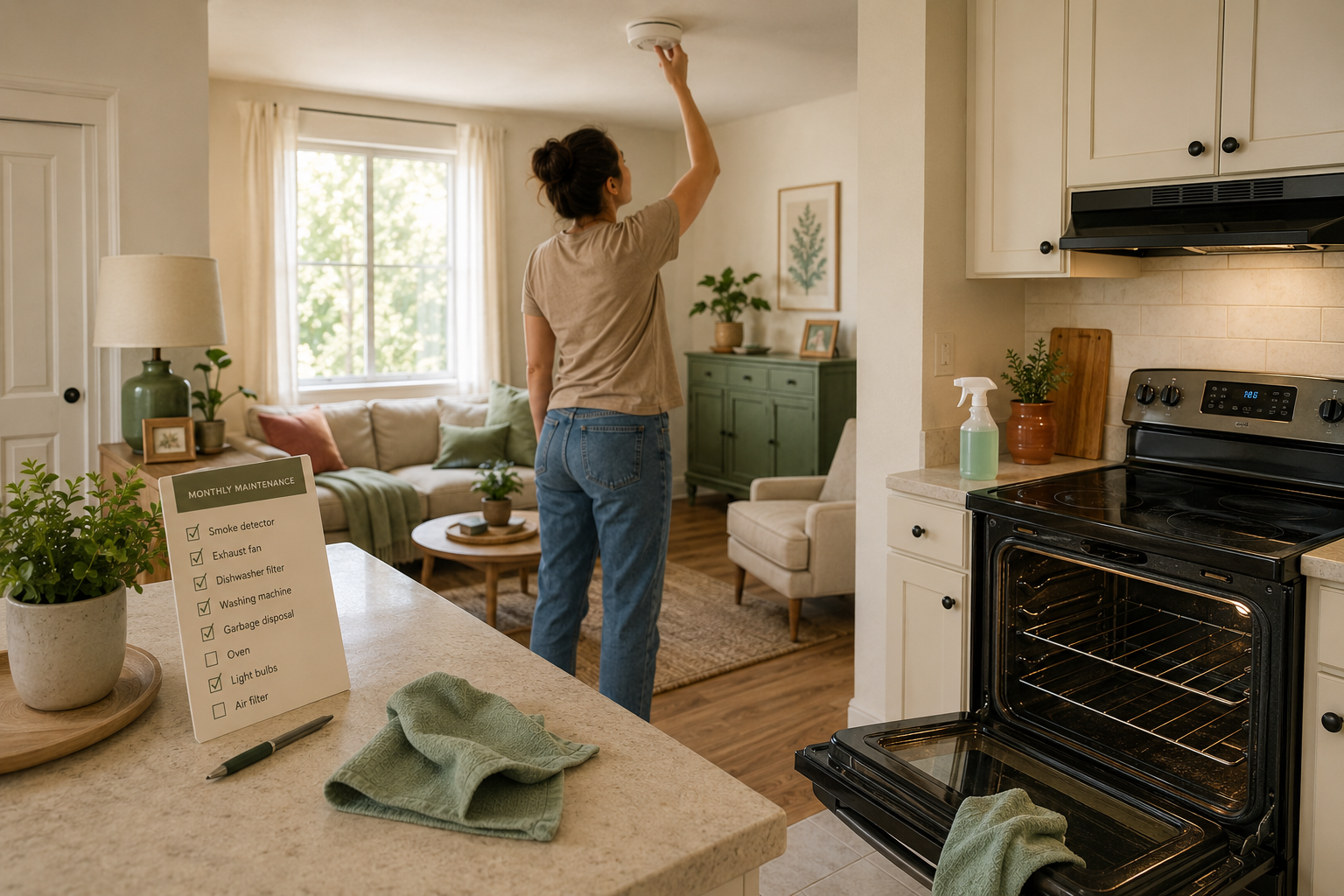
This is also where daily maintenance habits matter more than any product. A two-minute end-of-day reset, putting a handful of things back in their spot before bed, does more for long-term organization than an occasional deep clean ever will, because it catches small drift before it becomes a real project.
Step Three: Add Storage Once You Know What It Actually Needs to Hold
Storage should be the last step, not the first, because buying bins and shelving before decluttering and system-building means guessing at capacity instead of actually knowing it. Once the genuine clutter is gone and daily systems are handling the recurring categories, what’s left is a much clearer picture of what actually needs a permanent storage home, and how much of it there really is.
This is also the step where vertical space, closet reorganization, and furniture that opens for storage do the most good, since they’re solving a real, known need rather than a guessed one. A closet that’s been decluttered first often reveals it never needed a bigger container system at all, just better use of the vertical space already inside it.
The dedicated storage solutions guide below covers the specific products and layouts worth investing in, once you actually know what they need to hold.
The Full Sequence, One More Time
If your home has drifted into chaos, or you’re setting up a new space from scratch, this is the order that avoids solving the same problem twice:
- Declutter room by room, removing items that genuinely don’t earn their space rather than relocating them to another room
- Identify the recurring daily categories that cause the most friction: mail, shoes, dishes, laundry, and give each one a fixed, convenient home
- Build the small daily habits that keep those systems working, especially a short end-of-day reset
- Add storage last, once you actually know what’s staying and how much space it genuinely needs
- Revisit the whole sequence every few months, since a home you’re actually living in will keep shifting no matter how well the first pass went
Buying storage first, which is the instinct almost everyone starts with, is exactly what leads to organized clutter: tidy-looking bins holding things that never should have stayed in the first place.
Organizing a Home You Don’t Live in Alone
Every step in this sequence gets harder, though not impossible, when more than one person shares the space. A system that only makes sense to the person who built it tends to collapse fast once a partner, roommate, or kid is expected to follow it without being told the rules out loud.
The fix is designing for the household’s actual habits, not an idealized version of them. If mail always ends up on the kitchen counter no matter how many times a designated tray gets introduced, the counter is telling you something true about behavior that a tray alone won’t override. Sometimes the answer is a bigger, more obvious tray right where the mail actually lands, rather than fighting the pattern.
Decluttering with other people in the home also needs a different approach than solo decluttering. Items belonging to someone else, even ones that seem unnecessary from the outside, aren’t yours to remove unilaterally. A shared decluttering session, even a short one, tends to produce buy-in that a surprise purge never does, and it avoids the resentment that comes from someone discovering their belongings gone without warning.
The daily systems that survive a shared household are usually the simplest ones: a single obvious hook, not three optional spots for keys; one shoe zone, not an unspoken expectation everyone will just know where to leave them. Simplicity does more for household-wide compliance than any labeling system or matching bin set ever will.
Frequently Asked Questions
How long does it take to fully organize a small home? A full first pass, including decluttering, typically takes several focused weekends rather than a single day, especially if it’s been a while since the last real reset. Doing it room by room over a few weeks tends to hold up better than one exhausting attempt to finish everything at once.
Should I buy storage bins before or after decluttering? After. Buying storage first means guessing at how much space you’ll need, and it’s common to end up with either too many bins or the wrong sizes once decluttering reveals what’s actually staying.
What’s the biggest reason organization systems fail after a few weeks? Most failures come from skipping the decluttering step and organizing clutter instead of removing it, or from building a system that doesn’t match how the household actually moves through daily life. Both lead to the same slow drift back toward chaos.
Do I need to declutter my entire home before starting on daily systems? No. Decluttering room by room and building daily systems for the rooms you’ve already finished can happen in parallel. The full-home decluttering pass doesn’t need to complete before any systems get built.
How often should a home organization system be reassessed? Roughly every three to four months, or whenever a specific spot, like an entryway or a kitchen counter, starts consistently collecting clutter again. A short seasonal check catches drift early, before it turns into a full reorganization project.
Related Reading
- The Decluttering Guide — the real method for removing clutter instead of just relocating it
- Storage Solutions Guide — storage that works in small spaces without built-ins, a garage, or a basement to fall back on
- Closet Organization Guide — turning one small closet into storage that actually holds everything it needs to
- The Complete Small-Space Decluttering Guide — a related Taims Space guide.
- The Complete Guide to Daily Organization Systems — a related Taims Space guide.
- The Complete Small-Space Storage Guide — a related Taims Space guide.
- The Complete Small Closet Organization Guide — a related Taims Space guide.
- Home Maintenance Routine Guide — a related Taims Space guide.
Category: Decluttering Hub: /organization-and-storage/
Reviewed by the Taims Space editorial team.