Table of Contents
You know a living room’s storage is working when you can find the remote, the deck of cards, and a spare charger cable in under ten seconds, without lifting three throw pillows or checking under the couch. You know it isn’t working when guests are coming over in twenty minutes and your solution is a laundry basket you’re about to hide in a closet.
Most small living rooms don’t have a storage shortage. They have a storage-location problem. There’s usually enough space in the room; it’s just not organized into places that are easy to use daily, so things pile up on the coffee table and the arm of the sofa instead. This guide walks through the pieces that actually solve that, starting with the ones that already have a job to do anyway.
The Real Test of Living Room Storage
A living room’s storage only counts if it’s easy to use in the moment, not just impressive when the room is freshly tidied. A beautiful shelving unit that requires moving three baskets to reach the remote fails this test just as badly as no storage at all, because the friction means things stop going back where they belong within a week.
This matters more in a living room than almost anywhere else in a small apartment, because it’s the room getting used the most, by the most people, for the widest range of things: watching something, playing a game, having a friend over, working from the couch on a Sunday. Every one of those activities generates small objects that need a home, and a living room without a real system for them ends up wearing all of that clutter on its coffee table.
So before looking at specific furniture, it’s worth naming what actually needs a home in your room. Remotes. Chargers. Games or puzzles. Extra blankets. Coasters. Whatever’s specific to how you actually use the space, not a generic list from a magazine.
Media Consoles That Do More Than Hold a TV
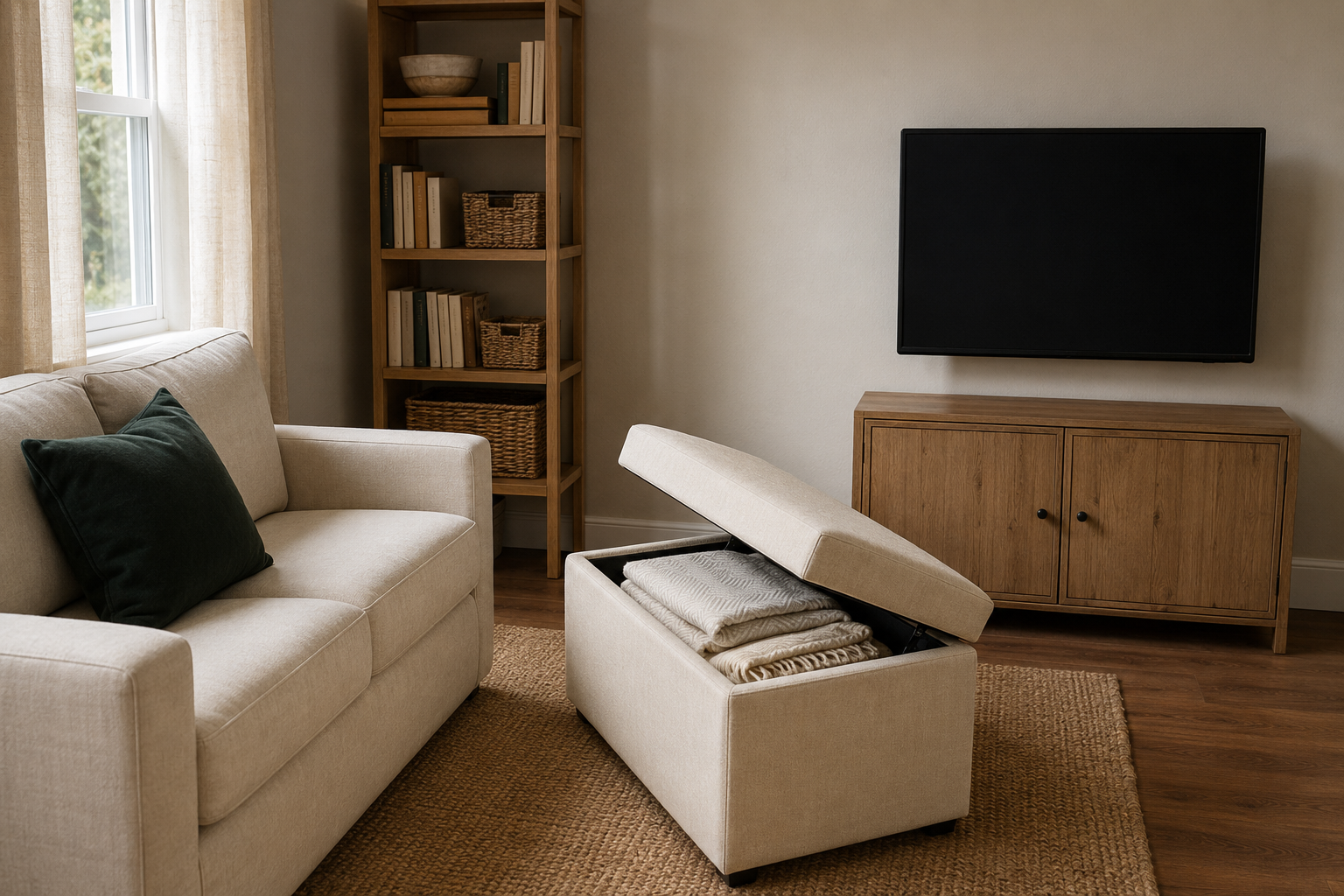
A media console with closed storage, drawers or cabinet doors rather than open shelving, is one of the highest-value pieces in a small living room, because it’s furniture you likely need anyway and it can absorb an enormous amount of daily clutter behind a clean front. The TV sits on top; everything else disappears inside.
Closed storage matters here specifically because open shelving under a TV tends to become a display of cables, game consoles, and whatever else accumulates near the entertainment setup, and that display rarely looks intentional. A cabinet door hides the same mess completely, for the same footprint.
Inside, a simple system helps more than the console itself: one drawer or shelf for remotes and small electronics, one for games or entertainment items, and one flexible space for whatever doesn’t fit the first two categories but still needs a home. This is the same one-job-per-object principle that works on a small desk, applied to a living room’s most-used storage piece.
Ottomans and Benches That Hide the Daily Clutter
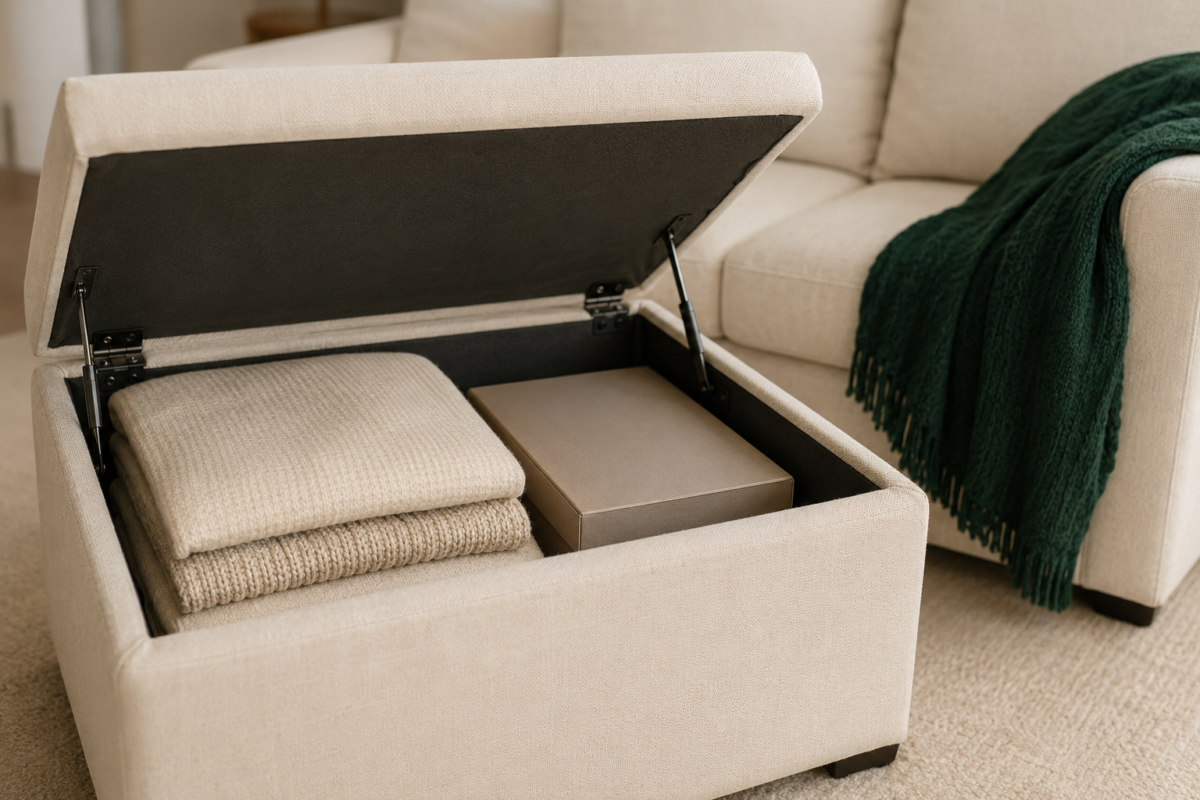
A storage ottoman placed where a coffee table might otherwise go solves two problems with one piece of furniture: somewhere to put your feet up, and somewhere for blankets, extra pillows, or board games to live when they’re not in use. This is the single easiest swap in a small living room’s storage plan, since it doesn’t require adding a new piece of furniture at all, just choosing one that pulls double duty.
A bench with a lift-up seat works similarly, and often fits better along a wall than in the center of the room, which makes it a strong option for rooms where a full coffee table isn’t the priority. Either option handles the category of items that otherwise ends up folded over the back of the sofa: blankets people actually use, not decorative ones nobody touches.
Going Vertical When the Walls Are the Only Space Left
Once the console and the ottoman are handling the daily-use categories, a tall, narrow shelving unit in whatever corner the room’s layout leaves free picks up everything else: books, board games too tall for the console, decorative objects, and anything that needs a home but doesn’t need to be reached every day. This is the same principle that works in a small bedroom, applied to a room with usually even less floor space to spare.
Look for units built for height rather than width. A shelf that’s 16 to 20 inches wide and reaches close to ceiling height holds nearly as much as a wide bookshelf half its height, while claiming a fraction of the floor footprint a small living room actually has to give up for it. Style the lower shelves with baskets for anything you don’t want on display, and let the upper shelves hold what you’re actually happy to look at. That split alone does most of the work of making vertical storage feel intentional instead of like an overflow shelf.
The One Storage Mistake That Undoes Everything Else
Here’s the part that trips people up more than any specific piece of furniture: buying storage without deciding what’s going in it first. A gorgeous console, a stylish ottoman, and a well-placed shelf can all sit in a room together and still fail to solve the clutter problem, if nothing was ever assigned a specific spot inside them.
The fix takes five minutes and costs nothing. Before anything gets stored, name the category. This drawer is remotes and chargers. This basket is blankets. This shelf is books currently being read, not the whole collection. When every storage spot has a specific job, putting things away stops requiring a decision each time, and that’s the difference between a system that survives a busy week and one that collapses back into a coffee table pileup by Thursday.
Matching Storage to Your Room’s Layout Challenge
If your living room has a defining layout challenge, a fireplace, a window wall, or a single entry point, that same challenge usually decides where each storage piece fits best, so it’s worth thinking about storage and layout together rather than as two separate decisions.
In a fireplace room, the media console typically sits opposite or beside the fireplace, wherever the TV placement landed, and the vertical shelving unit takes whichever corner the fireplace itself doesn’t claim. In a window-wall room, storage naturally shifts to the wall the windows aren’t on, since that’s the only wall with enough depth for anything beyond a slim console. In a single-entry room, the priority is keeping storage pieces out of the walking path entirely, even if that means a slightly less convenient spot for the console than you’d otherwise choose, because a shelf that narrows the room’s one route to the door creates friction every single day, not just on the days you’re tidying up for guests.
This is also where a genuinely small living room tends to separate from a merely modest one. A room with real space to spare can treat storage as an afterthought and still end up fine. A truly small room needs storage decisions made at the same time as layout decisions, because there usually isn’t a second good wall waiting in reserve once the obvious one gets used for something else.
Bringing It Together in a Room That Finally Works
Picture the room now. The remote’s exactly where it always is, in the top drawer of the console, because that’s its one job and nothing else lives there. The blanket you actually use on cold nights is folded inside the ottoman instead of draped awkwardly over the arm of the sofa, competing for space with three decorative pillows nobody asked for. The corner that used to hold a random pile of magazines and a stray charging cable now has a narrow shelf doing quiet, unglamorous work, holding the things that don’t need daily access but still deserve a home.
None of this required knocking anything out or adding a piece of furniture the room didn’t already need. It just required giving the furniture you already have, or were already planning to buy, a second job, and being honest about what actually needs a spot before deciding where that spot is. A living room set up this way doesn’t just look better in photos. It’s the kind of room where getting ready for guests takes five minutes instead of a frantic sweep of everything into one closet, which is really the whole point of storage that works.
FAQ
What’s the single best storage piece for a small living room? A media console with closed cabinet doors or drawers, since it’s usually furniture you need anyway and it can absorb the largest range of daily clutter behind a clean front.
Do I need a coffee table and an ottoman, or just one of them? Just one, in most small living rooms. A storage ottoman can serve both roles at once, freeing up floor space a separate coffee table and storage piece would otherwise both need.
How do I stop my shelving from looking like an overflow dumping ground? Use baskets on the lower shelves for anything you don’t want visible, and reserve the upper shelves for the specific items you’re happy to have on display. The split matters more than the shelf itself.
What’s the biggest mistake people make with living room storage? Buying furniture with storage capacity but never assigning specific categories to what goes inside it. A drawer without a defined job becomes a junk drawer regardless of how nice the console around it looks.
Can I fit real storage in a living room with no extra wall space? Usually yes, through furniture that already needed to be there. A console under the TV and an ottoman in front of the sofa solve most of a small living room’s storage needs without claiming a single additional inch of floor space.
Should storage placement change based on my room’s layout challenge? Yes. A fireplace room usually has one clear leftover corner for vertical shelving, a window-wall room needs storage kept off the window wall itself, and a single-entry room needs storage kept fully clear of the walking path from the door.
Related Reading
- The Complete Small Living Room Guide — the full layout → storage → style sequence this guide fits into
- Small Living Room Layout Guide — furniture arrangements that work around a fireplace, a window wall, or a single entry point
- Multi-Purpose Living Room Guide — making one room genuinely work as a living room, guest room, or home office
- Complete Guide to Living Room Storage — related Taims Space guide.
- Storage Furniture That Doesn’t Look Like Storage — related Taims Space guide.
- Shelving Ideas for Unused Walls — related Taims Space guide.
- Small Storage Wins for Remotes and Cords — related Taims Space guide.
- Complete Guide to Multi-Purpose Living Rooms — related Taims Space guide.
Category: Living Room Storage Hub: /small-living-rooms/
Reviewed by the Taims Space editorial team.