Table of Contents
You’ve probably bought at least one piece of furniture that looked completely normal in a product photo and then turned into a genuine obstacle the second it landed in your actual room. It wasn’t too big for the wall. It was too big for the walking space in front of it, and nobody mentions that measurement on the product page.
Furniture sizing in a small bedroom isn’t really about the piece itself. It’s about the piece plus the clearance it needs to actually use, which is the number most shopping guides leave out entirely. This guide covers the specific sizing and shape rules for a dresser, nightstands, and seating that still leave enough floor to walk through comfortably, along with a quick way to measure before you buy anything.
The One Measurement Rule That Applies to Every Piece
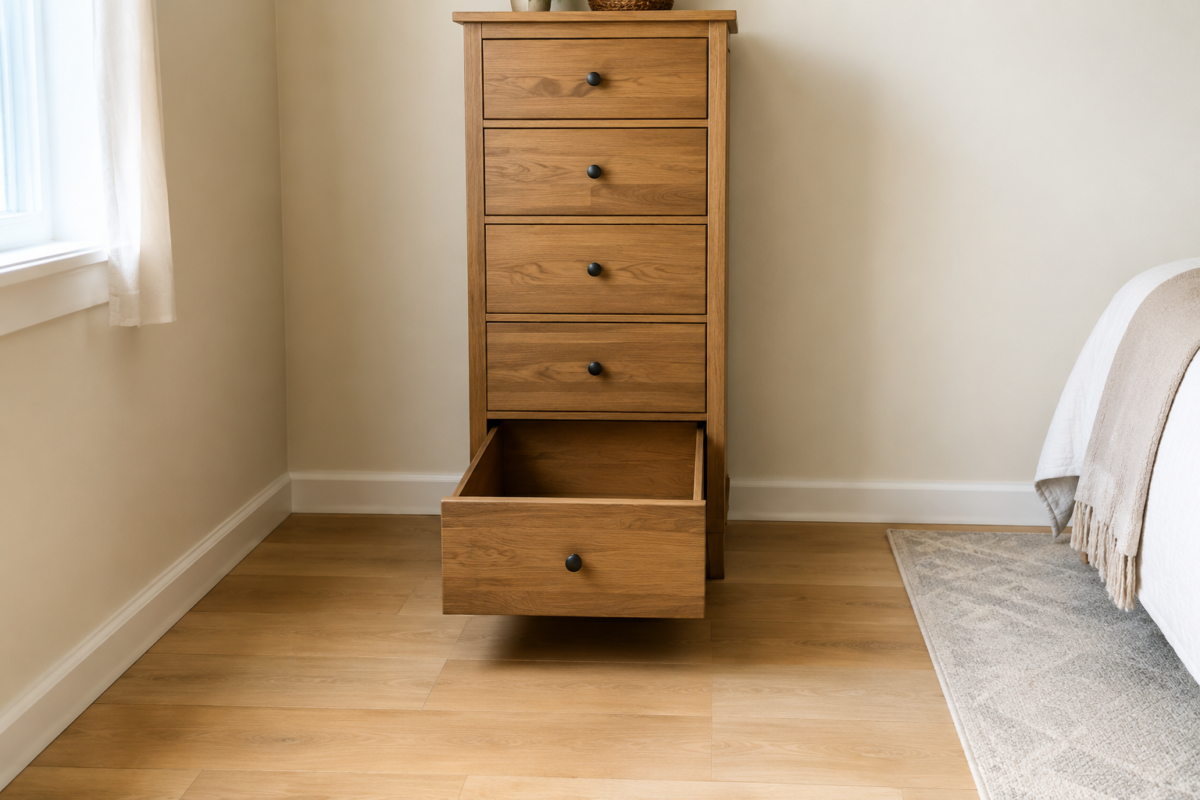
Before sizing any individual piece, one number matters more than any other: leave at least 24 inches of clear floor in front of anything with a door or a drawer that opens, and 30 to 36 inches anywhere you’ll be walking regularly, like the main path from the door to the bed. A dresser that fits perfectly against the wall is still the wrong dresser if opening its bottom drawer requires standing in the doorway to do it.
This clearance number is the actual constraint in most small bedrooms, not the wall length. A wall can be five feet long and still only support a dresser two feet wide, because the other three feet belong to the walking path in front of it, not the piece itself.
If your bed placement isn’t settled yet, the complete small bedroom layout guide walks through that decision first, since where the bed lands determines how much wall space is actually left for everything covered in this guide.
Sizing a Dresser for a Room That Can’t Absorb a Big One
A standard dresser runs somewhere between 30 and 60 inches wide, and in most small bedrooms, anything past 36 to 40 inches starts eating into clearance that the room genuinely doesn’t have to spare. Before shopping, measure the actual wall segment available after subtracting door swings and outlet placement, then subtract another 24 inches of depth for the drawer clearance in front of it. Whatever width is left is your real limit, not the width that happens to look reasonable in a furniture store showroom with three times the floor space of your bedroom.
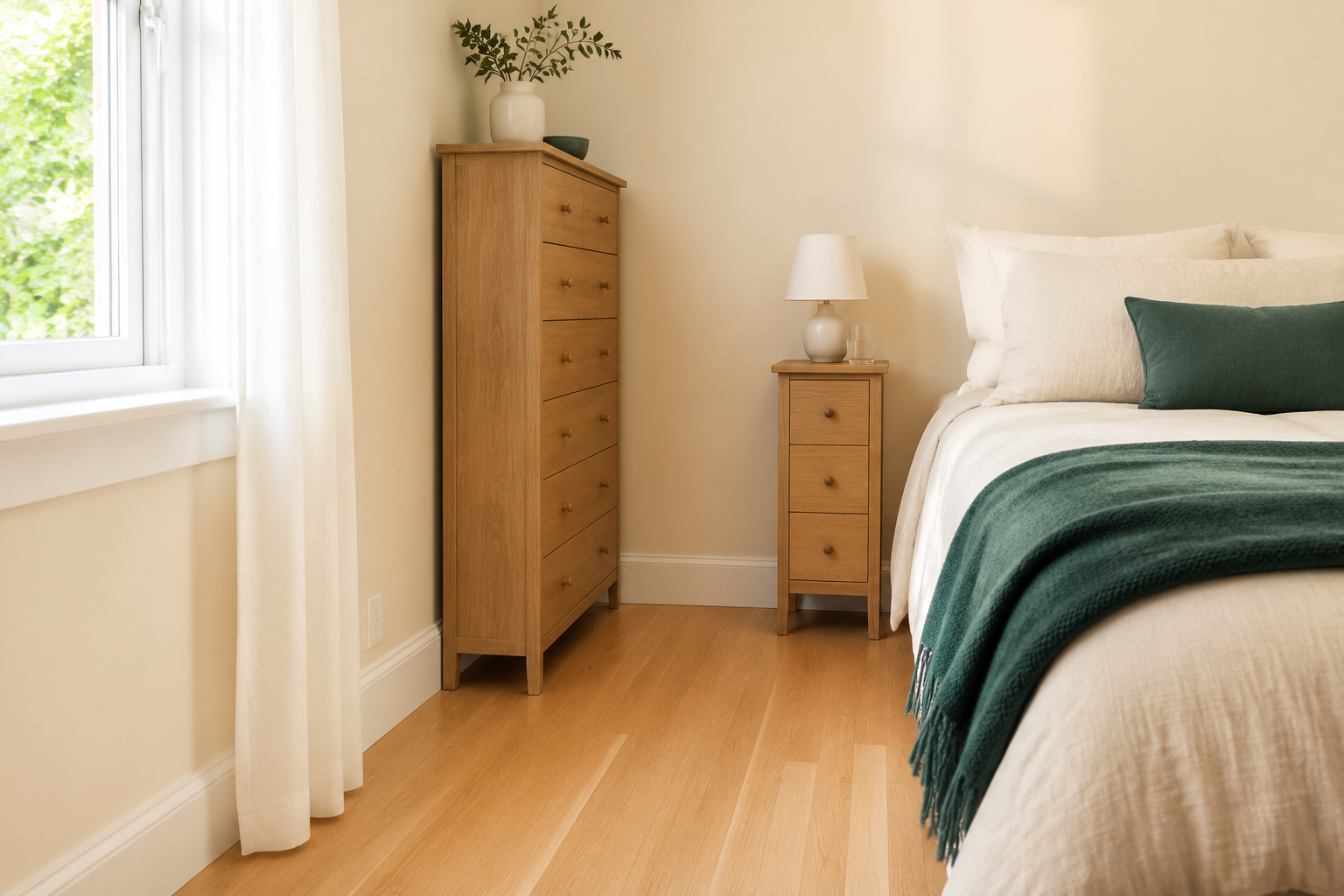
Height can absorb the storage volume a narrower dresser gives up in width. A tall, narrow six-drawer dresser holds roughly the same volume as a wide, low four-drawer one, without demanding nearly as much floor footprint. If your ceiling height allows for it, choosing height over width is almost always the better trade in a tight room.
Nightstands: When Small Beats Matching
A nightstand’s only real job is holding a lamp and whatever you reach for before bed, which means the smallest nightstand that does that job is usually the right one in a tight room, even if it doesn’t match anything else in the space. A nightstand deeper than 16 to 18 inches starts to genuinely eat into a walking path beside the bed, and most people don’t need that extra surface area badly enough to justify it.
If there’s only room for a nightstand on one side of the bed, a slim wall-mounted shelf, six to eight inches deep, handles the same function on the other side without taking up any floor space at all. It doesn’t need to match the first nightstand in style, only in finish tone, close enough in wood color or undertone that the two don’t visibly clash across the room.
Seating: When to Skip It and When One Chair Actually Works
A dedicated seating area is one of the most common overreaches in small bedroom furniture planning, and skipping it entirely is often the right call rather than a compromise. A small bedroom rarely has the floor space to support a chair, a side table, and the walking clearance both require without cutting into space the rest of the room actually needs.
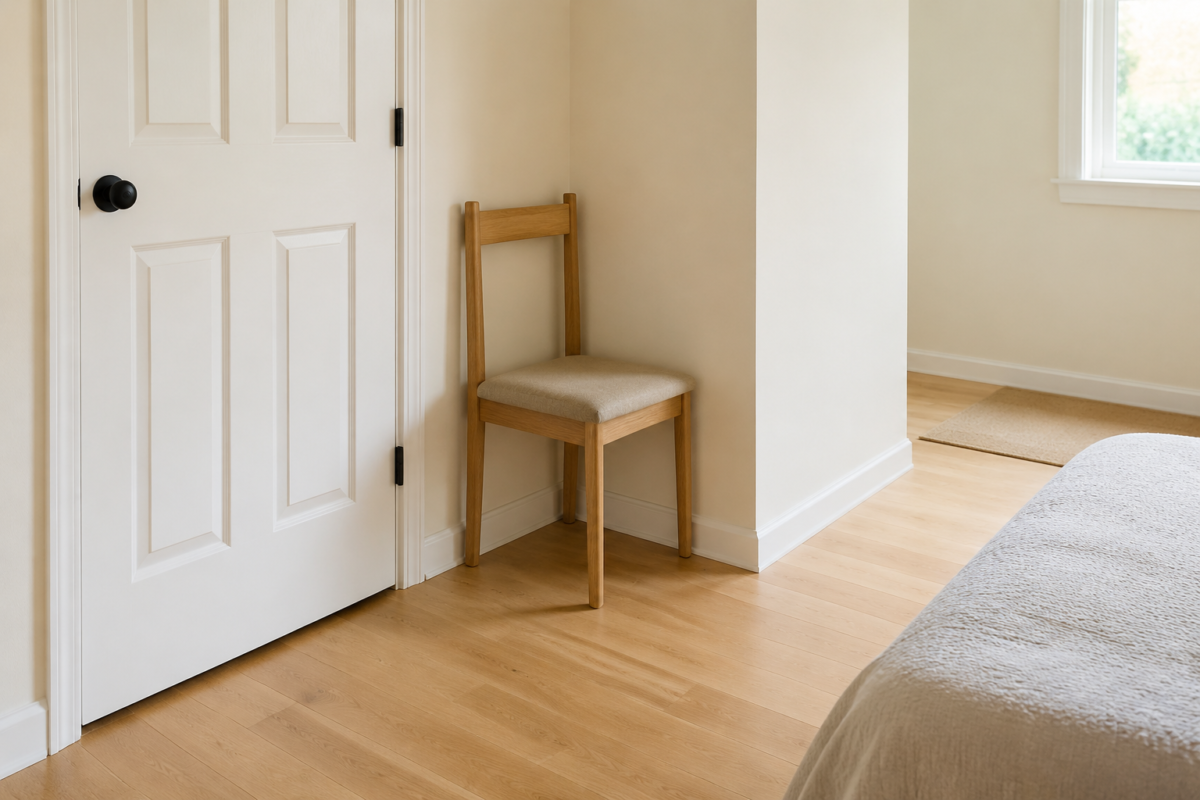
One chair, placed in an existing dead corner that wasn’t going to be used for anything else anyway, can work without costing the room anything. A slim, armless chair pulled up against the foot of the bed or tucked into an unused corner near the closet adds real function, a spot to sit while getting dressed, without requiring a separate seating zone. The test is simple: if the chair needs its own clear space that isn’t already dead space, skip it. If it fits into a corner nothing else was using, it’s worth adding.
Shape Over Size: Why a Taller, Narrower Piece Usually Wins
Across every category, the shape of a piece matters as much as its overall size, and it’s the detail most people overlook while shopping. Two pieces with the same total storage volume can have completely different footprints depending on whether that volume is built wide and low or narrow and tall. In a small bedroom, the narrow, taller option almost always leaves more usable floor space, even when the two pieces hold the exact same amount.
This applies beyond dressers. A narrow bookshelf holds nearly as much as a wide one in the same square footage of wall, and a slim-profile chair takes up meaningfully less floor space than an overstuffed one without necessarily sacrificing comfort. When two options are otherwise similar, choose the one built vertically rather than horizontally every time.
A Quick Measuring Method Before You Buy Anything
Before buying any piece, mark its footprint directly on your floor using painter’s tape, including the clearance space in front of it, not just the piece itself. Walk the room the way you actually would with the piece in place. This takes about five minutes and catches sizing mistakes that are much harder to see from a product photo or a showroom floor with different proportions than your actual room.
If a taped-out footprint makes the room feel tight the moment you stand in it, the piece is too big, regardless of what the listing says about the room size it’s “designed for.” Trust the tape on your actual floor over a product description written for an average room that isn’t yours.
Frequently Asked Questions
How much clearance does furniture need in a small bedroom? Leave at least 24 inches of clear floor in front of anything with a door or drawer that opens, and 30 to 36 inches along any path you’ll walk regularly. This clearance, not the wall length, is usually the actual limit on how large a piece of furniture can be.
What size dresser fits in a small bedroom? Most small bedrooms can comfortably fit a dresser up to about 36 to 40 inches wide, depending on the wall space left after accounting for drawer clearance. A taller, narrower dresser holds a similar amount of storage as a wider one without needing as much floor footprint.
Do I need a matching nightstand on both sides of the bed? No. A slim wall-mounted shelf on one side and a small freestanding nightstand on the other work well together as long as their finish tones are close, even if the styles don’t technically match.
Should I skip seating entirely in a small bedroom? Often, yes. A dedicated seating area rarely fits without cutting into space the room needs elsewhere. One slim chair placed in a genuinely unused corner, rather than a chair paired with its own side table, is usually the only seating a small bedroom can support.
Related Reading
- For where the bed itself should go before you plan furniture around it, see the complete small bedroom layout guide.
- If your room has an obstacle like a door swing or an off-center window complicating furniture placement, bed placement in an awkward room covers those specific cases.
- If budget is a factor in which pieces to buy new versus secondhand, small bedroom decor on a real budget covers where to spend on furniture that actually fits.
- For the palette to pair with your furniture finishes, see color palettes that work in small bedrooms.
- For more layout and furniture-fit approaches for this room, visit the Bedroom Layouts category page.
- To see how this fits into organizing every room in a small home, start at the Small Bedrooms hub.